The air quality situation in Ukraine on the morning of 17 September is quite contrasting – the air in Dnipro is more than five times more polluted than the air in Uzhhorod. However, pollution levels are not a threat to the public anywhere.
This is reported by EcoPolitic based on data from the international monitoring platform IQAir.
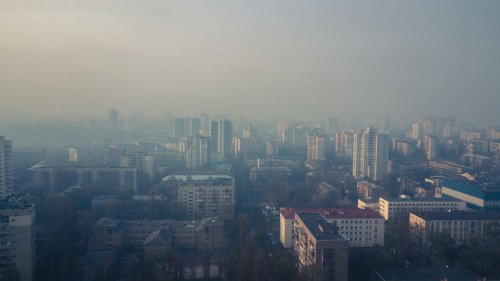
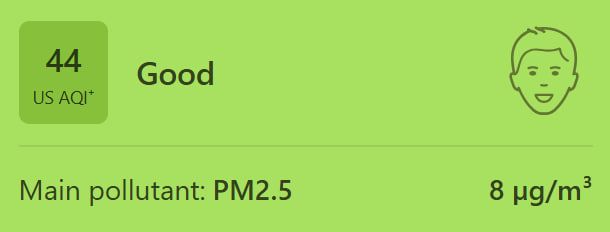
According to average readings from monitoring stations in Kyiv, air quality is good. However, the concentration of PM2.5 fine particulate matter is slightly above the standard. It stands at 8 µg/m3, whilst the World Health Organisation’s upper limit is 5.5 µg/m3.
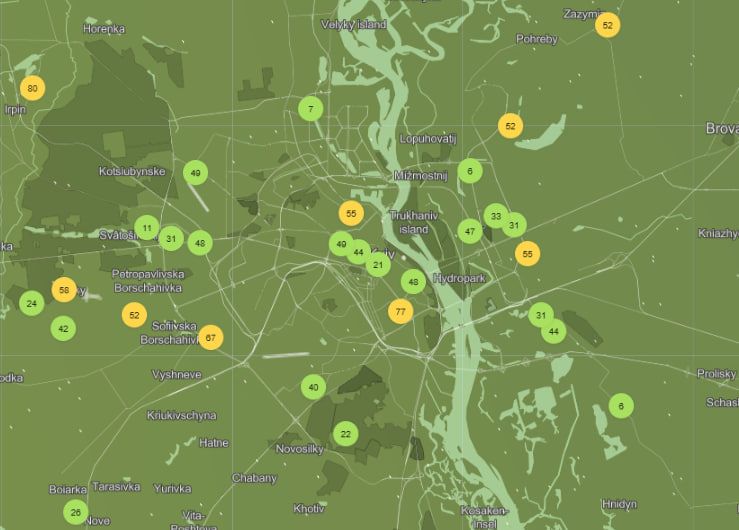
At some locations, air quality is in the ‘yellow’ zone, indicating moderate pollution. For example, on Yevhen Konovalets Street, the dust concentration is 23.2 µg/m3, which is more than four times the standard. On Kyrylivska Street and Hotkevych Street, the dust concentration as of this morning is 11 µg/m3.
Regional centres with the highest levels of pollution as of the morning of 17 September:
- Dnipro – 18.5 µg/m3;
- Odessa – 14 µg/m3;
- Zaporizhzhia – 12.1 µg/m3;
- Ivano-Frankivsk – 13.9 µg/m3;
- Poltava – 11.7 µg/m3;
- Rivne – 11.4 µg/m3;
- Cherkasy – 9.5 µg/m3;
- Ternopil – 11 µg/m3;
- Chernivtsi – 11.2 µg/m3.
The air quality here falls within the ‘yellow’ category, yet it does not pose a risk to people.
At the same time, IQAir classifies air quality as ‘good’ in many cities:
- Lviv – 4.2 µg/m3;
- Zhytomyr – 7.6 µg/m3;
- Vinnytsia – 6.9 µg/m3;
- Lutsk – 5.1 µg/m3;
- Kharkiv – 8.7 µg/m3;
- Khmelnytskyi – 6.8 µg/m3;
- Mykolaiv – 6.6 µg/m3;
- Uzhhorod – 3.5 µg/m3;
- Chernihiv – 4.5 µg/m3.
We would like to remind you that local pollution levels are significantly affected by the consequences of Russian attacks. As Ukrainian scientists have found, the concentration of pollutants can sometimes increase tenfold.