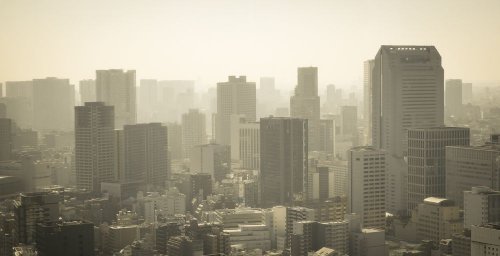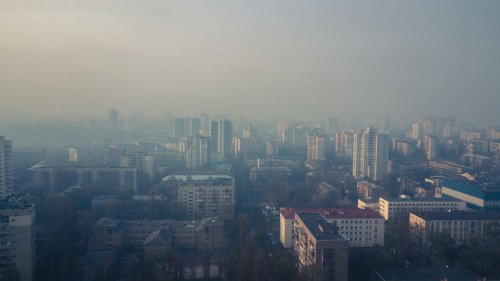
A study by scientists from Monash University, Australia, showed that more than 99.9% of people on the planet breathe air with an excessive content of PM 2.5 solid particles.
The World Health Organization considers air with a PM 2.5 concentration of no more than 5 micrograms per m3 to be safe, and only 0.001% of the population breathes it, The Washington Post reports.
The study's findings underscore the growing urgency for society to focus on limiting major sources of air pollution, it said. In particular, emissions from power plants, industrial facilities and vehicles.
"The unexpected result is that in almost all parts of the world, the annual average concentration of PM 2.5 exceeds the air quality standards recommended by the WHO," said Yumin Guo, lead author of the study.
Scientists found that the highest concentrations of the pollutant were observed in East and South Asia, as well as in North Africa. In addition, around the world, 70% of the days of the year, the level of pollution exceeded the recommended standards. However, particulate matter levels decreased in Europe and North America. This may be due to legislation and concerted efforts to reduce air pollution.
Air pollution was also higher depending on the time of year in some locations, the study found. For example, particulate matter levels increased in northeast China during the winter. The authors hypothesized that this is due to increased use of fossil fuels for heating in colder months. In addition, higher levels of particulate matter were found in Amazonian countries during August and September. This is potentially due to farmers clearing the land with fire, i.e. using slash-and-burn tillage.
The article emphasized that in 2019, almost 7 million people died worldwide due to air pollution. PM 2.5 particles have a size of up to 2.5 microns and can enter the blood and lungs and cause serious diseases, including cancer.
It is noted that by 2021, the WHO recommended level of PM 2.5 was twice as high. Permissible limits have been reduced to encourage pollution reduction.
The study showed that even by previous WHO standards, only 1.8% breathe clean air.
According to many scientists, even small concentrations of air pollution can have a negative impact on people's health. After all, there is no safe level of air pollution.
The head of the cardiology department at the University Medical Center of the Johannes Gutenberg University in Mainz, Germany, Thomas Müntzel, said that the results of the study are consistent with his previous studies. He found that a high number of excess deaths, mostly from cardiovascular problems, were caused by air pollution. The study also found that even PM 2.5 concentrations of 2 to 5 micrograms can cause excess mortality.
Earlier, EcoPolitic wrote, that a UN study showed that the number of deaths due to air pollution reaches 7 million every year.
As EcoPolitic previously reported, the brains of elderly people who live in cities with polluted air are degraded by polluted air.