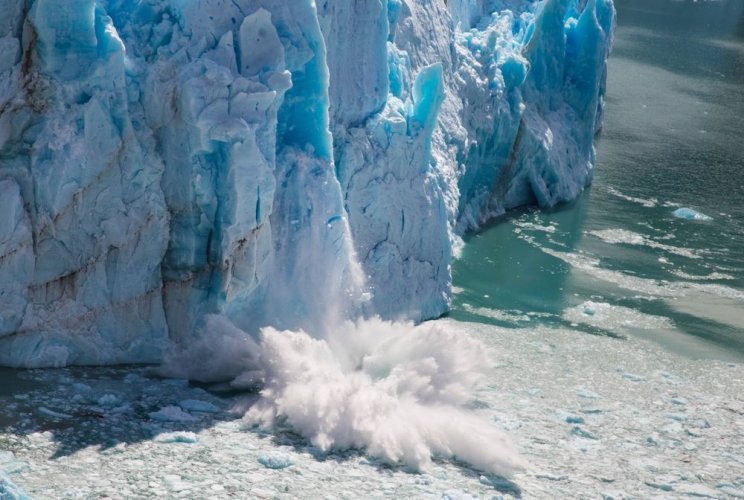
Scientists have discovered that the Thwaites Glacier in Antarctica, which is called the Doomsday Glacier, is developing deep cracks and is melting at a significant rate.
Its partial collapse could lead to a sea level rise of more than 70 cm, which would devastate coastal communities around the world, and a complete collapse of 3 meters, according to CNN.
The article explained that this name of the glacier is related to the fact that its collapse could lead to a catastrophic rise in sea level. Its size can be compared with the American state of Florida. On land, it is held by an ice shelf, which is in danger of collapsing due to rising ocean temperatures.
Scientists also discovered a complex landscape in the glacier, which could be the main cause of the collapse.
The authors said that the Thwaites dumps billions of tons of ice into the sea every year, contributing to about 4% of annual sea level rise. Especially rapid melting occurs at the point where the glacier meets the seabed. Since 1990, the bottom has receded by 14 km.
"Although it may take hundreds or thousands of years, the ice shelf may break up much sooner," the article says.
The researchers found that the rate of melting averaged between 2 and 5.4 meters per year, less than previous models had predicted. However, its underwater glacial landscape turned out to be much more complex. So it is dominated by strange stairs-like terraces and large cracks that pass through the entire ice shelf.
The research team found that melting occurred particularly rapidly in these areas. After all, the warm salty water was able to penetrate through the cracks and gorges and expand them, contributing to the instability of the glacier.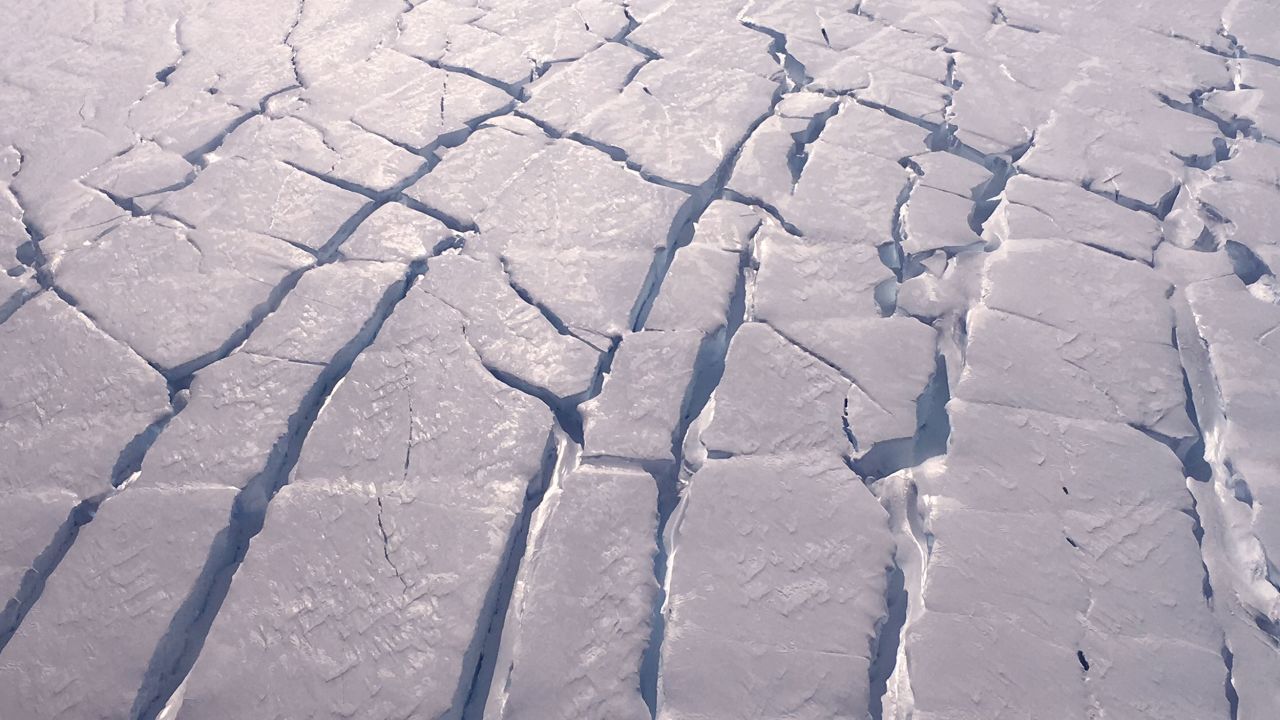
According to the authors of the study, melting along the sloping ice of cracks and terraces may become the main trigger for the collapse of the ice shelf. The findings add a new layer to a series of alarming studies that point to the rapid melting of the glacier.
A 2021 study suggested the ice shelf could collapse within the next five years, and in 2022 scientists said the Thwaites Glacier was "on its toes" as the planet warmed, with the potential for rapid retreat in the coming years.
Earlier, EcoPolitic wrote, that part of a mountain glacier collapsed in the Italian Alps against the background of record temperatures of a heat wave.
As EcoPolitic previously reported, due to global warming, bacteria that are currently in glaciers will be released outside and cause a carbon explosion.