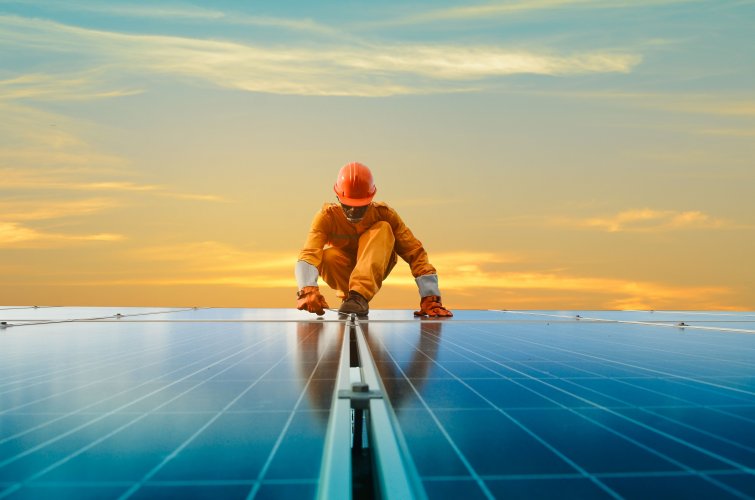
New report of industry group SolarPower Europe showed that a record 41.4 GW of solar power capacity was installed in the EU in 2022, which is 47% more than in 2021.
The leading countries that installed the most solar power plants were Germany, Italy and Poland, reports Euronews.
It was noted that the capacity of SPP installed in 2022 can provide electricity to 12.4 million houses. Also, the capacity of the unit to produce electricity from this renewable source has increased by 25% in a year.
SolarPower Europe CEO Walburga Hemetsberger emphasized that solar energy offers a "lifeline" against the background of the energy and climate crisis. And no other source of energy is developing as quickly and reliably as SES.
Experts from the International Energy Agency claim that the EU should install about 60 GW of solar power plants in 2023 to compensate for the shortage of Russian gas. SolarPower Europe believes that Europe can fill this gap.
TOP-9 EU countries that have installed the most solar power plants:
- Germany – 8 GW, because high energy prices made SPP a cost-effective solution;
- Spain - 7.5 GW, with a 55% increase in solar installations this year, thanks in part to the growth of rooftop solar panels and the energy crisis;
- Poland – 4.9 GW;
- The Netherlands – 4.0 GW;
- France – 2.7 GW;
- Portugal – the number of installed solar panels increased by 251% compared to 2021;
- Denmark;
- Greece;
- Sweden.
The article noted that the REPowerEU plan aims to increase renewable energy sources to 45% in the EU by 2030. To achieve these goals, among other things, it is necessary to increase the number of qualified specialists for the installation of panels and their connection to the power grid. Training more people for this job could increase the growth rate of solar energy in the EU.
SolarPower Europe says it is also necessary that the rules for the industry remain stable and that administrative procedures are simplified. This will encourage people to install more solar panels. The stability of the electricity grid and European solar panel production also needs to be improved to get rid of the blocks that are hindering growth.
"Europe is already hearing these calls from the solar sector and has many of these recommendations on its 2023 agenda," the authors noted.
Earlier, EcoPolitic wrote, that the representatives of European wind and solar power generation expressed concerns about the new permit rules of the European Union, which were presented on November 10. They are planned to be extended only to new projects.
As EcoPolitic previously reported, the European Commission officially launched the Alliance of Solar Photoelectric Industry EU to resume its own production of solar power plant cells.