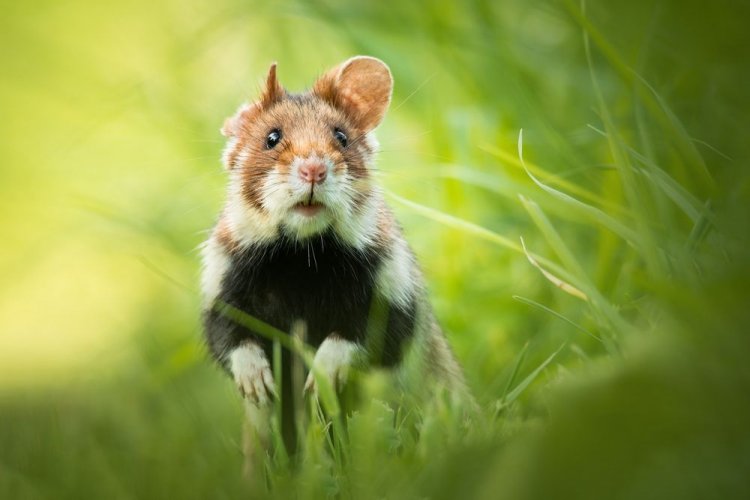
In the de-occupied Kherson region, 6 dead hamsters were found at one of the abandoned positions of the Russian military.
Biologist Mykhailo Rusyn published the photo on his Facebook page, as well as a video where the hamster "got" into the Ukrainian military.
The Russian military hung the hamsters on a tree by their tails and necks. Among the brutally killed animals was a red-book gray a hamster
"Until 2021, we worked on a project to preserve the gray hamster in the south of Ukraine (Kherson region and Zaporizhzhia). And now they are sending such a photo from an abandoned fascist position somewhere in the Kherson region," he wrote Rusyn
The story caused strong indignation among users of social networks.
"But this hamster was luckier," the biologist captioned another video.
The Ukrainian military also met an animal that climbed into their food packages. The hamster was released.
Earlier, EcoPolitic wrote, that a video of a Russian military commander with his bare hands was released on social networks grabbed the raccoon by the tail in the enclosure and threw the animal into the cage on the eve of the de-occupation of Kherson.
As EcoPolitic previously reported, Russian troops have begun the construction of a "line of defense" on the left bank of the Kherson region, where a number of nature reserves, natural monuments and unique ecosystems are located, including psamophyte (sand) steppes, which can destroy the nature of the region.