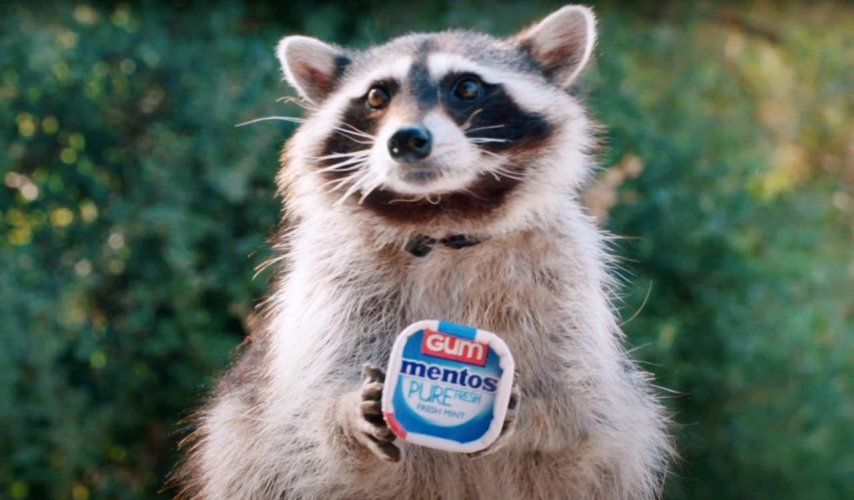
A US candy producer taught raccoons to sort garbage. Video

A US candy producer taught raccoons to sort garbage. Video youtube.com/c/MentosUS
Katerina Belousova

In this way, the company tries to make its contribution to reducing the impact on the environment

The Mentos chewing gum manufacturer has trained raccoons to find cardboard packaging from their candies in trash cans for further recycling.

A successful test of the Mentos Recycling Group of Raccoons (RRF) took place in the city of Simi Valley, California, USA, where the animals collected about 75% of the packaging, according to a Mentos' press release.

Professional trainers trained the raccoons for 40 hours. Then the animals were released to the dumpsters, where they looked for packaging and transferred it to a special blue bin. The company's team picks up the collected garbage and sends it for recycling.

"The results weren't surprising," says Crystal Chen, a raccoon trainer at Working Wildlife. "Raccoons are actually incredibly intelligent and trainable, and they're already in our trash. In a weird way, it makes perfect sense. I just hope that people can pay attention to keep those Mentos gum bottles out of the waste stream!"

Craig Kuhra, vice president of marketing at Perfetti Van Melle, which owns the Mentos brand, said the company is trying to do its part to reduce its impact on the environment, reduce its use of plastic and meet its reduction, recycling and reuse goals.

The press service noted that from February 2022, Mentos packaging will consist of 90% recyclable cardboard.

As EcoPolitic reported earlier, in the world during 2022 were numerous positive environmental projects have been implemented of different scales – from small local to global ones, which are able to change the world and show that "there is hope".


Related
This week’s round-up of environmental crimes: deforestation, pollution and poaching

The failure of forestry officials to fulfil their duties has led to the loss of hundreds of trees

32 million bees have died in the Kirovohrad region. Beekeepers are blaming farmers

The farmers did not even warn the local authorities that they were going to treat the field, so people were unable to prevent the bees from coming into contact with the poison

Shooting animals in the nature reserve is illegal: activists have won their court case against the Khmelnytskyi Regional State Administration

The authorities did not even specify the types of animals, effectively allowing hunters to kill them at their own discretion

Communities in the Kharkiv region are refusing to allow environmentalists to establish protected areas

The Regional State Administration even went so far as to break the law by failing to provide either comments or approval of the applications