A household item does not benefit and destroys the environment

A household item does not benefit and destroys the environment shutterstock
Katerina Belousova

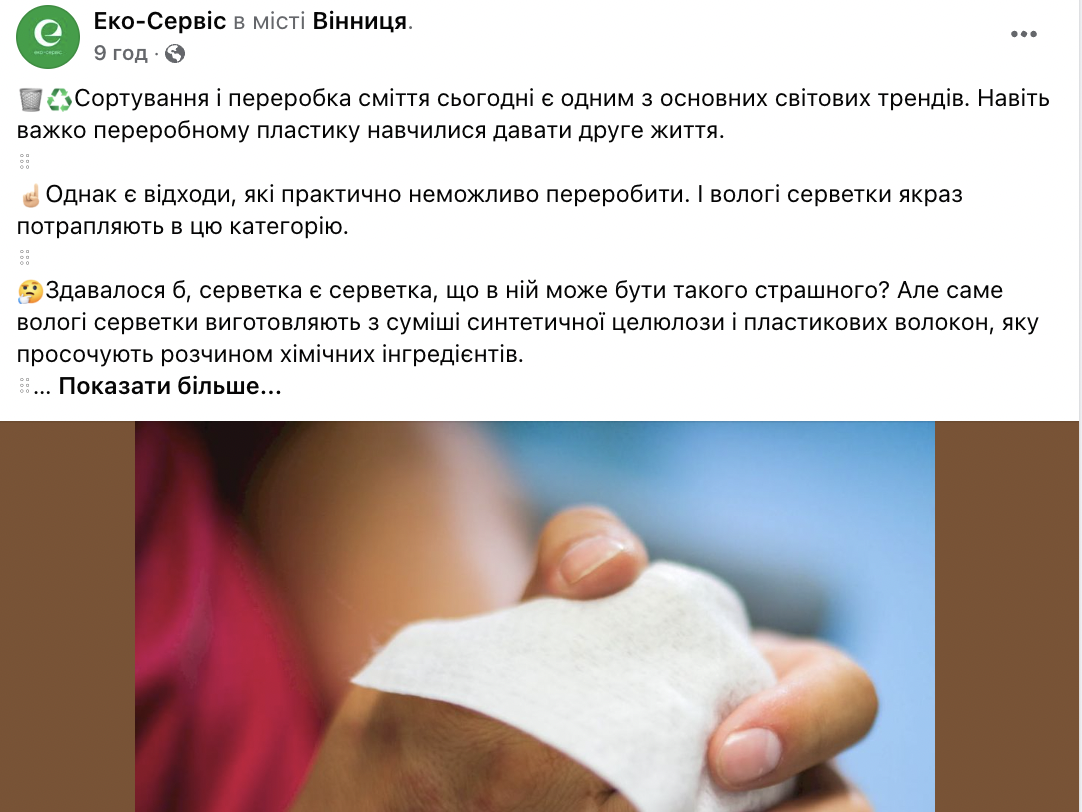
They are made from a mixture of synthetic cellulose and plastic fibers, which is impregnated with a chemical solution.

Wet wipes are non-degradable and non-compostable, making them very difficult to recycle.

Scientists also argue that they do not contribute to disinfection, are not able to completely clean the surface of the skin and, if used improperly, contribute to a significant spread of bacteria, Eco-Service reports on Facebook.

“Even hard-to-recycle plastic has been given a second life. However, there are wastes that are almost impossible to recycle. And wet wipes fall into this category,” the message noted.

They are sent to general containers for non-recyclable waste, even in countries with a developed system of separate waste collection.

Wet wipes are made from a mixture of synthetic cellulose and plastic fibers that is impregnated with a solution of chemical ingredients.

“As a result, they end up in a landfill, dry out, become light and scatter around the world with the wind, just like plastic bags. You should think twice before exacerbating an already existing problem,” the material noted.

To give up wet wipes, eco-activists suggest washing hands with soap, using an environmental disinfectant and a reusable cloth handkerchief.
facebook.com/ekoservisvin/

Recall all Ukrainians were called do not use plastic for month.

As EcoPolitic reported earlier, there is thing made of plastic from which anyone can easily refuse.
Related
Up to €500,000 for destroying food: Spain is taking drastic measures to combat waste

The maximum fine applies to repeat offenses, including the intentional destruction of food products

The global waste management crisis: humanity is eight years ahead of projections

Globally, only 21% of waste is recycled, while 30% is simply dumped in open areas or not collected at all

Composting at home and on a city-wide scale: how to turn organic waste into biofertilizer

Clearing leaves from parks in the fall is a waste of fuel for transportation and a theft of fertilizer from the ecosystem

In the EU, only 48% of the half-ton of waste generated by each European was recycled

In 20 of the 27 EU countries, the amount of waste per person has increased