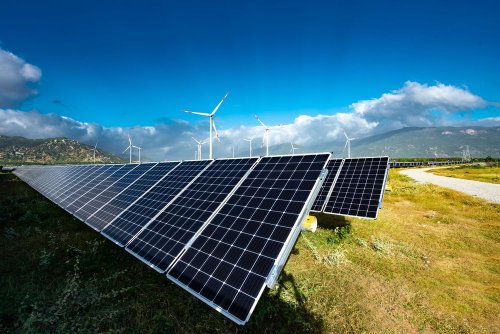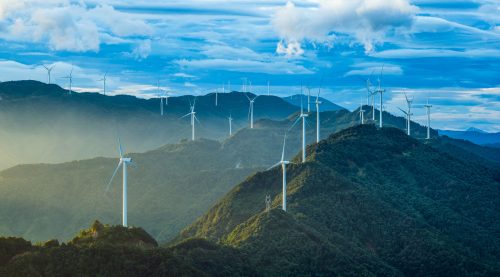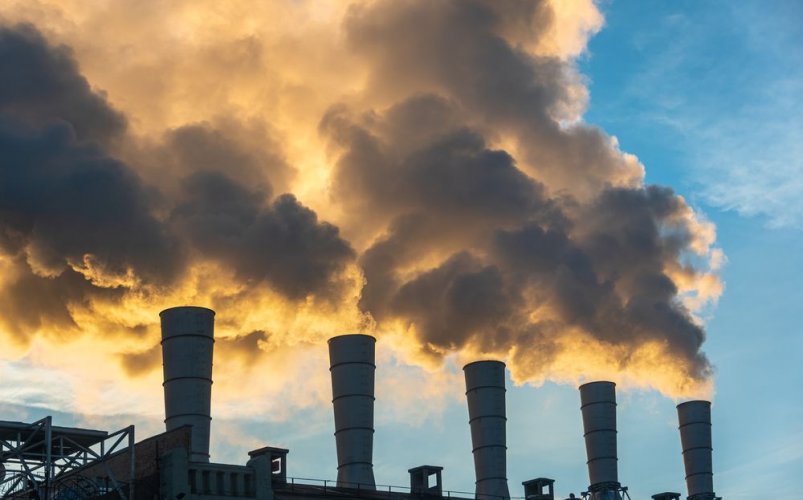
A new REN21 study has found that the world is using more fossil fuels than ever and the transition to renewable energy has essentially stalled.
This is stated in the report on the global state of renewable energy for 2022. BBC.
REN21 is an international energy policy network comprised of industry leaders, academics and some governments.
The report noted that the share of renewable energy in the global energy balance over the past decade has grown minimally - from 10.6% to 11.7%, and fossil fuels - from 80.1% to 79.6%. The use of coal, oil and gas continues to dominate overall energy consumption.
"As the demand for energy is rising, this effectively means that we are consuming more fossil fuels than ever," said Rana Adeeb, chief executive of REN21.
The article explained that during the recovery from the Covid-19 pandemic in 2021, there was a significant increase in overall energy consumption, most of which was covered by fossil fuels. This has led to a significant increase in carbon emissions around the world by about 2 billion tons.
Due to the fact that supplies could not keep up with demand, the prices of oil, gas and coal rose sharply. In addition, the Russian invasion of Ukraine has added uncertainty and forced governments to look for alternative sources.
As consumer energy prices have risen, some countries, including the UK, have introduced new income taxes on oil and gas producers. However, many countries have also introduced new fossil fuel subsidies.
“We are spending $11 million a minute globally on fossil fuel subsidies. In 2020, that was 7% of global GDP,” Adib said. “This obviously creates a system that is unbalanced because, despite being an economic alternative to fossil fuels, renewable energy does not play in a fair market.”
While renewables will reach 10% of global electricity production in 2021, complex areas such as transportation are facing significant challenges. Thus, cars, trucks, ships and aircraft account for 32% of total final energy consumption, but the share of green energy in 2021 was only 3.7%.
Adib said the slow progress highlights the critical importance of politics in changing markets and sentiment.
"The reality is that banning the combustion engine is a regulatory obligation to move away from that, so we're seeing an exponential trend in electric mobility, and I think that's quite encouraging," he said.
The article also noted that it was not achieved progress on policy pledges made at the COP26 climate conference.
While 135 countries had net zero emission targets for 2050 ahead of the Glasgow meeting, only 84 countries had economy-wide renewable energy targets. However, events in the world have changed over the past six months, which could lead to a significant increase in the cost of environmentally friendly sources, since they are not only much cheaper than fossil fuels, but also have other advantages.
"The energy transition is our lifeline," said Teresa Ribera, vice president of the Spanish government.
She explained that this will enable innovative business models and organizational forms, transform value chains, redistribute economic power and shape governance in new, more people-centric ways.
“With the right investment in technology, renewable energy is the only energy source that offers every country in the world the chance for greater energy autonomy and security,” she added.
Recall how "Green Marshall Plan" help the global energy transition.
As EcoPolitics reported earlier, the European Commissioner said that the war in Ukraine can't be an excuse to delay the Green Deal.