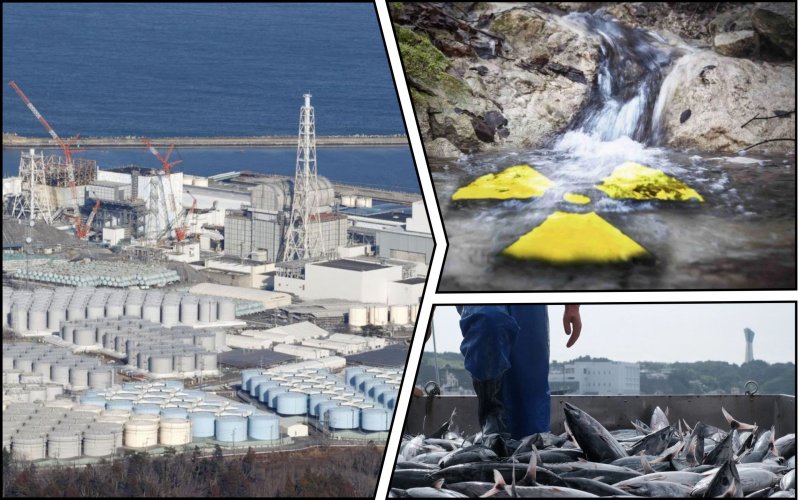
On Thursday, August 24, Japan will begin discharging more than 1 million metric tons of purified radioactive water from the Fukushima nuclear power plant.
According to the conclusions of the International Atomic Energy Agency (IAEA), such a discharge will have a negligible impact on people and the environment, reports Reuters
It is noted that such a plan caused sharp criticism from China. The country has banned the import of seafood from 10 Japanese prefectures, including Fukushima and Tokyo. Imports of seafood from other prefectures are allowed, but they must pass tests for radioactivity and have proof that they were produced outside the 10 banned prefectures.
The article said that the initiative raised concerns among local fishermen due to the possible destruction of livelihoods and reputational damage to the industry. South Korean activists and a number of island countries of the Pacific Ocean also opposed the water discharge.
According to Japanese officials, the water will be filtered before discharge to remove most radioactive elements except tritium, an isotope of hydrogen that is difficult to separate from water. Before being released into the Pacific Ocean, the treated water will be diluted to reduce the tritium concentration to levels well below internationally approved levels.
It is noted that this water was used to cool fuel rods at the Fukushima-Daiichi NPP, where an accident occurred in 2011 due to a powerful tsunami.
The article emphasized that in early September, Japan will conduct an analysis of seawater and fish near the plant and publish the results on the website of the Ministry of Agriculture.
Recall, in January 2023 the Japanese government announced that it plans to release more than 1 million tons of radioactive water from the Fukushima NPP into the ocean in the spring or summer of 2023.
As previously reported by EcoPolitics, the lakes in the mountains of Japan, which suffered from the nuclear disaster at the Fukushima-1 nuclear power plant, will be radioactive for at least another 20 years.