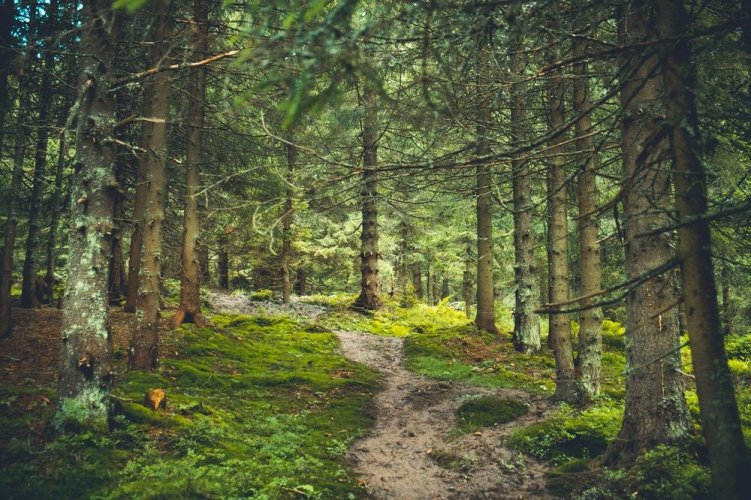
About 20% of the forest fund has been lost due to the war, and timber exports are being restricted due to growing domestic demand. All recent statements by government officials point to a common conclusion: Ukraine lacks forests. And while the State Forestry Agency has essentially only patched up the areas of deforestation in registered forests with its much-publicized "billion trees" initiative, Ukraine has hundreds of thousands of hectares of existing forest areas that simply need to be added to the fund and protected.
In an interview with LB.ua, Petro Testov, an expert on forest management and head of the analytical department of the Ukrainian Nature Conservation Group (UNCG), talked about what Ukraine is doing to preserve natural forests and forests without owners, and why this work is insufficient.
Who should manage the new forest?
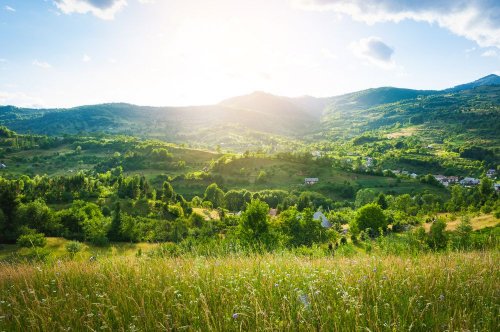
Natural forests form on land that has been abandoned by farmers. Technically, these areas still have the status of agricultural land and mainly belong to communities.
However, there are several constructive ways to preserve new forests in the country:
- transferring land to the fund of State Enterprise "Forests of Ukraine";
- setting up a municipal enterprise and changing the intended use of the land to forestry under a simplified procedure;
- transferring these areas to existing municipal forestries that are subordinate to regional councils. Such enterprises exist in a number of regions.
Land is more important than forest
In fact, communities are in no hurry to officially recognize the forest as forest and to transfer land to the state forest fund or to municipal forestries. Its agricultural designation allows the trees to be uprooted and the land leased anew to farmers. For the community, above all, this means tax revenues for the local budget.
"The situation has worsened due to the pressure from the relocating agribusiness sector. Entrepreneurs need land for growing crops, but most of it is already in use, so they turn to such uncultivated areas where self-sown forests are found," said Petro Testov.
The mechanism exists, but action is lacking
According to the expert, foresters are reluctant to negotiate with communities. At the same time, however, the prosecutor's office has developed an effective mechanism. It requires communities to recognize land as forest through the courts. This is in line with current law and gives hope that self-seeded forests will gradually receive official status and, with it, protection from logging.
The Lisproekt Institute has created a GIS system specifically for identifying self-seeded forests. It identifies such areas in a semi-automatic mode, comparing satellite images, forest maps, and cadastral maps. All that remains is for foresters to visit the identified location, record the presence of the forest, and prepare documents for the transfer of land. There are two options: "peaceful" or through the courts if the community resists.
However, the transfer to the State Enterprise "Forests of Ukraine" is proceeding at a slow pace. According to a UNCG expert, only 9,500 hectares have been transferred since the beginning of this year.
Forests without an owner
Some forest plantations were artificially created but, for various reasons, have no owner. According to 2011 data, these covered several hundred thousand hectares.
Petro Testov estimates that currently there are about 100,000 ha of unowned forests in Ukraine. In 2024, the parliamentary environmental committee tasked the forestry service with at least accurately calculating their total area. No one has completed this work properly.
“However, I can cite the Lviv region as an example, because there the regional administration counted them. It turned out that they have 31,000 hectares of forests that are not under any use. In other words, they belong to no one,” the expert noted.
However, a provision has recently been introduced into the Forest Code that may motivate communities to transfer such forests under state protection, that is, to the state forest fund. As always, everything revolves around money. If trees are cut down in ownerless forests and the culprit is not found, it is the amalgamated territorial community (ATC) that owns the land that must pay. Since 2023, this provision has been enforced by the State Environmental Inspectorate.
The expert emphasizes that if nothing is done, all these forests-both self-seeded and ownerless-will simply disappear. The former will be uprooted for the resumption of agricultural activities, while the latter will be cleared for development or simply cut down for firewood.
EcoPolitic reported that at COP30, the Ukrainian delegation invited international partners to join efforts to preserve self-seeded forests. They can co-finance compensation for communities for transferring such territories into state ownership.
Also, nearly half a million hectares of Ukrainian forests remain mined or contaminated with explosive objects.