The Cabinet of Ministers has updated its approach to forest management, including timber harvesting. The authorities maintain that the new mechanisms comply with European standards and environmental requirements. These changes are set out in the government resolution ‘On Amendments to Certain Resolutions of the Cabinet of Ministers of Ukraine Concerning the Regulation of Timber Harvesting’.
This was reported by the State Agency for Forest Resources of Ukraine.
Key changes
The authorities have slightly altered their approach to logging, referring to the transition of Ukraine’s forestry sector towards nature-friendly forestry practices.
The new principles for tree felling are as follows:
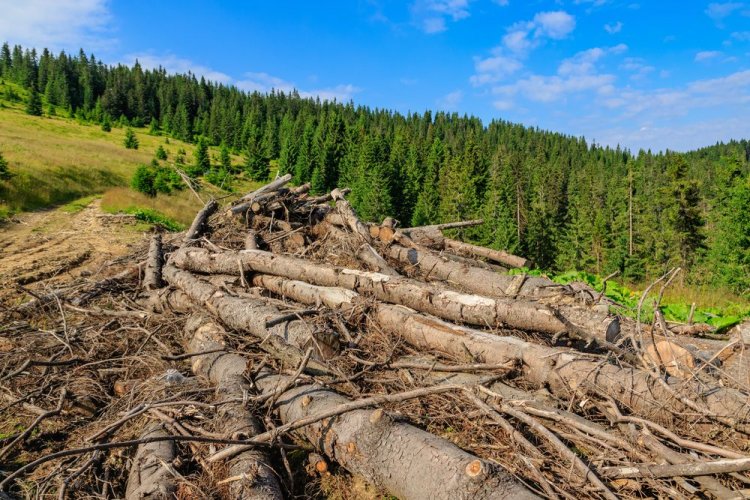
in the Carpathians, instead of clear-cutting in production forests, they plan to introduce gradual felling;
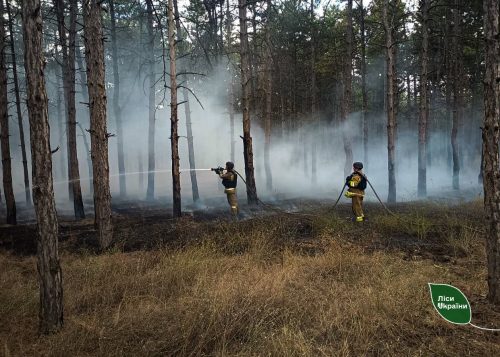
- the consequences of military actions are now an official reason for sanitary felling. Due to the destruction of trees, the authorities plan to "eliminate forest damage more promptly";
- thinning felling is becoming a new tool. With its help, they aim to restore low-productivity areas and create new forests in their place.
Notably, trees felled during sanitary logging will not be counted towards the annual logging quota. This regulation will apply during martial law and for a year afterward.
The government has also approved clearer criteria for selecting trees for felling and thinning, which is considered essential for forming resilient, uneven-aged forests. To prevent excessive thinning of forests, a minimum stand density is being introduced.
The decree also streamlines administrative procedures. For example, if a logging permit contains a technical error, it can be corrected without reissuing the documentation.
"The adopted changes are not just about an additional resource for the state. They mean the modernization of forestry rules, enhancing forest resilience, preserving biodiversity, and creating real conditions for implementing European close-to-nature forestry approaches in Ukraine," emphasized the Head of the State Forest Resources Agency Viktor Smal.
EcoPolitic has repeatedly reported that forestry workers use sanitary logging to conceal illegal deforestation even without government approval.
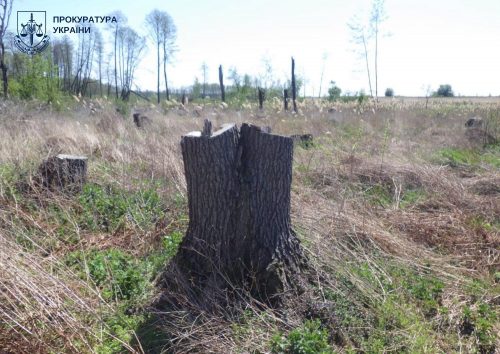
For example, in Donetsk region, a fake inspection of forest conditions was used to fell 1,800 trees worth 14.6 million UAH. In Kherson region, war damage was used as cover for logging: under the guise of sanitary forest clearing, over 2,000 trees worth 7.9 million UAH were destroyed.