Starting March 4, the US State Department's Air Quality Monitoring Program will no longer transmit or publish data on air pollution from sensors in more than 80 embassies and consulates around the world.
This was reported by The Washington Post.
The monitoring was conducted mainly in countries where such data was limited or unreliable. According to a State Department spokesperson, the reason for the program's suspension is “budgetary constraints.”
“The current budget climate requires us to make difficult cuts, and unfortunately, we cannot continue to publish this data,” the spokesperson said.
Previously, the data was published on the AirNow.gov website, which is maintained by the Environmental Protection Agency, as well as in the ZephAir mobile application.
According to The Washington Post, as of Tuesday evening, an error message appeared on the AirNow website dedicated to the data of US embassies and consulates.
“We are sorry, but this webpage does not exist,” the message read.
On Wednesday, ZephAir's website also displayed “No data” and “Monitor not working” messages.
Why this program was important
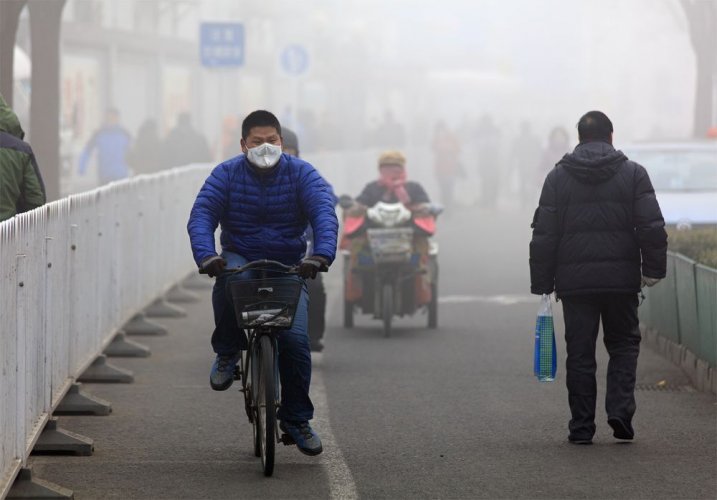
It started with a single monitor installed in 2008 on the roof of the US Embassy in Beijing. The device determined the content of fine particles at hourly intervals.
The original intention was to provide information for Americans and visitors to the embassy. But the data from the monitor quickly spread on the Chinese Internet – and put pressure on Chinese officials over what they called “excessive fog.”
On one day in 2013, the smog reached such a level that drivers had to pull off the roads. When the level of fine particulate matter (PM2.5) rose sharply, Beijing monitors recorded 500 micrograms per cubic meter of air. But the U.S. Embassy monitor continued to track the increase – up to an astounding 755 micrograms per cubic meter of air.
And the following year, China launched a “war on pollution.” The US ambassador to China at the time, Gary Locke, said he had never seen an American initiative have such an “immediate, dramatic impact on a country.”
In 2015, the United States expanded the program and eventually installed monitors in heavily polluted cities such as Mumbai (India), Karachi (Pakistan), and Dhaka (Bangladesh).
Environmental and public health advocates say that politicians and donors have not prioritized air pollution. Although one of the reports for 2022 found that air pollution reduces the average life expectancy in the world by more than 2 years, making it a more significant health problem than cigarette smoking.
As GMK Center reported earlier, among the top 5 problems that the Ministry of Environmental Protection and Natural Resources of Ukraine does not deal with, EcoPolitic named air pollution in cities. The other day, we also told you that Netflix has created “disappearing” billboards that visualize air pollution in real time.