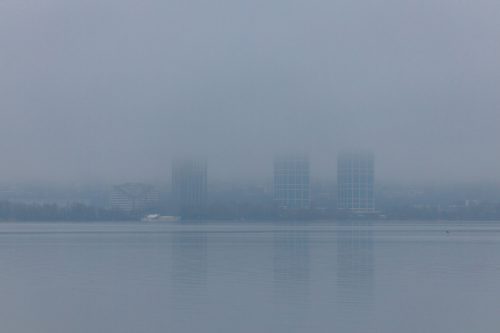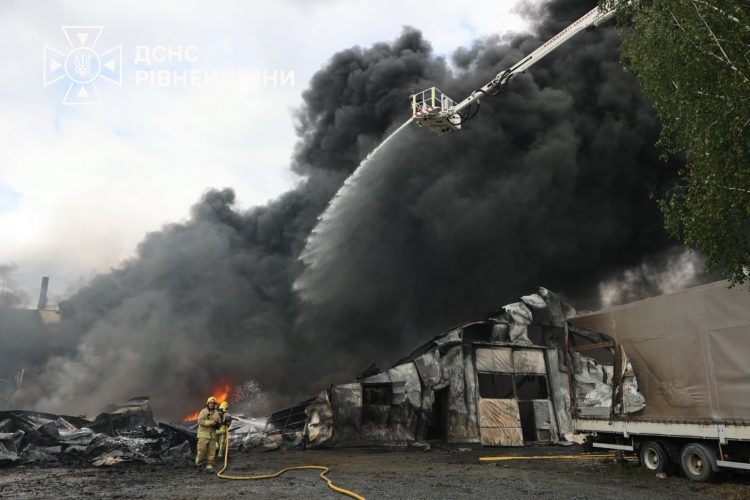
On Tuesday, August 11, a polystyrene foam production plant caught fire in Varkovychi, Rivne region. Despite extinguishing the blaze, residents complained about thick smoke, and specialized agencies detected excessive levels of toxic compounds in the air.
The events were reported by the Suspilne media outlet.
Fire containment
The Rivne Regional Rescue Service received notification of a fire on August 11 at 12:32. The fire concerned a warehouse building in the village of Varkovychi. The blaze was extinguished at 17:49.
According to the State Emergency Service (SES), the fire completely destroyed the polystyrene production facility covering an area of 1,000 m2. Additionally, a 200 m2 preparation workshop and a 4,400 m2 building where finished products were stored were also damaged.
"Upon arrival, the rescuers saw that the warehouse premises were engulfed in flames. Dry vegetation in the open area next to the warehouse was also burning. The firefighting operation was complicated by a high fire load and the significant amount of combustible materials, which contributed to the rapid spread of the fire," stated the State Emergency Service.
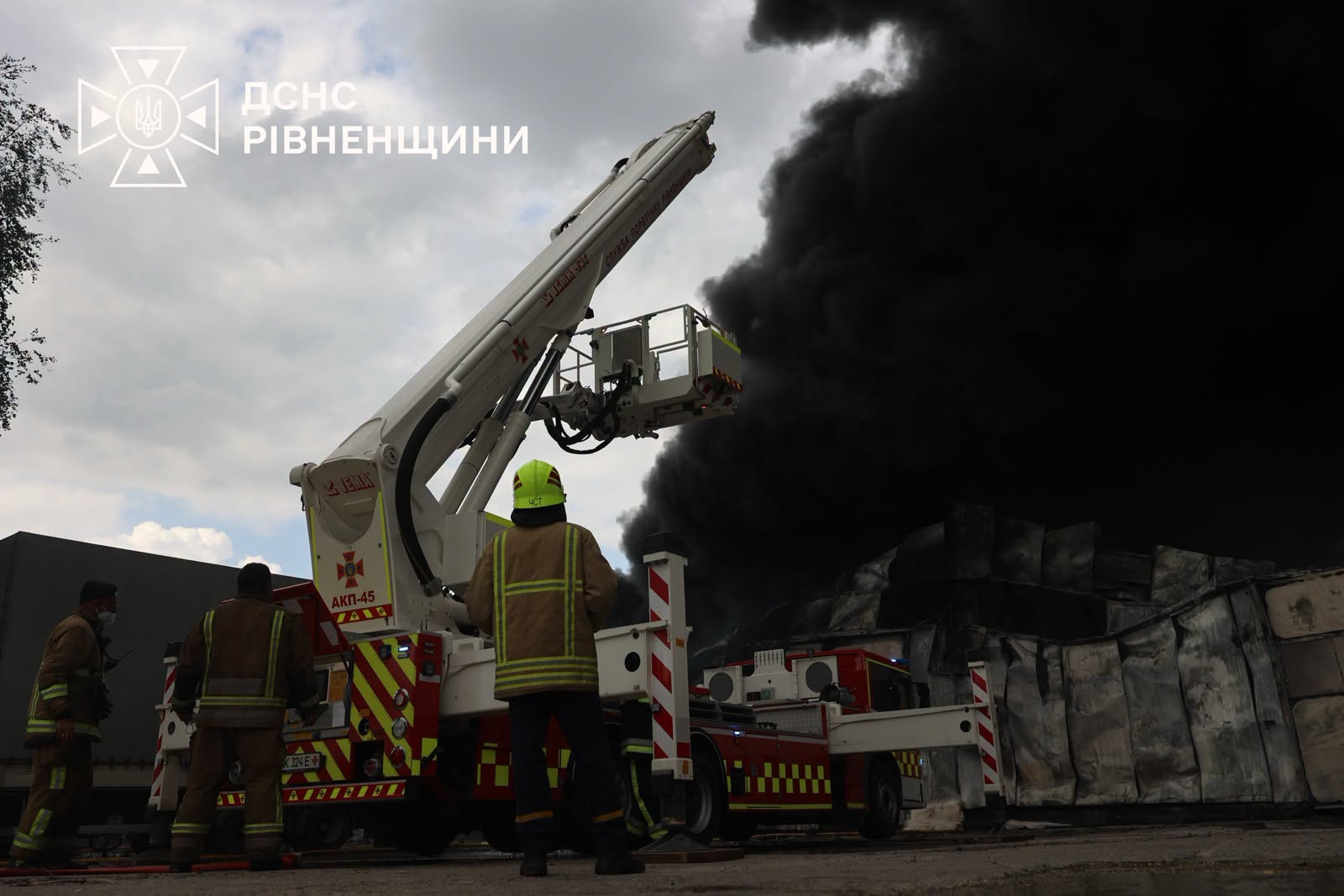
Source: Main Directorate of the State Emergency Service in Rivne Region / Facebook
However, the fire damage was not limited to this. A total of 2,100 m2 of dry vegetation, technological equipment, and even a 100-kW solar power plant were destroyed.
The fire was so massive that 48 rescuers and 17 pieces of specialized equipment had to be deployed.
At present, the exact cause of the fire is unknown. However, no people were injured.
Atmospheric pollution
To monitor the impact of the disaster on air quality in Varkovychi, samples were collected.
"We took an air sample at a point – at the end of the village of Varkovychi. It’s almost the last house, and we continued along the way. We are conducting studies for combustion products that we are authorized to assess," Yurii Mukha, head of the Dubno district branch of the Center for Disease Control and Prevention, told journalists.
As it turned out, by the evening after the fire was extinguished, the air was contaminated with hazardous compounds. According to the Rivne Center for Disease Control and Prevention, concentrations of several substances exceeded acceptable limits.
In the village of Varkovychi, soot levels exceeded the standard by almost three times, while nitrogen dioxide was 1.4 times above the norm. In the village of Molodizhne, the concentrations were somewhat lower but still above standard: soot levels were two times higher and nitrogen dioxide 1.1 times higher than normal.
As for other compounds-formaldehyde, phenol, and sulfur dioxide-their concentrations remained within normal limits.
EcoPolitic previously reported that in the Lviv region, peat fires have been extinguished for weeks. The elimination of the outbreaks is complicated by the fact that the flames are raging underground.