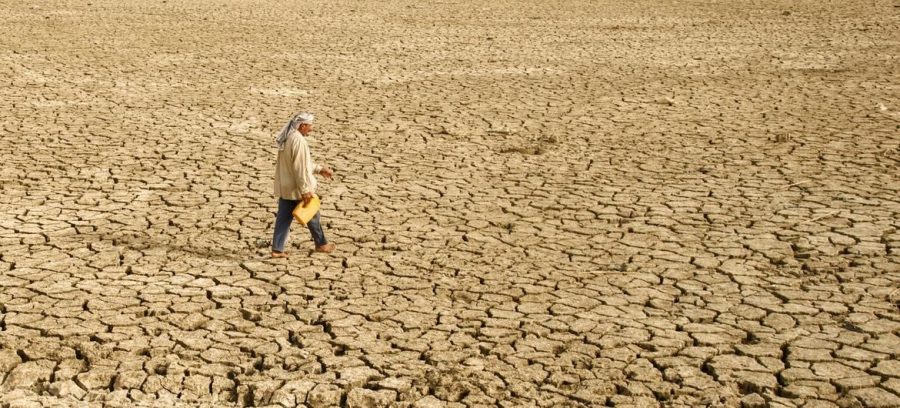
Humanity has entered an era of global water bankruptcy. Water resources have been so depleted by human activity and climate change that billions of people around the world are feeling the effects. And they are irreversible.
According to a UN report published in preparation for the Water Conference, the term "water crisis" no longer reflects reality. The world has moved into a post-crisis state and must adapt to new conditions and do everything possible to prevent them from worsening.
Water losses in figures
The report published telling data describing the situation in which humanity finds itself. Many countries have exhausted their water supplies and, at the same time, depleted their "reserves" – swamps and glaciers:
- In half a century, the planet has lost 410 million ha of wetlands, which is comparable to the area of the European Union;
- Since the 1990s, 50% of large lakes have reduced in volume;
- More than 30% of glacier mass has melted since 1970. The complete loss of glaciers threatens entire mountain systems in low and mid-latitudes;
- During certain seasons, the water volume in dozens of major rivers is insufficient to reach the sea.
As a result, 1.8 billion people lived under drought conditions during 2022–2023. An additional 4 billion inhabitants of the Earth experience severe water shortages for at least one month each year.
“This report tells an uncomfortable truth: many regions are living beyond their hydrological means, and many key water systems have already gone bankrupt,” said Kaveh Madani, Director of the United Nations University Institute for Water, Environment and Health.
Where are the consequences the worst?
The residents of North Africa and the Middle East feel the effects of water bankruptcy most acutely. Here, the lack of water resources is compounded by low productivity in the agricultural sector and sandstorms.
Groundwater decline and even soil subsidence have stricken certain regions of South Asia. This is a result of rapid urbanisation and intensive use of southern water resources.
A call for international cooperation
The problem of the Earth's water bankruptcy is not just about hydrology. It will impact the global agricultural market and, consequently, the economy and food security of billions of people. Globally, resource depletion also has social and political dimensions, so its resolution requires coordination at the national level and clear cooperation.
“We cannot restore vanished glaciers. But we can prevent further loss of the remaining natural capital and restructure institutions to adapt to new conditions. By acknowledging the reality of water bankruptcy, we can finally take the difficult decisions needed to protect people, economies, and ecosystems. The longer we wait, the deeper the water deficit becomes,” added Kaveh Madani.
EcoPolitic previously reported that desertification threatens a number of southern regions of Ukraine. This is influenced by climate change, human activity, and also the war – in particular, the destruction of the Kakhovka Hydroelectric Power Station dam by the Russians, which led to the loss of the entire reservoir.