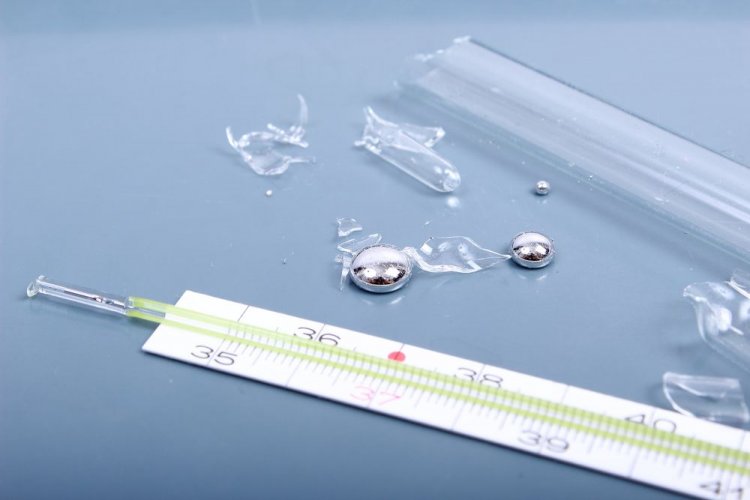
Experts from the Goofy Center for Waste Management said that if a mercury thermometer is broken, it is necessary to collect all its parts and all mercury drops in a jar of water.
How to do this safely and how to dispose of such a thermometer was described on the Goofy Center's Facebook page.
Experts advised to make sure that the broken thermometer is really mercury, as there are safe analogs.
"Mercury is a silver-colored liquid that collects into small balls when poured," the message explained.
What to do if a mercury thermometer is broken:
- vacate the premises from everyone, especially pets;
- close the door of the room so that there is no draft;
- put on rubber gloves and a face mask;
- prepare a jar of water;
- it is better to start collecting mercury with the largest drops so that they do not break into smaller ones. For this, it is recommended to use a thick sheet of paper, and to roll mercury drops onto the sheet – a thick needle or knitting needle;
- small drops can be collected with the help of tape, and pieces of adhesive tape with mercury drops should also be placed in a glass jar;
- drops of mercury can be extracted from the slits using a medical syringe with a thick needle. After that, the syringe should also be placed in the jar;
- the collected remains of the thermometer must be placed in a jar, tightly closed and taken to the Waste Management Centers;
- after collecting all the drops of mercury, it is necessary to treat the surface with a solution of potassium permanganate or an agent with chlorine, and in 3 hours to perform high-quality wet cleaning in the entire apartment and intensively ventilate the room.
The report emphasized that it is absolutely impossible to throw a broken thermometer in the trash or toilet. In addition, you cannot collect mercury with a vacuum cleaner, because it will be contaminated with mercury particles and cannot be used again. Also, the vacuum cleaner filter will not retain all the mercury and its particles will be sprayed around the room.
Experts also urged not to remove mercury with a broom, as it will turn into dust. In addition, wiping mercury droplets with a rag will smear them and increase the area of evaporation.
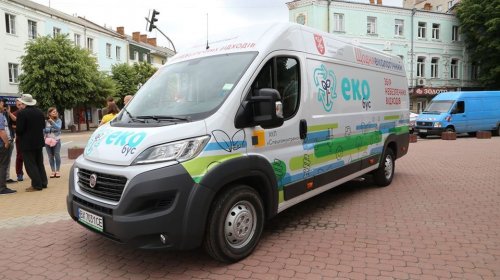
In Khmelnytskyi, in March, the eco-bus will be used to recycle fluorescent lamps, batteries, electrical equipment, household chemicals, medicines, used disposable cigarettes, etc.
As EcoPolitic previously reported, on January 1, Law No. 3116-IX "On Ukraine's Accession to the Minamata Convention on Mercury" came into force in Ukraine, introducing international rules for the management of this toxic metal and a gradual ban on the production, import and export of goods containing mercury.