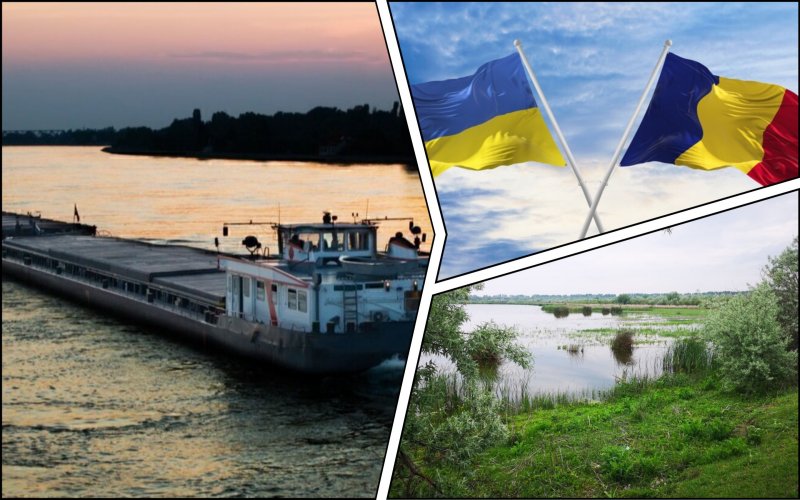
Ukraine and Romania have resolved a 20-year dispute over the arrangement of the Danube-Black Sea deep-water shipping lane.
The country has fulfilled all the necessary environmental European integration requirements of the Espoo Convention regarding the canal, Minister of Environmental Protection and Natural Resources Ruslan Strilets reports on Facebook.
This happened during the 9th Meeting of the Parties to the Espoo Convention.
"We have done our homework and have come a long way to bring the project into compliance with the requirements of the Convention. After all, Ukraine does not care about good neighborly relations and compliance with the norms of international law. We want and can find a common language and correct the mistakes of the past," he wrote.
As you know, the dispute regarding the canal has been going on since 2004, when Ukraine launched navigation through the canal in an experimental mode. However, the European Commission and Romania opposed it due to the environmental protection status of the delta and the lack of a procedure for assessing the impact of shipping on the environment.
"Ukraine has understood not only that it must fulfill all the obligations and conditions established at the European level for such a project, but also that it can do it," wrote the Minister of Environment, Water and Forestry of Romania, Mircea Fechet. "It is important not only for Romania and the European Union, but also for Ukraine to implement those rules that guarantee the protection of the Danube Delta."
He added that the next step will be the implementation of the Joint Romanian-Ukrainian Commission. The authority will manage all cross-border environmental impact assessment procedures.
As EcoPolitic previously reported, in November 2022, Ukraine and Romania signed an Agreement on implementation of the Espoo Convention. The document covers the Carpathian region and joint transboundary river basins, in particular the Danube Delta.