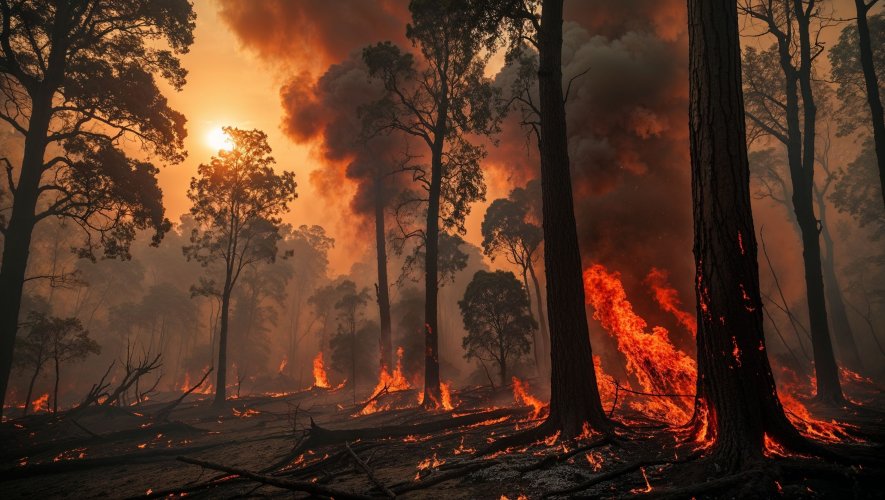
У Mykolaiv region, forest worth over UAH 110 million has burned down

У Mykolaiv region, forest worth over UAH 110 million has burned down shutterstock.com/ru

Illya Fedun

Fire engulfed 40 hectares of forest

On the evening of August 11, a large-scale forest fire occurred in the Andriivske forest tract near Mykolaiv, resulting in 40 hectares of forest burned and damages amounting to 110 million UAH. 

This was reported by the State Environmental Inspectorate of Ukraine. 

Due to the fire, nearly 30,000 tons of pollutants were released into the air, including 28.5 tons of carbon dioxide. 

Specialists estimated the environmental damage caused by the emission of toxins into the atmosphere at over 110 million UAH. Inspectors emphasized that such disasters not only destroy natural ecosystems but also significantly affect the quality of the air we breathe. 


As previously reported by EcoPolitics, a fire occurred at the landfill in Zhytomyr: what is the current situation and what are the consequences.
Related
FAQ about CBAM: the EC has published an updated document

Starting in 2027, emissions prices within the CBAM will be published weekly and linked to ETS figures

The Ministry of Economy has received the first application for an integrated environmental permit 

The industrial pollution reform has entered the implementation phase

Ukraine could earn up to €1.1 billion annually from methane recovery

According to experts, reducing emissions of this gas is one of the fastest and most cost-effective climate measures available to our country during the critical period from 2025 to 2045

Germany risks failing to meet its 2040 climate targets

It is estimated that average emissions will exceed their total annual emissions cap by approximately 60–100 million metric tons of CO₂ equivalent by 2030