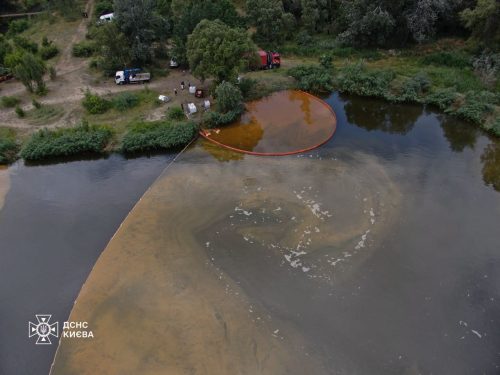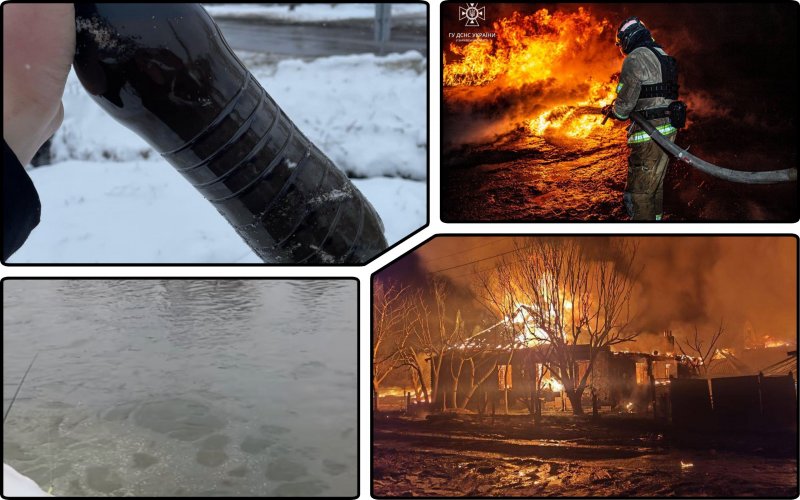
In Kharkiv, as a result of a "chessboard" drone attack on the evening of February 9, oil products from a fuel and lubricant storage facility got into the Nemyshlya and Lopan rivers.
The water from the Nemyshlya River turned black as a result of the pollution, environmental activist Artem Prykhodko reported on Facebook.
"The black bottle in the photo is water from the Nemyshlia River. One can only imagine what is there in Petrenko Lake, – he wrote. "There will be significant environmental consequences."
Prykhodko also published a video from social networks, the author of which filmed the pollution of the Lopan river at the Lopan dam.
"After the "arrival" in the Nemyshlyansky district, gasoline, oil, and diesel went into the Lopan River. It will all go further downstream," said the author of the video.
Earlier, EcoPolitic wrote, that in Kalynivka, Kyiv region, an oil depot destroyed at the beginning of the full-scale invasion was found to contain 33 times more oil products than it should have. The level of pollution has not changed in almost 2 years.
As EcoPolitic previously reported, cyber specialists of the Security Service of Ukraine detained an agent of the Russian FSB special service who collected and transmitted the coordinates of toxic substances storage sites, including warehouses and pesticide storage facilities. The occupiers planned to launch missile strikes against these facilities to provoke an environmental disaster.