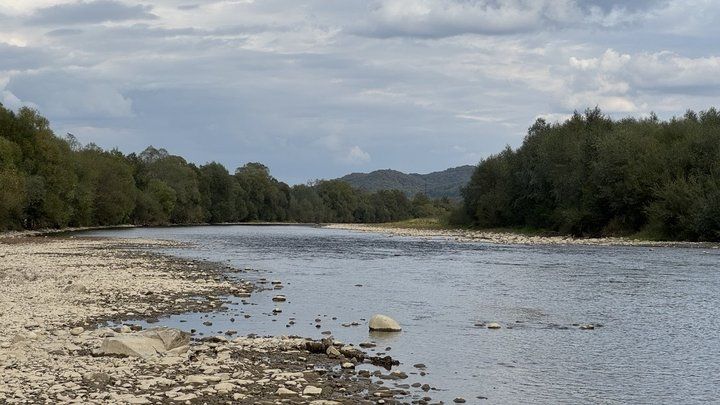
In some sections of rivers in the Lviv region, water levels continue to fall, even despite the recent rainfall. Overall, water bodies continue to record their lowest water levels — the low summer-autumn low-water mark.
This was reported by the media outlet ‘Suspilne’, citing comments from Hanna Bashta, deputy director of the regional department of ecology and natural resources, and Yevhen Kozyrev, a leading hydrologist in the hydrological forecasting sector of the Lviv Centre for Hydrometeorology.
A few per cent below the norm
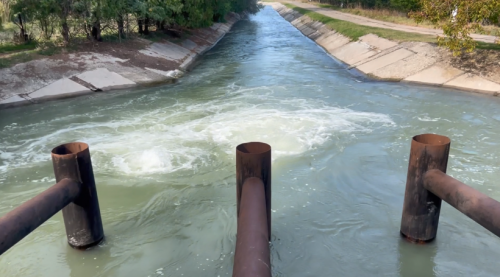
Water levels in Lviv’s rivers are extremely low by the standards typical for September. At some hydrological monitoring stations, levels are reported to be just a few per cent of the required water volume.
"According to hydrometeorological observations, since the beginning of September, the average water level of the Dniester within Lviv Oblast has been 5–11 per cent of the September norm. Levels meeting the criteria for low water have been recorded at 15 hydrological stations in the region. This is not a critical level, but the situation is continuing," said Yevhen Kozyrev.
The rain isn’t helping
Last week, 6–35 mm of rainfall was recorded across the Lviv region. A hydrologist reported that this was enough to raise the water level by 10–20 cm. This is a negligible increase given the current low water levels.
According to Yevgeny Kozyrev, any form of precipitation contributes to the rivers’ water levels, but such rainfall is unlikely to significantly improve the situation.
Overall, up to 70 per cent of the normal rainfall has fallen since the start of September. However, following a brief cyclone, sunny and dry weather has returned to the region.
In theory, prolonged and heavy rainfall in October could remedy the situation. However, if this does not happen, the water shortage will worsen.
Moderate but prolonged rainfall is needed to replenish the soil and water bodies. However, recently these downpours have become more intense and of shorter duration.
The start of the crisis
The conditions leading to low water levels had been developing since winter — due to insufficient snow cover in the Carpathians. This is precisely why the reservoirs did not receive the necessary water reserves. The next stage was spring, with its limited rainfall.
"In some areas, water levels were very low; in others, there were dry and critical spots," noted Hanna Bashta.
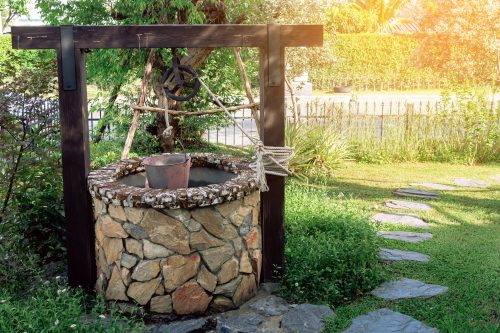
The summer, however, cemented the trend. Even then, as the water table fell, boreholes and wells began to run dry.
Fortunately, there were no major problems with the water supply in the region. The authorities had even planned to bring in water, but this proved unnecessary.
EcoPolitic previously reported that, due to the water shortage in Ukraine, water abstraction had been restricted for 300 water users. These even include municipal water supply companies.
The restrictions have been ‘extended’ until 30 September. If the situation does not improve, they may be extended further.