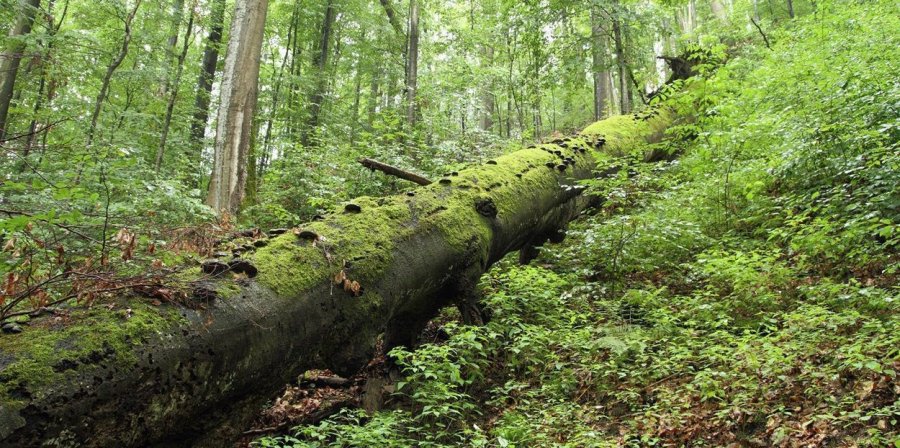
The Cabinet of Ministers has relaxed the requirement to retain non-marketable, i.e. dead, timber at felling sites. Previously, there was a mandatory requirement to leave 30 cubic metres per hectare. However, under a resolution adopted on 17 September, a differentiated approach will be used to determine these volumes.
According to a statement from the Cabinet of Ministers of Ukraine, this should ensure a balance between the conservation of biodiversity and the sustainable use of forest resources.
"It is important that the requirements take into account the actual natural conditions of a specific site, rather than setting a uniform standard for all forests. The adopted amendments make it possible to strike a balance between economic and environmental objectives when implementing relevant forestry measures," emphasised Taras Vysotskyi, Minister of Agrarian Policy and Food of Ukraine.
Key provisions of the resolution
Deadwood and stumps (of natural origin) should be left in place during the following types of felling: selective, gradual, formative and restoration. The volume of non-marketable timber left behind will vary by 1 hectare — 5, 10, 15 or 30 cubic metres.
Where there is a specified number of dead standing trees, provision has been made for their preservation.
"Dangerous" trees – that is, those that pose a direct or potential threat during felling – will be felled.
The actual volumes of deadwood, stumps and dead standing trees that are to be left on felling sites will be documented. The government emphasises that this will help to avoid situations where it is impossible to obtain a special permit for the use of forest resources due to a technical non-compliance.
The Cabinet of Ministers justifies its decision to replace the old quota of 30 cubic metres per hectare with a differentiated system by citing the risk of a reduction in the harvesting of marketable timber. It cited figures indicating a reduction of 950,000 cubic metres in the volume of timber available for felling in 2027.
"This posed risks to the supply of raw materials to the timber industry, to budget revenues and to the supply of firewood to the population. At the same time, the international forest certification schemes FSC and PEFC do not set a universal requirement to leave a specific volume of ‘deadwood’ per hectare in the forest," the government added.
Please note that citizens are not permitted to remove dry wood from the forest. A special permit is required to do so. Failure to obtain one constitutes an offence and may result in a fine.