On June 13, the Cabinet of Ministers of Ukraine introduced mandatory photographic recording of timber for all forest users and approved a new structure of the environmental monitoring system.
This was reported by the Ministry of Environmental Protection and Natural Resources of Ukraine.
Struggle with the "gray" wood market
A government decree requires all forest users to take photos of timber. Now, the electronic timber accounting system will generate a TTN-forest only after a photo of a timber truck with timber is uploaded to it. This will introduce an additional tool for tracking the movement of timber to its destination.
According to Minister Ruslan Strilets, everyone will be able to check the authenticity of timber documents on the website of the State Enterprise “LIAC” by the TTN number or the number of the logging truck, as information on TTNs is public. Previously, this service was in test mode, but now it is mandatory for all forest users.
Changes in the monitoring system
The Cabinet approved a new one Procedure of the state environmental monitoring system, which replaces the outdated Regulation of 1998 and defines its new structure.
Now all information about the state of environmental components will be subject to systematic monitoring at 4 levels – from national to object level. The system will consist of 8 monitoring subsystems:
- atmospheric air;
- water;
- lands and soils;
- forests;
- biodiversity and landscapes;
- geological environment;
- waste management;
- physical factors.
Also approved The procedure for monitoring the geological environment. This will make it possible to create one of the eight subsystems of the new state environmental monitoring system, which is currently being built in Ukraine according to European standards and is one of the conditions for our country's integration into the EU.
Monitoring of the geological environment will be carried out at two levels:
- State Geodrama and the National Academy of Sciences of Ukraine;
- subsurface user enterprises.
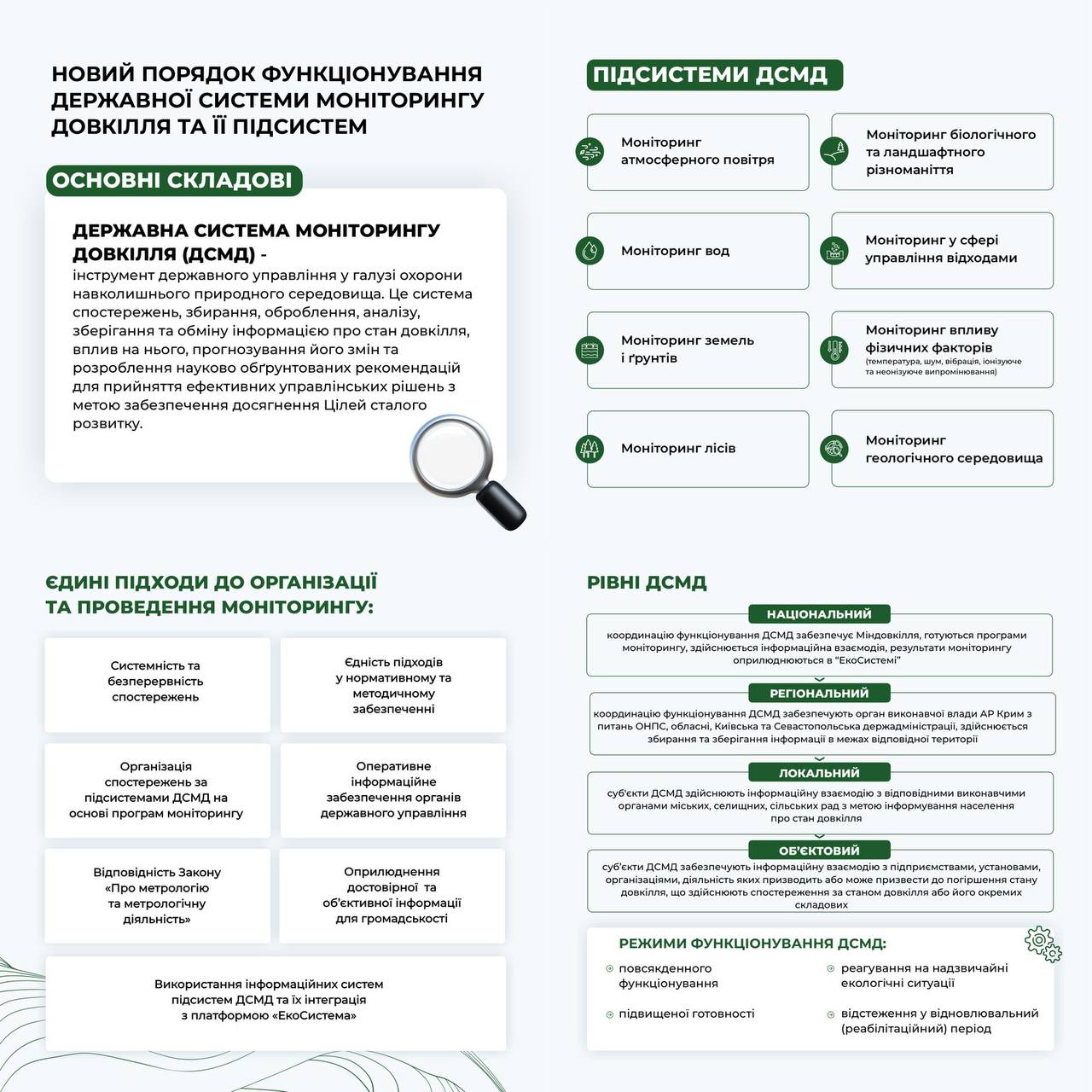
Infographic: Ministry of Environmental Protection and Natural Resources of Ukraine
Earlier, EcoPolitic reported that the government approved a number of changes regarding the monitoring of greenhouse gas emissions.
In March 2023 the Verkhovna Rada adopted draft law No. 7327 "On the state system of environmental monitoring".