The EU's green economy already accounts for 5.8 million jobs – Eurostat

The EU's green economy already accounts for 5.8 million jobs – Eurostat shutterstock
Maria Semenova

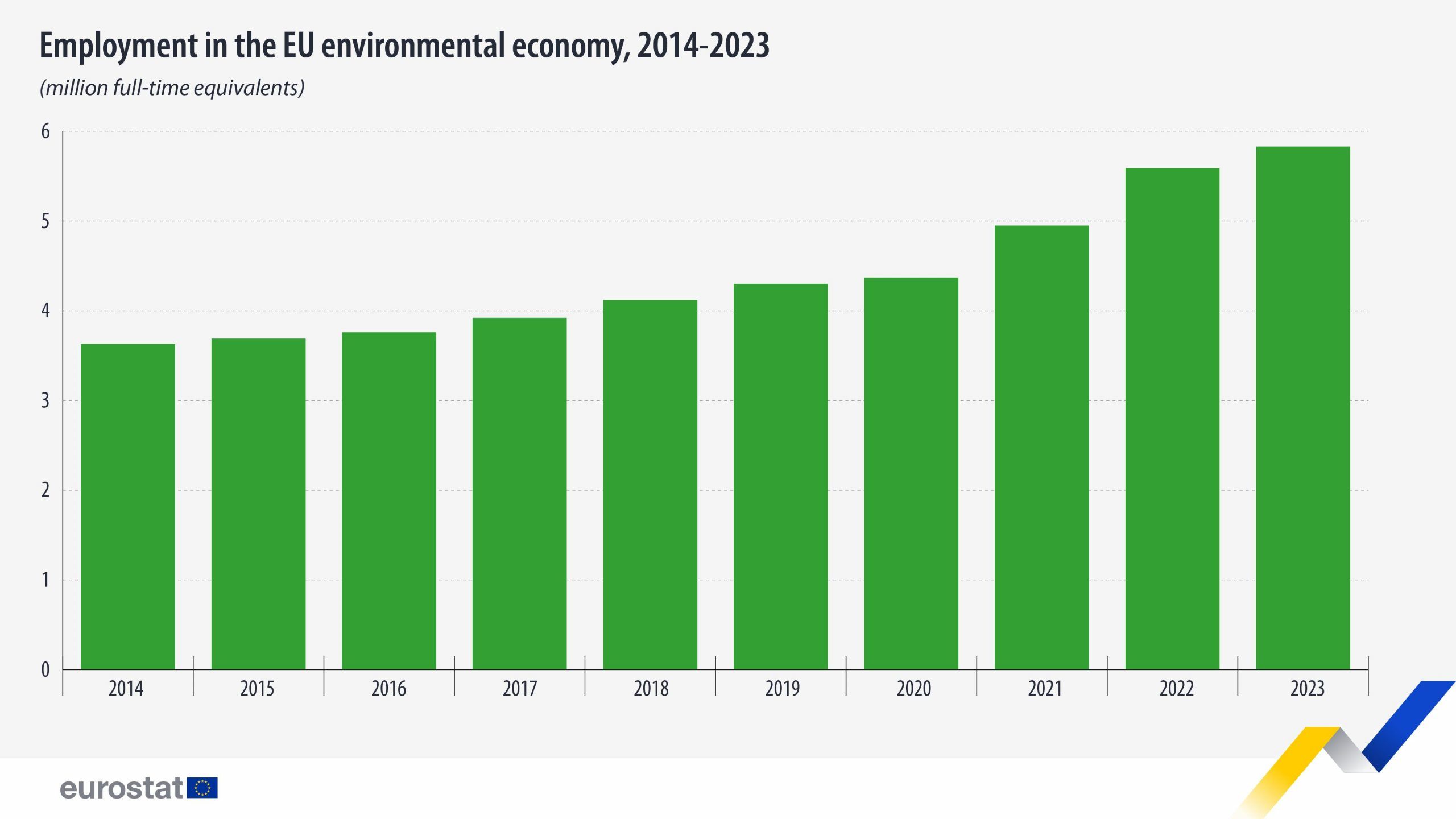
Every year, employment in this sector grows by an average of 5.5%

The number of jobs in the EU’s green economy has increased by 2.2 million over the past ten years. In 2014, employment in this sector stood at 3.6 million full-time equivalents; by 2023, it had risen to 5.8 million.

This is according to new data from Eurostat.

On average, the number of jobs grew by 5.5% per year. In 2023, this figure stood at 4.2%.

Occupational pool

The analysis covers information on employment trends in the following sectors:

  • Environmental protection, for example, wastewater or waste management.
  • Resource management. This segment includes work related to energy efficiency measures in construction, forest management, and renewable energy.

The data source for the statistics was the accounts of the European environmental goods and services sector (EGSS).
Source: Eurostat

The Financial dimension of the environmental economy

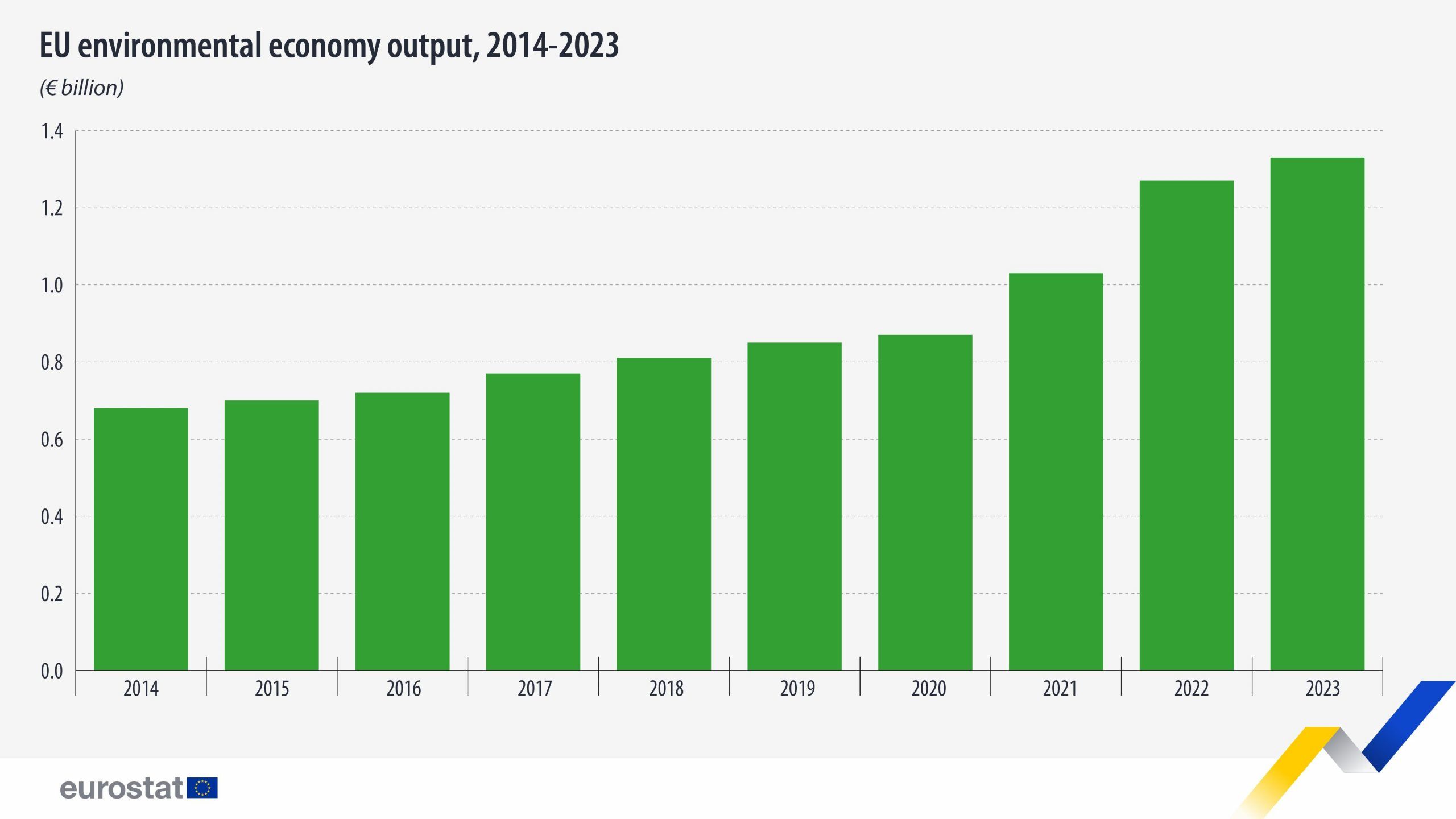
In 2023, the volume of the EU environmental economy sector amounted to €1.33 billion, which is 4.3% higher than the figure for 2022.

Since 2014, this sector has shown steady growth – averaging 7.9% per year. During this period, output has nearly doubled, increasing from €0.68 billion.
Source: Eurostat

The reconstruction of Ukraine could potentially create a significant number of green jobs. EcoPolitic previously cited experts’ forecasts of 1.2 million such positions.
Tags:
Related
A complete watering down of the EU ETS? The European Commission has presented updated rules for the carbon market

The authorities want to oblige EU countries to allocate at least half of their carbon revenue to industry

How climate change is destroying farmland: an interactive map has been created in Europe

Southern Europe will gradually see its productivity decline by the end of the 21st century

Solar power has become the EU’s leading source of energy, overtaking all other forms of power generation

Spain, Germany and Poland are among the leaders in the ‘solar race’

Deregulation in the EU: relaxation of a number of environmental regulations concerning hydrogen, forests and batteries

The European Commission has excluded a number of products from the regulations on deforestation and removable batteries