European electricity prices are currently twice as high as in the US. For years, industry has been complaining about unbearable tariff pressure, which has already led to the closure of hundreds of production facilities. And green energy is not helping – the outdated pricing system takes into account the highest price set for gas. At the same time, manufacturers consider EU ETS carbon prices to be unaffordable.
According to Euronews, proposals to reduce electricity tariffs are to be discussed at a meeting of the Council of Europe in March.
Tariffs hit industry
Complaints about prices have long been voiced by representatives of a number of energy-intensive industries, including steel, chemical, and cement. According to the media, hundreds of industrial plants have closed in the EU due to the high cost of electricity.
Since February 2024 alone, 101 chemical industry facilities have ceased operations in Europe, resulting in the loss of more than 75,000 jobs.
Fossil fuels determine prices for everyone
Last week, European Commission President Ursula von der Leyen reported heated behind-the-scenes discussions surrounding the law on the structure of the energy market. Particular attention was paid to pricing policy, which still uses the most expensive resource for pricing.
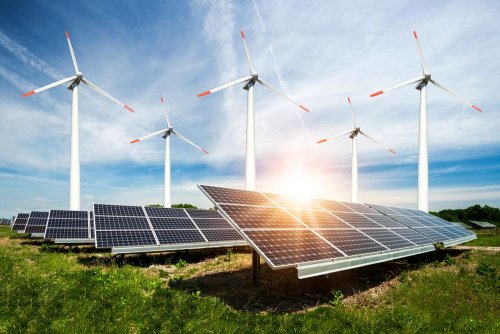
We are talking about gas, as its price per 1 MWh is the highest at €100. For comparison, the cost of the same amount of nuclear energy is €52, and renewable energy is €24.
"We have not reached a conclusion, but I will propose various options and conclusions as to whether it is time to move forward with market design or whether we are still fine," the Commission President told the media.
EU leaders decided to review the legislative framework for price regulation back in 2022, when the European Union was hit by an energy crisis due to Russia's invasion of Ukraine. The law, updated in 2024, aimed to weaken the impact of fossil fuel prices on consumer tariffs.
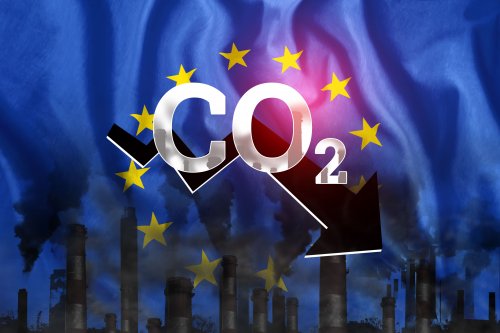
The internal energy trading system operates on the principle of supply and demand. However, there is one caveat: the price of carbon emissions under the EU ETS system, which industry must pay.
"Carbon prices have risen from less than €10 per ton in 2018 to €90 per ton today. The Dutch gas market (TTF) is declining after a surge in 2022. However, over the past three years, prices have fluctuated mainly around €40/MWh, which is almost twice as much as in 2018," said Alessandro Armenia, global trade intelligence analyst at Kpler.
"Even if nine out of ten power plants rely on inexpensive renewable energy sources, a single fossil fuel power plant needed to meet demand can determine the price of all electricity," added steel company Eurofer.
The EU plans to review the ETS this summer, and some industries are actively lobbying for the abolition of carbon costs. If EU leaders agree to change the market law, "prices will ultimately fall," said Ursula von der Leyen. She also added that infrastructure is important too — without network upgrades and new networks, cheaper energy will not reach those who need it.
Due to the surplus of green energy, their price can be negative
However, the problem for the EU energy market is even more complex. Negative prices have begun to appear for solar and wind energy, whose production is unstable and depends on weather conditions and the season. This means that due to the surplus of generated capacity, producers are forced to pay extra to the grid to accept the energy.
To combat negative prices, Europe needs to invest in energy storage systems. This is the opinion of Tinne Van der Straeten, director of the WindEurope association. An additional step should be demand management, which will help energy-intensive industries choose to operate when energy is cheapest.
To stabilize the situation, the EU must increase the total capacity of electricity storage facilities tenfold by 2030 and learn to respond more flexibly to demand. This will help to use energy from RES throughout the day without wasting it.
“The implementation of existing electricity market rules and clear flexibility indicators at the national level will help reduce price fluctuations, limit negative prices, and make solar energy more profitable while lowering costs for both consumers and industry,” emphasized Katarina Augusto from SolarPower Europe.
Earlier, the President of the European Commission stated that cheap and clean energy is one of the foundations of European business competitiveness.
Also, EcoPolitic reported that renewables supplied almost half of the EU's energy.