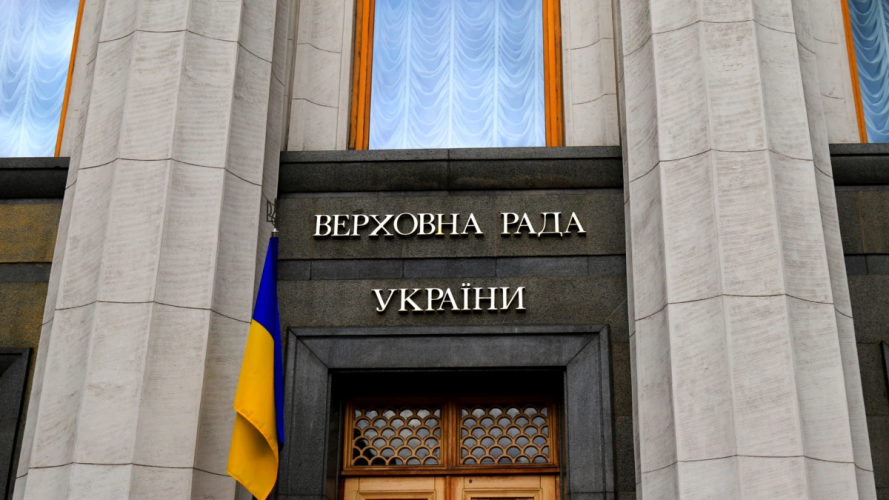
At a meeting on May 7, members of the Verkhovna Rada Committee on Environmental Policy and Nature Management reviewed alternative bills aimed at increasing fines for violations of environmental legislation in the water sector. Also on the agenda were a review of the opinion on radioactive waste and the dissolution of several working groups.
This was reported on the environmental committee’s website.
Radioactive waste
As early as June 30, 2025, the environmental committee submitted its opinion on draft law No. 12356 “On the National Targeted Environmental Program for Radioactive Waste Management.” However, for its adoption in 2026, during the second reading, the document was updated. First and foremost, this involved adjusting the Program’s implementation deadlines and clarifying funding amounts.
Therefore, the committee revised its opinion. Overall, with proposals for the final version and a new title—“On the Approval of the National Targeted Environmental Program for Radioactive Waste Management for 2026–2032”—the document was recommended for adoption in the second reading and as a whole as a law.
Liability for violations in the water sector
The Environmental Committee reviewed two draft laws concerning amendments to Ukraine’s Administrative Code. These are No. 15096 and No. 15096-1, both designed to strengthen accountability for violations in the protection and rational use of water resources.
Meeting participants emphasized that reducing fines is inadvisable. Therefore, of the two alternatives, draft No. 15096 was chosen. With the Environmental Committee’s comments, this version was recommended to the Committee on Law Enforcement for adoption as a basis.
Disbandment of working groups
The Environmental Committee considers a number of legislative tasks to have been completed, removing the need for several working groups. As a result, the following activities have concluded:
- the joint working group of the Committee on Environmental Policy and Nature Management and the Committee on Law Enforcement on the causes of forest fires and their prevention in the future;
- the working group on the development of a new flood protection strategy and the corresponding legislative support for overcoming the consequences;
- the working group for processing draft law No. 6004-d;
- the working group for studying international experience and developing legislative proposals to improve the regulation of strategic and critical minerals issues in Ukraine;
- the working group on legislative regulation of requirements for the maintenance and operation of the civil protection shelter fund and establishing liability for violations of these requirements;
- the working group finalizing for the second reading draft law No. 12353 on amendments to certain legislative acts of Ukraine regarding mandatory evacuation procedures.
EcoPolitic previously reported on the updated fines that may threaten Ukrainians for "water" violations in the event that the corresponding draft laws are adopted.