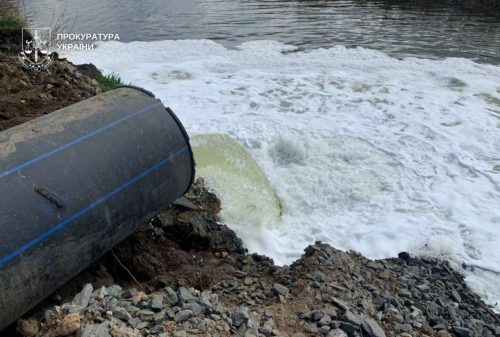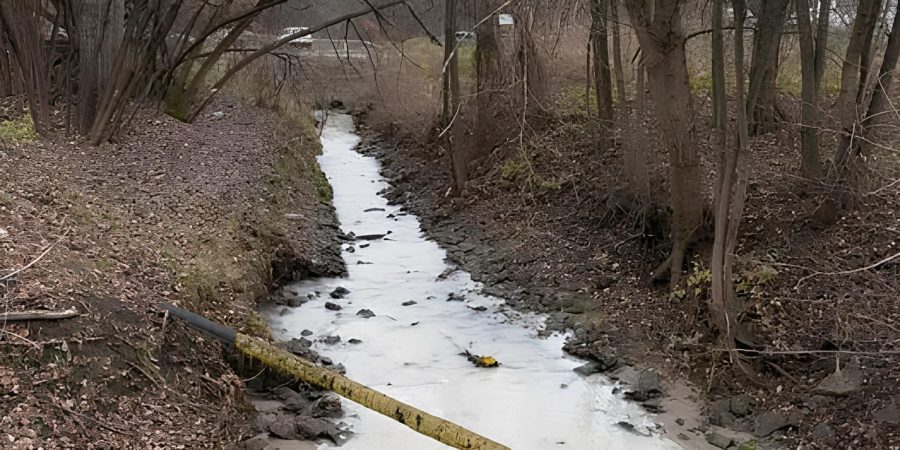
On 24 November, the municipal enterprise "Pleso" detected signs of possible pollution of the Syrets Stream along Tyraspilska Street in the Shevchenkivskyi district of Kyiv.
This was reported in a Facebook post by local historian Kyrylo Stepanets and in a comment by "Pleso" under it.
"SOS! An environmental disaster on the Syrets River. Rivers of milk, banks of jelly. Someone is dumping an unknown substance. All of this then ends up in the Dnipro", Stepanets wrote under a photo taken near 12 Tyraspilska Street.
What is known about the pollution
The enterprise's inspection department carried out a survey and recorded an inflow of cloudy, light-coloured water that visually resembles a construction mixture. Characteristic sediment was also found along the banks. The affected section is approximately 100 metres long.
According to preliminary indications, foreign substances may have entered the stream through the stormwater drainage network. To determine the composition and extent of the possible pollution, specialists took water samples for laboratory testing. Law enforcement agencies were also notified of the incident so that they could respond and identify those possibly responsible.
Risk to Kyrylivske Lake
Of particular concern to the enterprise is that the stream flows towards Kyrylivske Lake, which is managed by "Pleso". There is a risk that the pollutants will spread further and reach the lake. The enterprise is taking the necessary response measures within its competence.
What social media users say
Under the post about the pollution, social media users have put forward their own theories about the possible causes of the incident. In particular, they suggest that the discharges may be linked to preparations by the company "Autostrada" for the construction of the metro line to Vynohradar, namely the tunnelling between the "Syrets" and "Mostytska" stations.
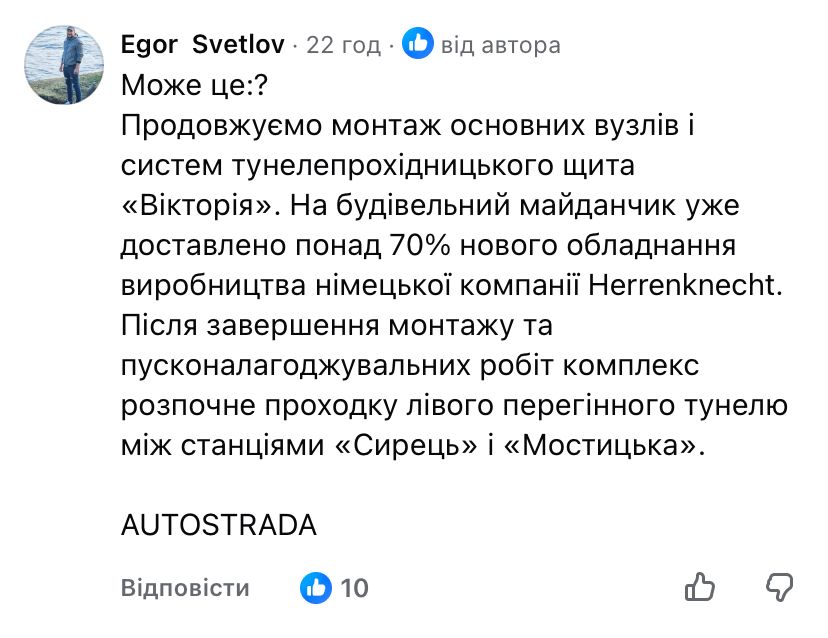
Others suggest that the water may have turned white because of waste from "Khimprom", a discharge of polymer dispersion or the remains of construction mixtures, such as primer or putty, from nearby new residential buildings.



Screenshots from Facebook.
As EcoPolitic previously reported, this summer oil product leaks were discovered in Kyrylivske Lake and the Syrets Stream after they entered the water bodies as a result of a Russian strike on a petrol station. At the time, municipal workers had to block off the lake with absorbent booms and clean the shoreline of fuel and lubricants.