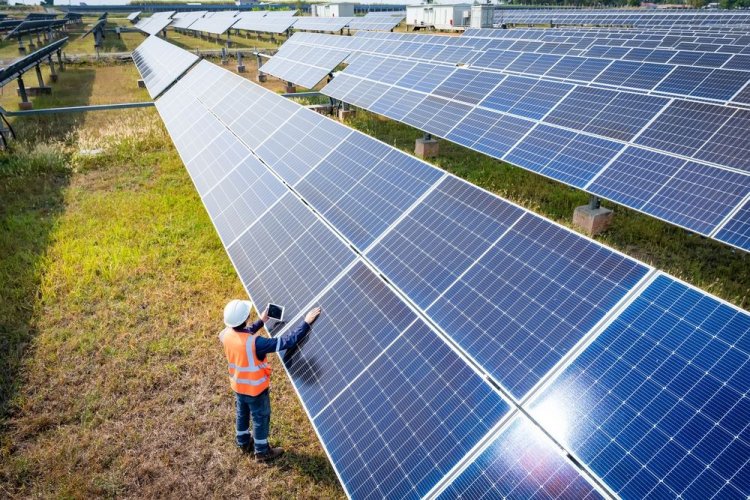
During June, solar power stations in the European Union generated a record 52 TWh of energy. This accounts for 25 per cent of the bloc’s total electricity generation. The previous record was set in May of this year, but the amount of energy generated was 5 TWh lower.
This was reported by Euronews.
The undisputed leader
Solar power has overtaken all other sources of generation — both ‘clean’ and fossil fuel-based. During the month, nuclear power generated 21 per cent of the energy, gas 15 per cent, wind 14 per cent, hydro 12 per cent, and coal 8 per cent.
This is only the third time in recent years that solar power has become the largest single source for the EU. However, in terms of generation volumes, June 2026 surpassed both May of this year and June 2025.
“In just a few years, solar power has gone from being a minor player to a key part of the European energy system, as governments and citizens seek affordable and quick-to-install domestic energy sources,” noted Chris Rosslow, senior analyst at the Ember think tank.
By way of comparison, five years ago, in June 2021, solar power generated 10 per cent of the EU’s electricity (21 TWh).

Highest Growth
Over the past five years, the share of solar energy in use has increased by about one-fifth annually. This is the fastest growth rate, primarily driven by the commissioning of new capacity. In 2025 alone, 65.1 GW were added.
High generation coincided with increased electricity demand due to heat waves. In part, it was the sun that not only raised temperatures but also provided the energy needed for cooling buildings.
Regional Dynamics
This year, as many as 18 EU countries have already set their own records for solar generation. Among them is Spain, where in June solar power plants provided 34% of electricity production. Since 2019, the capacities of both wind and solar power plants there have doubled, adding over 40 GW.
This directly impacted consumer bills. Electricity prices fell here even when they were rising in other countries due to the war in Iran. According to Ember, every household saved 10 euros per month, even as the world faced a fuel crisis.
The solar boom also affected emissions. While the average European emits 1.3 t of CO2 per year, for Spaniards this figure is 0.9 t.
Germany became one of the frontrunners in this segment. There, solar provided 33% of generation in May and a full 36% in June.
Germany is also home to the largest solar park in the EU, consisting of more than 500 ha of panels installed on an ex-coal mining site.
Ordinary Germans prefer panels on roofs, balconies, and terraces, also making their own contribution to generation. In many EU countries, such systems can be bought simply in a store or online. Experts note that the average payback period for a system is between two and six years depending on price and installation location.
Poland has also demonstrated significant progress. In June, solar power plants met 24% of its generation needs. As of 2025, the country had installed 23 GW of solar capacity, up from just 2 GW five years earlier.
EcoPolitic reported that during 2025, 1.5 GW of new solar generation capacity was installed in Ukraine. The previous year, this increase amounted to 800 MW.
Overall, last year, renewable energy provided 11% of electricity generation for Ukraine. Solar energy led the way, accounting for a 78% share among all "green" sources.