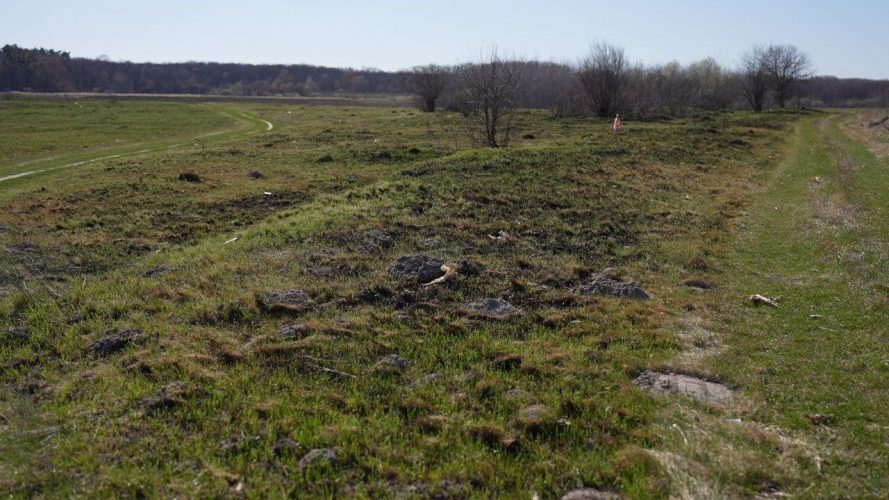
In the village of Sosonka in Vinnytsia Oblast, the company Inter-Oil Trade LLC plans to extract sand. However, the community opposes the quarry—residents fear soil destabilization, water loss, and the reopening of a cattle burial ground containing anthrax. The company, however, dismisses all these risks, claiming that the public is being misinformed.
This was reported by the media outlet Suspilne.
An auction with irregularities?
A special permit for 20 years of subsoil use was sold at auction on October 15, 2025, for 10 million hryvnias. The winner of the State Geological Service’s auction was Inter-Oil Trade LLC.
That same year, deputies of the Stryzhav community began fighting to have this decision invalidated, as the community had not approved the development of the quarry. Formally, this is not a violation of the law, since at the end of 2022, some prior approvals were revoked by parliament to expedite the issuance of special permits for extraction.
However, the land that the state leased for extraction is currently leased by community residents. This is according to Mykhailo Demchenko, the head of the Stryzhavska community. Consequently, the village council filed a lawsuit with the Kyiv Commercial Court. As early as March of this year, criminal proceedings were initiated, and the court banned sand extraction until the case is resolved on its merits.
However, according to residents, work nevertheless began on March 12.
The community fears the consequences
Suspilne correspondents spoke with local residents. They are concerned that quarry development is allegedly too close to homes. They emphasize that soils here are unstable quicksands, so extraction may damage residential buildings and lead to water loss.
Another risk factor is anthrax. According to residents, back in the 1960s, during a mass livestock die-off, remains of infected animals from across the district were buried on the site of the future excavations.
Experts clarify that anthrax spores may remain active for up to 100 years, continuing to pose a threat to human life.
Protected area
Another factor is the threat to environmental conservation. Environmental activists claim this territory is part of the Emerald Network. The Desna River flows near the future quarry site.
“Mineral resources will be extracted, the water level will drop significantly, and this will affect the water balance of the river itself. Consequently, it will affect changes in biodiversity. A large percentage of all species in this area will be destroyed. These cattle burial sites, all of this will enter the Vinnytsia city water intake,” emphasized Nataliya Shybinska, head of the YaVir regional association of environment defenders.
Environmental impact assessment procedure begins
LLC “Inter-Oil Trade” has begun the environmental impact assessment procedure. Information has been posted on the Stryzhavka community website stating that residents can familiarize themselves with the company’s plans and submit comments to the Ministry of Economy, Environment, and Agriculture of Ukraine.
Company’s position
The company responded to the accusations from the community. In particular, “Inter-Oil Trade” claims that there is no burial site of infected animals above the deposit. According to the company, the distance to the boundary of the cattle burial ground is 500 m.
The article cites a response from the State Service of Ukraine for Food Safety and Consumer Protection, which inspected the site together with law enforcement officials and local government representatives. In short, the commission was unable to determine the boundaries of the animal burial site. There is no animal burial ground on the extraction site itself that complies with regulations.
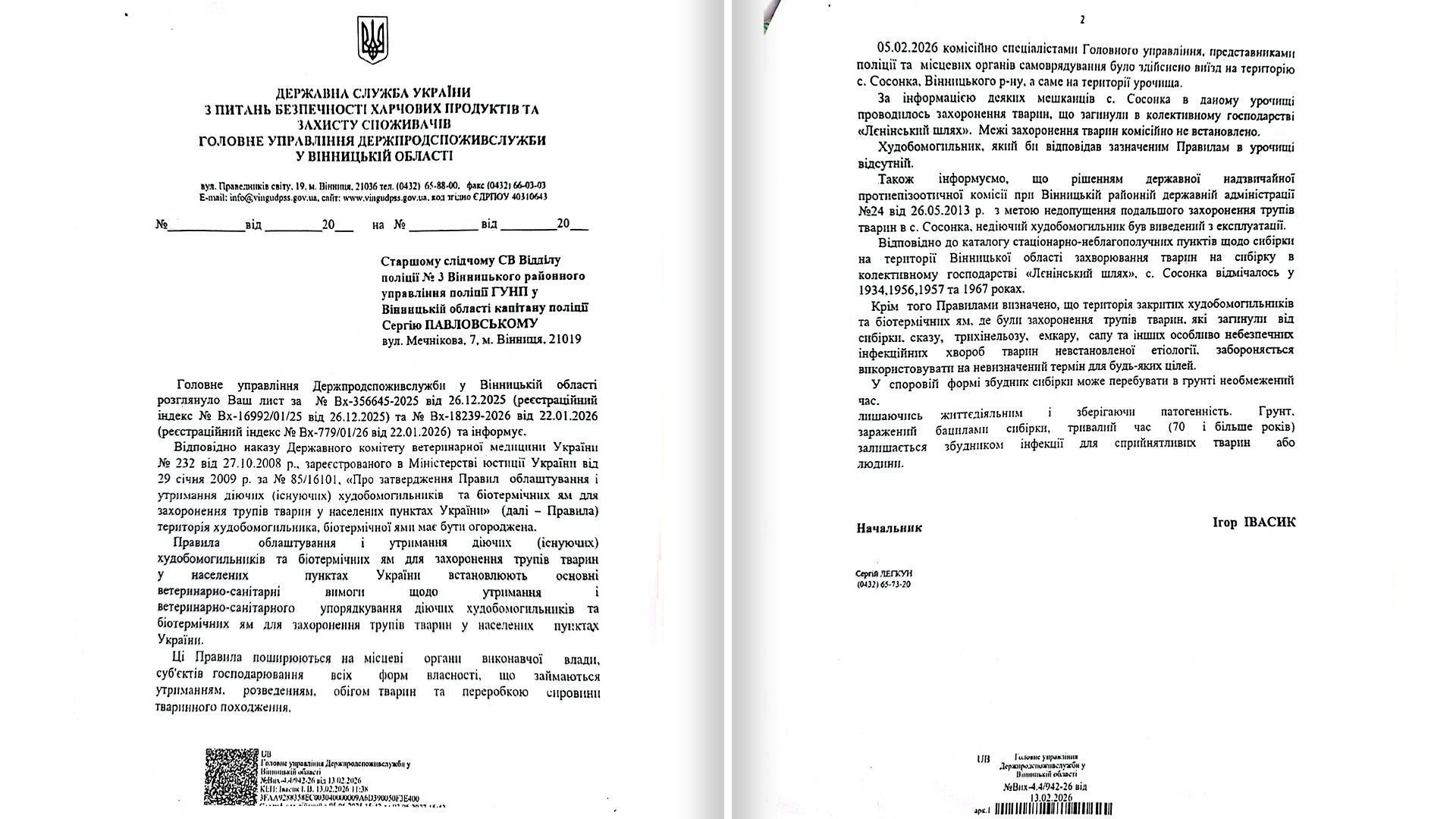
Response of the State Service of Ukraine on Food Safety and Consumer Protection
Regarding the preparatory works that upset residents, the company assured that raspberries and strawberries are planned to be grown on the site, not sand extraction.
“Without understanding the situation, the head of the territorial community organised people for a protest. People were told that sand extraction would take place at this specific site. This is absolutely untrue. The company ‘Inter-Oil Trade’ has nothing to do with these 7 hectares,” explained company representative Serhii Demchenko.
The deposit itself is located 1,000 meters from the residential area, not 100 meters as claimed by the residents.
Regarding the tenants, the company noted that they are relatives of the community head and employees of the settlement council. Therefore, “Inter-Oil Trade” is currently unable to extract minerals there.
Concerning whether the area belongs to the Emerald Network, the company refers to the response of the State Environmental Inspectorate of Ukraine, which does not contain any information about land use restrictions. The Ministry of Economy, Environment and Agriculture provided a similar response.
EcoPolitic previously reported that the waste processing plant in Zhytomyr may cease operations. The reason is that local authorities do not want to revise the waste management tariffs approved in 2022.