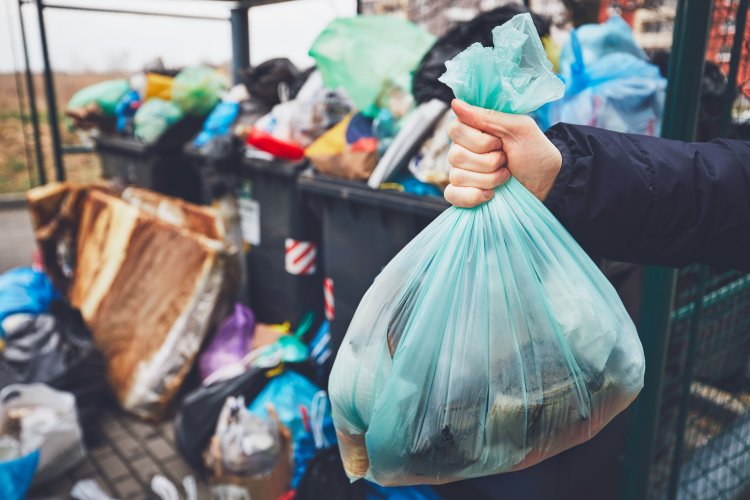
In December 2025, Kropyvnytskyi launched a program for separate waste collection. However, the results of the first month show that residents have not yet developed environmentally friendly habits—people either do not sort waste or do so only partially.
This was reported by the First Electronic Newspaper.
Limited urban space
Containers for dry waste marked "Valuable Waste" were installed near 53 high-rise buildings, next to regular bins. This makes it possible to separate plastic, glass, metal, and paper from other waste.
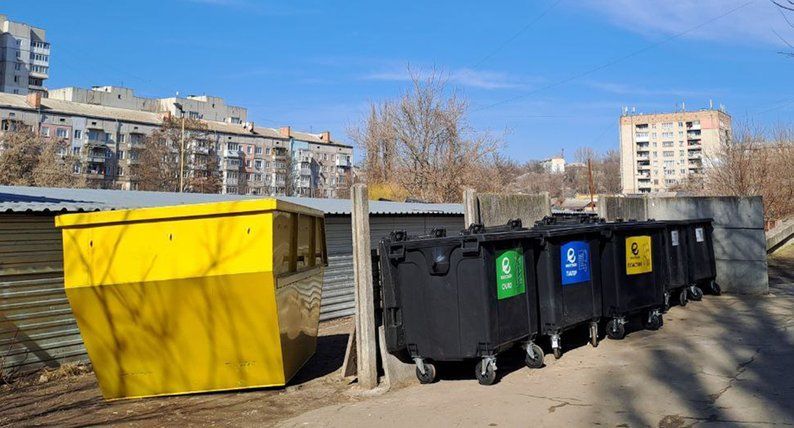
Source: Suspilne Kropyvnytskyi.
The key problem for setting up full-fledged sites for separate collection is the outdated standards according to which residential areas were designed.
Most of the existing garbage dumps were designed for only two or three containers. A much larger area is needed to set up a fully-fledged modern collection system. This involves installing separate bins for plastic, glass, paper, metal, organic, mixed, and hazardous waste.
The city's beautification rules prohibit the relocation of existing sites. Expanding them is also difficult, as there are a number of restrictions on accessibility and safety.
“In this situation, at the initial stage, the city is offered a European two-level model, which involves sorting waste into two categories: dry (paper, plastic, metal, glass) and wet (food and organic waste). Containers will be placed next to the buildings, and residents will be able to take out sorted waste at any time,” – said Roman Ivaniuk, CEO of “Ekostyle” LLC.
Residents' unwillingness
The residents of Kropyvnytskyi were gradually prepared for the introduction of the new waste collection system. Back in the spring of 2025, waste collection was tested in the form of an educational campaign lasting two months. According to Roman Ivanyuk, people did not take the innovation very seriously—only the presence of company employees ensured that the "right" container was chosen. But without supervision, the bins were filled "as convenient," without sorting.
When separate collection was launched in full, the situation did not change. At least, these are the results of the first month of the program.
“A significant portion of the containers for 'valuable waste' are filled with organic and household waste, which indicates an unwillingness to sort or insufficient awareness despite active communications by the company on all possible social media platforms and in the mass media,” said the company's CEO.
He also shared a few more interesting observations. In some districts, the containers for "valuable waste" remain empty, which could indicate that recyclables are simply being taken away by outsiders. At several collection sites, residents are already sorting waste properly, but the amount of plastic, glass, and other inorganic waste is less than could potentially be generated in the area.
Simple steps to help everyone learn how to sort their waste were previously outlined by EcoPolitics.