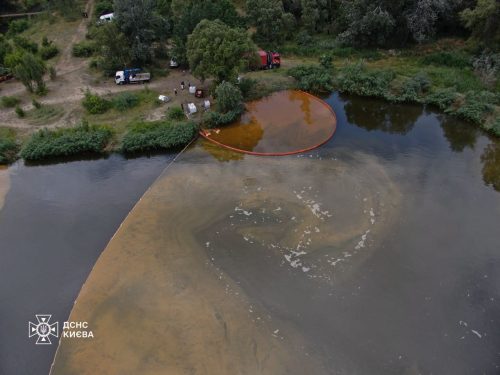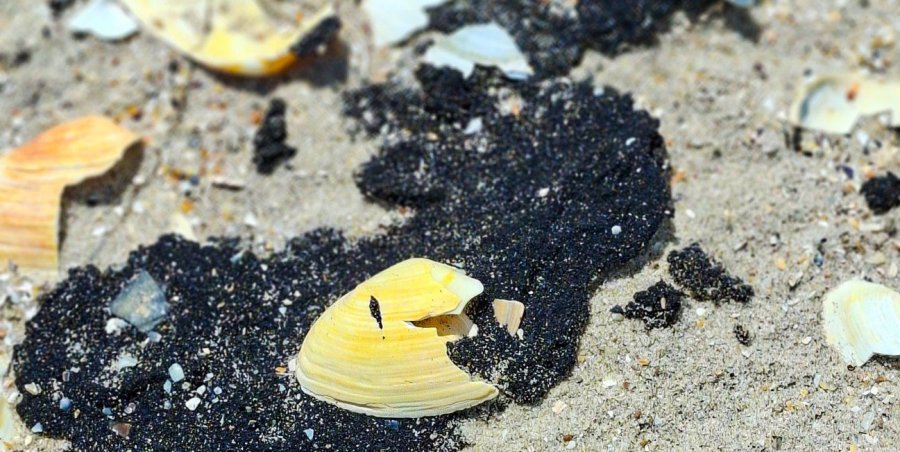
For more than 3 months, hundreds of tons of fuel oil have been lying on the sandbar near the Danube Biosphere Reserve in Odesa region, which floated there after the accident of Russian tankers.
This was reported on Facebook by Ivan Rusev, an ecologist and head of the research department of the Tuzly Estuaries National Nature Park.
According to him, the contaminated area is located near the Katranka recreational complex and the Tuzly Estuaries National Park on the territory of the Lyman community in Bilhorod-Dnistrovskyi district. The ecologist said that more than 100 days ago, the municipal service of the Lyman community partially collected several hundred kilograms of fuel oil that fell into the Black Sea from Russian tankers on December 15, 2024, but a lot of pollutants still remained. He showed in the video what is happening now on the polluted coast.
Ivan Rusev says that the employees of Tuzly Estuaries immediately informed the State Ecological Inspectorate of the Southwestern District about the situation. But despite this, the environmental problem has not yet been eliminated: fuel oil continues to gradually pollute the “unique natural area of sandy spill”.
The ecologist reminded that this aggressive pollutant melts with rising temperatures and increases the scale of pollution.
“Meanwhile, the State Environmental Inspectorate, which is obliged to monitor the state of environmental cleanup on behalf of the state, is completely failing to fulfill its basic functions,” the scientist was outraged.
In early May, EcoPolitics reported that employees of the Tuzly Estuaries National Park had again found fuel oil fractions on their sandy embankment.