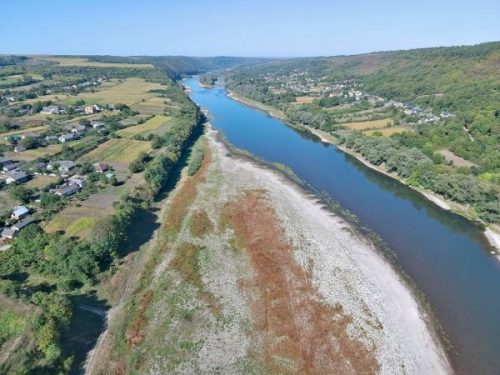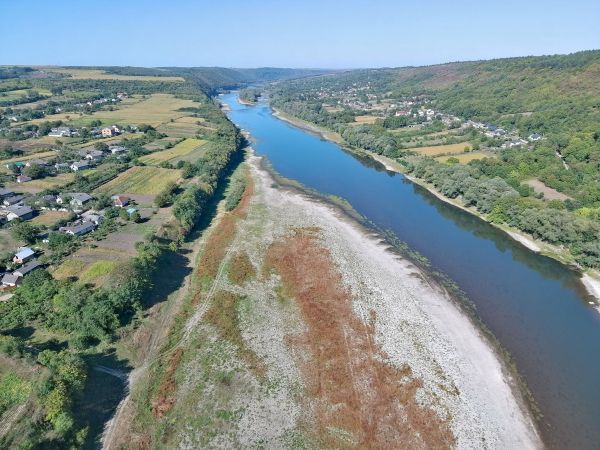
The water shortage in Ukraine has not come to an end with the arrival of autumn and the increase in local rainfall. Meteorologists’ warnings about the critical low water levels in Ukrainian rivers, particularly those in the west, remain valid until at least 30 September.
This was reported by the Ukrainian Hydrometeorological Centre.
Highest danger level
Water levels in a number of rivers will continue to fall, in some places to below historical lows. This applies to:
- the Dniester river basin (Lviv, Ivano-Frankivsk, Ternopil and Khmelnytskyi regions);
- the Xian sub-basin (Lviv Oblast);
- the Western Bug sub-basin (Lviv and Volyn regions);
- the Tisa sub-basin (Zakarpattia Oblast).
Meteorologists add that water levels in rivers covered with vegetation will continue to fall to low-water levels and below. In some areas, the flow may cease entirely.
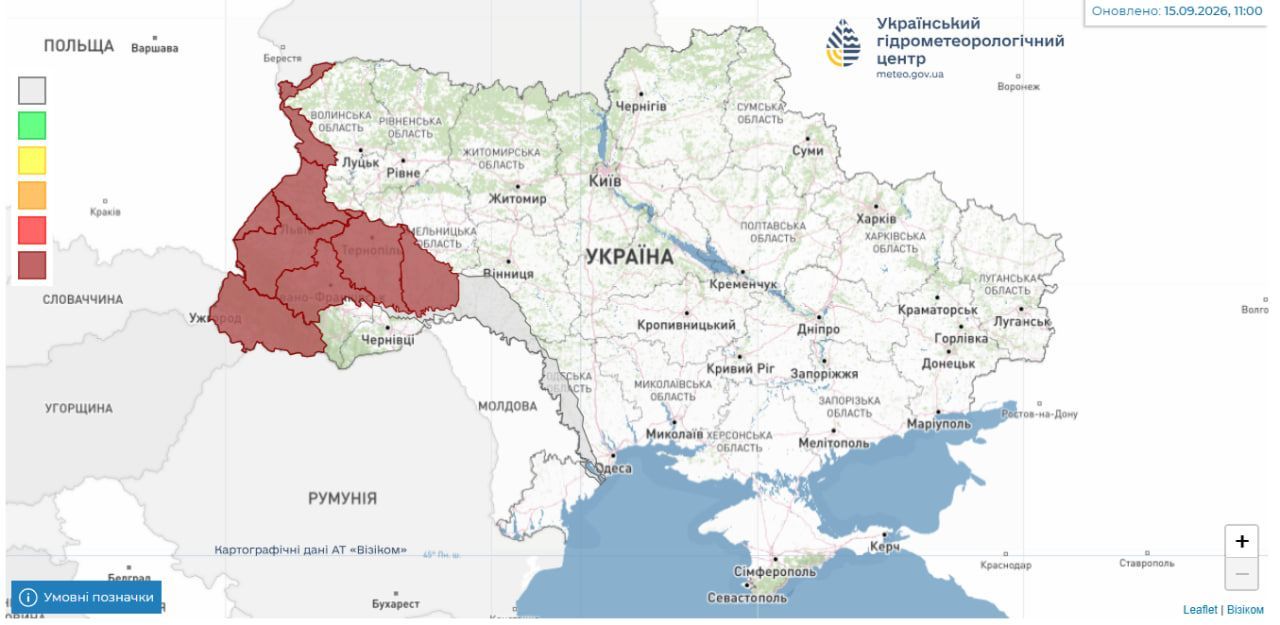
Source: Ukrainian Hydrometeorological Centre
Causes and consequences
The State Water Agency stated that the low water levels were caused by a combination of several factors: high temperatures, a lack of rainfall and the effects of military operations.
This year, for the first time, signs of critical low water levels began to be recorded as early as the start of summer — in June. This refers to a critical drop in river water levels, which is already being described as low water, that is, a hydrological drought. A quantitative indicator of this phenomenon is a reduction in water flow to 20 per cent of the monthly average.
The situation on the Dniester is the worst; low water levels have been recorded there for the fourth month running. Since 30 April, the inflow into the Dniester Reservoir has been lower than the outflow. Between 9 and 11 September, an all-time low of 26 cubic metres per second was recorded.
The situation is also affecting Moldova. An extraordinary meeting of the Commission on the Sustainable Use and Protection of the Dniester River Basin was held recently. No agreement was reached on further reductions in discharges.
EcoPolitic reported that, due to a water shortage, water use had been severely restricted for 300 businesses. These included not only agricultural and industrial enterprises, but also municipal water supply companies, notably those in Uzhhorod and Chernivtsi.