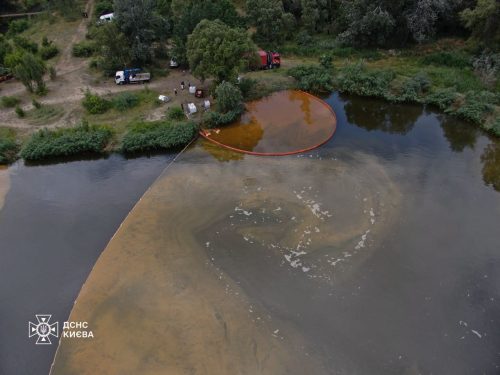
At the upper water quality monitoring points of the Seym River up to the village of Mutyn, experts observe further deterioration in water quality: chemical oxygen consumption and ammonium nitrogen have increased, and dissolved oxygen content has decreased.
The Ministry of Environmental Protection and Natural Resources of Ukraine provides up-to-date information on the pollution of the Seim and Desna rivers.
The ministry informed that in Chumakove village, chemical oxygen demand (COD) increased from 84.2 to 104.2 mg/dm3, while the norm is 30 mg/dm3, and the content of suspended solids increased. Ammonium nitrogen increased from 1.75 to 2.25 mg/dm3, while the norm is 2 mg/dm3, and dissolved oxygen decreased from 3.6 to 1.36 mg/dm3, while the norm is at least 4 mg/dm3.
At the meeting of the Sumy Regional Commission on Technogenic and Environmental Safety and Emergencies, the possible causes of the water quality deterioration and ways to localize the pollution of the Seim River were discussed. It was decided:
- clean the surface of the water mirror from solid sediments to minimize sources of additional pollution;
- consider all possible options for absorption of pollution with the involvement of scientists;
- regularly inform the population about the situation.
In Chernihiv Oblast, water quality in the Seim River has improved:
- the content of oxygen dissolved in water increased to 7.55-7.96 mg/dm3 (with a norm of 4 mg/dm3);
- the indicator of chemical oxygen consumption is within 29-30 mg/dm3;
- there are no excesses for total nitrogen, total iron, nitrites, phosphates and chlorides.
The water quality of the Desna River in Chernihiv Oblast has also improved at all points. At the monitoring point in the city of Oster, the indicators are as follows:
- chemical oxygen consumption is 32 mg/dm3 (with a norm of 30 mg/dm3);
- dissolved oxygen content – 7.68 mg/dm3;
- there are no excesses for ammonium nitrogen, nitrites, phosphates and chlorides at all observation points;
- in terms of manganese content, an excess of up to 1.5 times was observed.
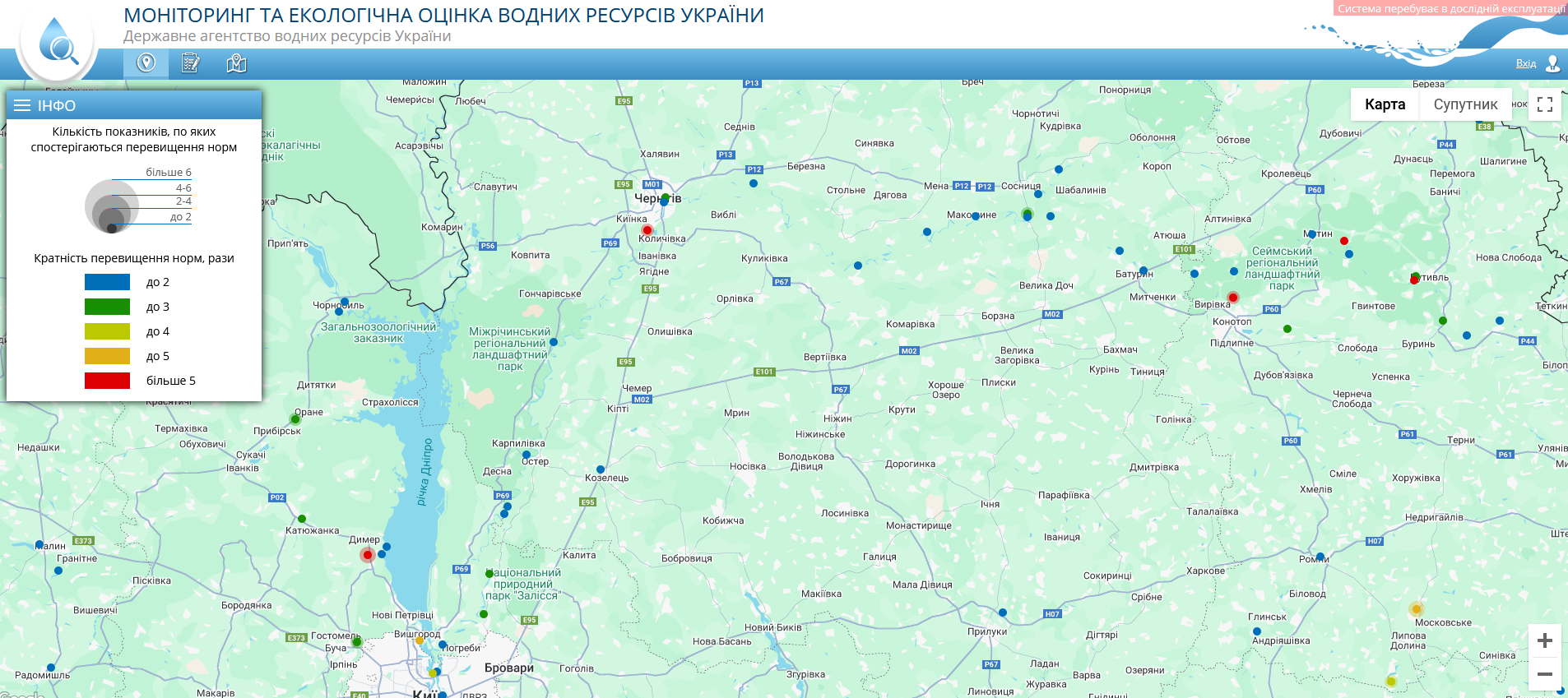
Screenshot from monitoring.davr.gov.ua.
Experts are sure that there are currently no risks for Kyiv's water supply.
EcoPolitic already talked about the pollution of the Seim and Desna rivers, which arose in the Kursk region of Russia in mid-August, quickly moved to the territory of Ukraine and caused a large-scale environmental disaster.