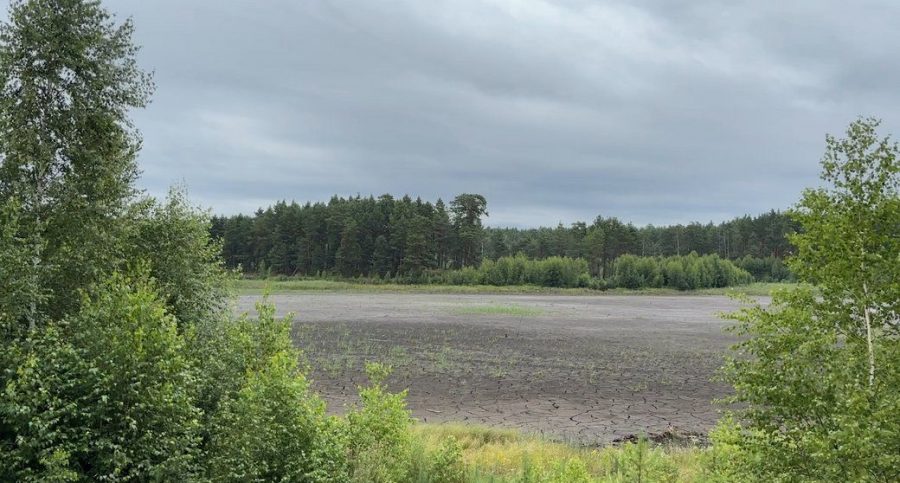
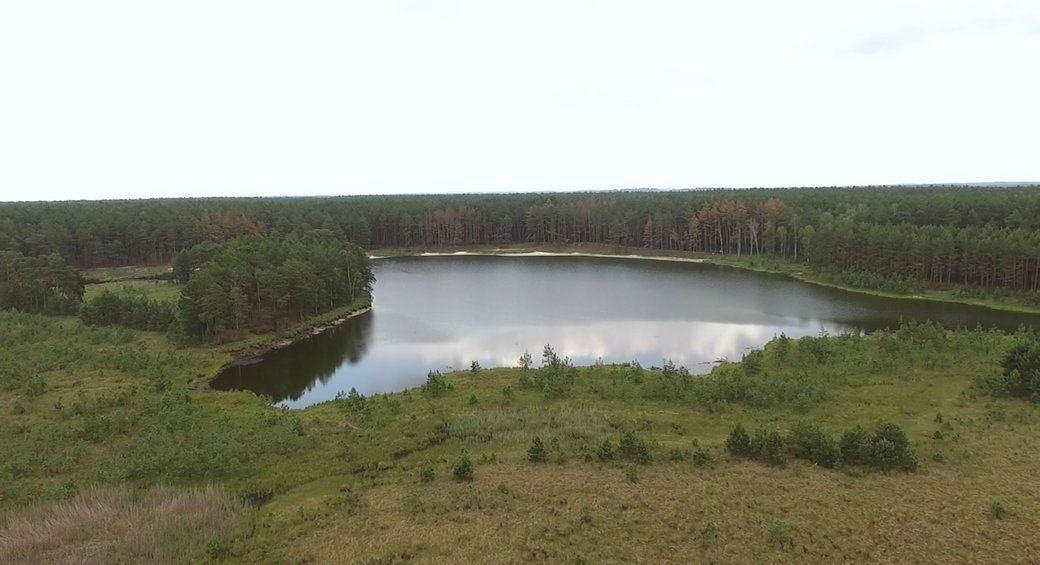
The Sacred Lake, situated in the forest of the ‘Male Polissya’ National Park, has finally run dry. This hydrological natural monument of national importance did not disappear overnight. However, it is currently impossible to remedy the situation.
This was reported by the media outlet Suspilne.
The gradual approach of disaster
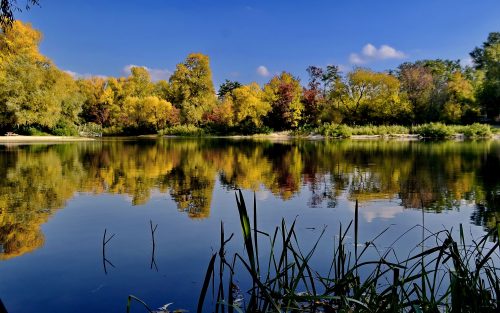
The Sacred Lake was over 10,000 years old. It was formed following the retreat of the glaciers and had since been fed by surface and groundwater. As far back as the early 2000s, it was popular with people as a place to relax.
The lake was shallow, with a maximum depth of around 5 metres. However, over time, it began to shrink steadily.
“We began to observe the process of the lake’s shallowing right from the start of the national park’s creation – in the summer of 2014. Although even by that time, the water level was significantly lower than it had been before the park was established,” said Oleksii Bilovskyi, chief forester of the “Male Polissya” National Nature Park.
Sviate Lake in the early 2000s. Source: Suspilne
Reasons for the disappearance of the waterbody
Among local residents, there is an opinion that industrial activity is to blame for the disappearance of Sviate Lake – specifically, quarries located near the lake, as well as a water intake facility. The latter appeared in 2016.
However, experts are convinced that the reason lies in a combination of interconnected factors affecting the region’s water security. At the root of these changes is climate change, which, due to rising temperatures and reduced precipitation, leads to declining groundwater levels.
This inevitably impacted the lake, as it was fed by surface water. All precipitation – now scarcer – flowed into the lake, as did water from a neighboring swamp, which is also drying up.
“Ponds and lakes in villages are drying up, small rivers, streams, and watercourses are disappearing. In the park area we are also witnessing the drying up of all the swamps once present here,” Oleksii Bilovskyi told journalists.
Rectifying the situation is impossible
Along with the lake, regional rare plant species have disappeared as well. Among them are white water lily and Menyanthes trifoliata (bogbean). The forester emphasized that, unfortunately, nothing can be done. Above all, this is a nature monument of national significance, where any economic activity is prohibited. But that is not the only reason.
Installing a dredger or clearing the waterbody would not be effective. According to Bilovskyi, the problem is that there simply is not enough water here.
EcoPolitic previously reported on the alarming drying of floodplain lakes in the Danube Delta. In May, the government decided to address the situation by forcibly filling them with water.
Recently, the State Emergency Service of Ukraine (SESU) reported the completion of petroleum product removal from Kyrylivske Lake in Kyiv. Over 300 tonnes of fuel and lubricants had entered the waterbody due to a Russian attack on a gas station that occurred on July 2.