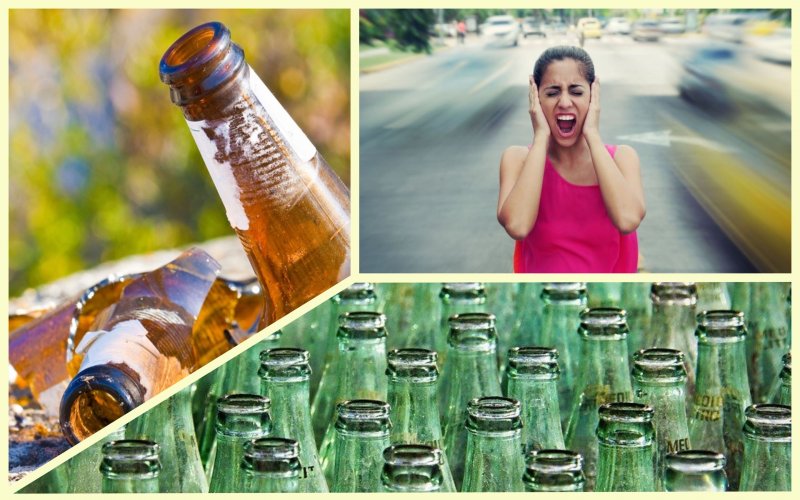
The residents of Poltava were offered an original psychological release by breaking bottles

The residents of Poltava were offered an original psychological release by breaking bottles shutterstock
Katerina Belousova

People will be provided with safety glasses and a hammer free of charge

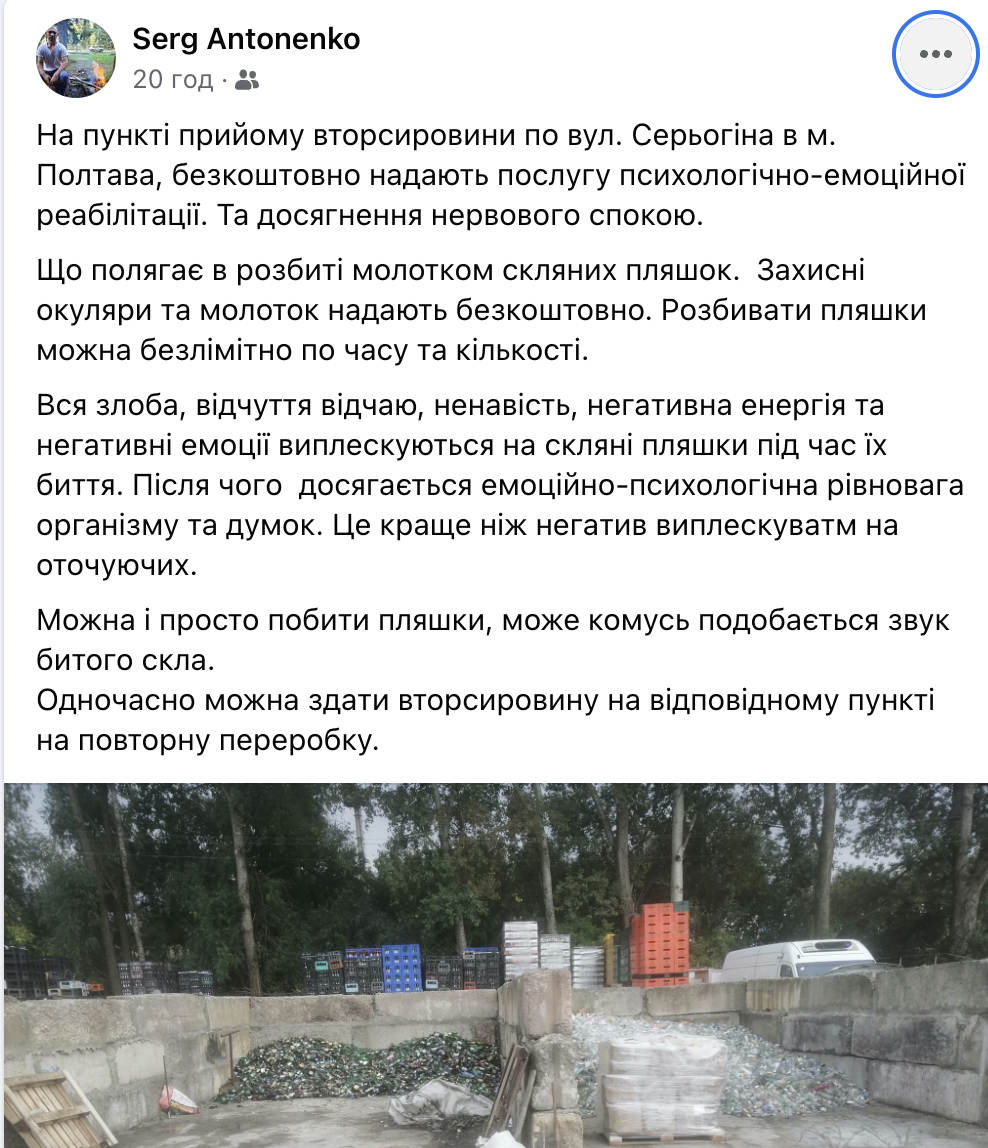
In Poltava, the point of reception of secondary raw materials offers a free service of psychological and emotional rehabilitation, namely, breaking glass bottles with a hammer.

Such a practice helps to splash negative emotions on bottles, and not on close people and acquaintances, writes Serhiy Antonenko, coordinator of the public organization "Batteries, give up" on Facebook.

He explained that when bottles are broken, all malice, feelings of despair, hatred, negative energy and negative emotions are released. After that, people reach emotional and psychological balance.
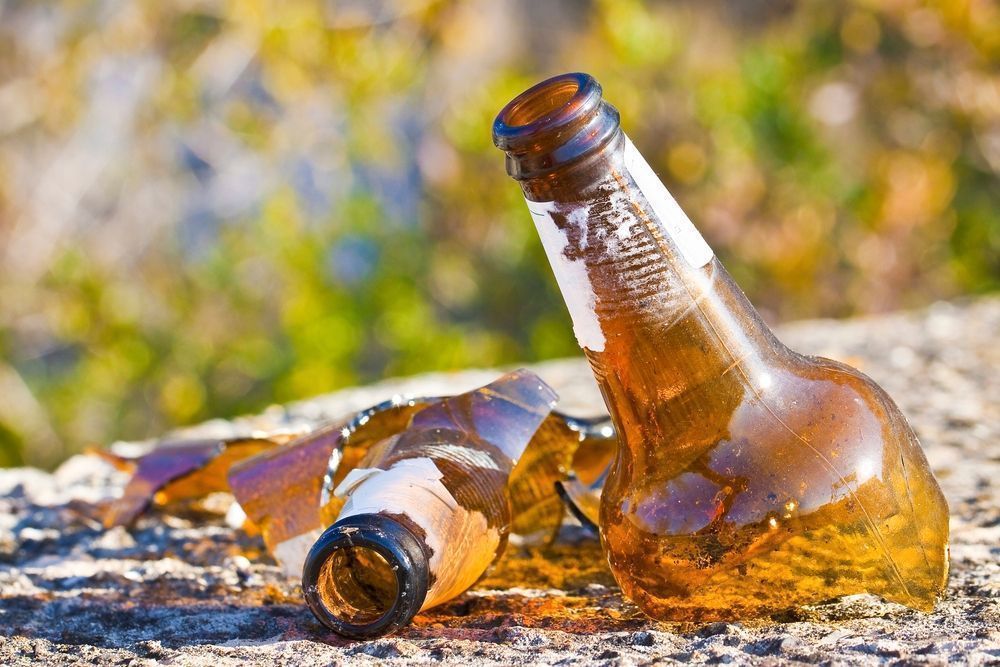
shutterstock

Safety glasses and a hammer are provided free of charge by reception staff. And you can hit bottles unlimitedly in terms of time and quantity.

"You can just break bottles, maybe someone likes the sound of broken glass. At the same time, you can hand over the recyclables at the appropriate point for reprocessing," Antonenko writes.

The reception point is located on Seryogina Street.
facebook.com/profile.php?id=100001552028514

Earlier, EcoPolitic wrote, that you can recycle glass many times. Every 10% of such glass reduces gas consumption by 3%, and as a result of processing, there is absolutely no waste left.

As EcoPolitic previously reported, in Lviv in Zamarstynivskyi Park a sorting ship is installed, which will help to collect 6 types of waste separately.
Related
Where to dispose of hazardous household waste in Lviv, Poltava and Khmelnytskyi: the eco-bus timetable

The list of waste accepted for recycling by the eco-bus varies from city to city

Millions of tonnes of food go to waste: how much food does the average EU resident throw away?

Most food waste is generated in households – it is thrown away by residents themselves, rather than by restaurants or supermarkets

The Government has approved the Circular Economy Development Strategy up to 2035

The document covers measures ranging from the production of biomethane to the introduction of end-of-life collection schemes for plastics, clothing and batteries

Hundreds of tonnes of rubbish in Uman: how the city is cleaned up during the Hasidic pilgrimage

The final clean-up will be completed in one and a half to two weeks