As of the morning of 2 October, air quality in most regional centres across Ukraine is fairly good and poses no threat to people. However, there are also towns with moderate levels of pollution, mainly in western Ukraine.
This is evidenced by data from the international monitoring platform IQAir.
Based on average figures, air quality in Kyiv is assessed as good. The key pollutant is PM2.5 fine particulate matter. Its concentration stands at 7.9 µg/m3. The World Health Organisation has set the upper limit for this indicator at As of the morning of 2 October, air quality in most regional centres across Ukraine is fairly good and poses no threat to people. However, there are also towns with moderate levels of pollution, mainly in western Ukraine.
This is evidenced by data from the international monitoring platform IQAir.
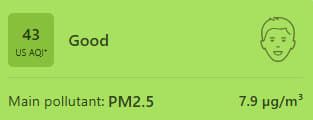
Based on average figures, air quality in Kyiv is rated as good. The key pollutant is PM2.5 particulate matter. Its concentration stands at 7.9 µg/m3. The World Health Organisation has set the upper limit for this indicator at 5.5 µg/m3.
However, there are also locations within the capital where pollution levels are moderate. These include Sichovykh Striltsiv Street, where particulate matter levels stand at 13.9 µg/m3, Kyrylivska Street (12.8 µg/m3), Hotkevych Street (9.8 µg/m³) and Horlivska Street (13 µg/m³).
In some towns and villages near the capital, the morning air is dangerously polluted. For example, in Velyki Dmytrovychi, the dust concentration stands at 133.7 µg/m3, which is more than 24 times the standard limit.
Moderate levels of pollution have been recorded in the following regional centres (with dust concentrations indicated):
- Rivne – 17.7 µg/m3;
- Ternopil – 12.5 µg/m3;
- Ivano-Frankivsk – 12 µg/m3;
- Vinnytsia – 11.5 µg/m3;
- Chernivtsi – 9.1 µg/m3.
In the other regional centres, IQAir classifies the pollution level as low:
- Dnipro – 9 µg/m3;
- Odessa – 8.4 µg/m3;
- Zhytomyr – 7.8 µg/m3;
- Kherson – 6.8 µg/m3;
- Zaporizhzhia – 6 µg/m3;
- Khmelnytskyi – 5.4 µg/m3;
- Lviv – 5.3 µg/m3;
- Chernihiv – 5.2 µg/m3;
- Mykolaiv – 5 µg/m3;
- Lutsk – 4.9 µg/m3;
- Cherkasy – 4.3 µg/m3;
- Kharkiv – 4.2 µg/m3;
- Poltava – 2.6 µg/m3;
- Uzhhorod – 2.6 µg/m3.
It should be noted that enemy attacks are a factor in local pollution. Following attacks, pollutant levels near the impact site can be up to ten times higher than normal.5,5 мкг/м3.
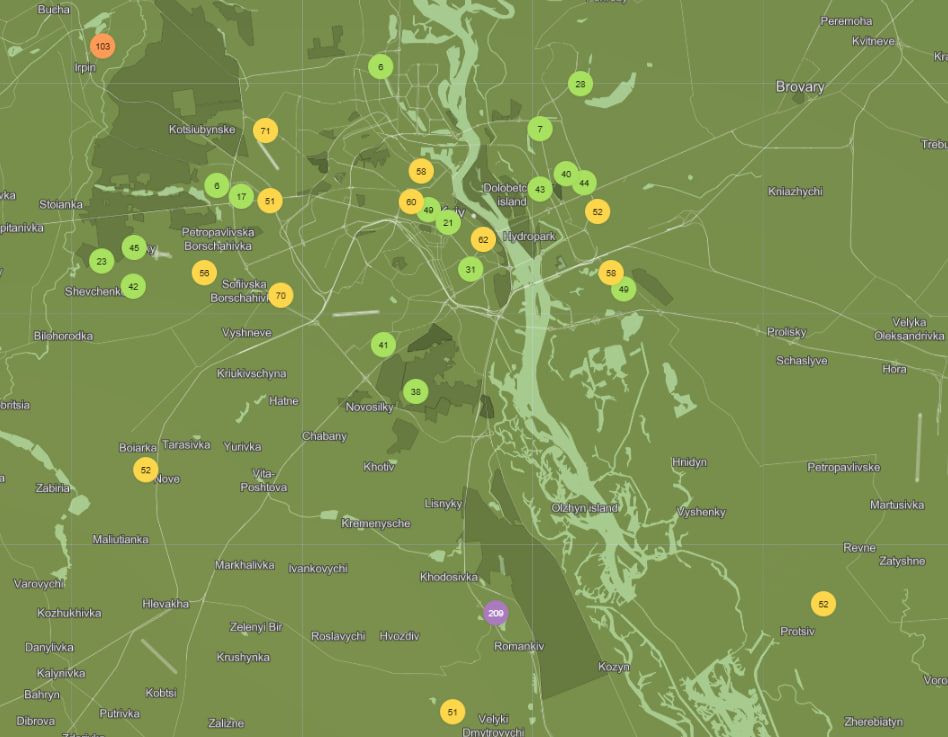
However, there are also locations within the capital where pollution levels are moderate. These include Sichovykh Striltsiv Street, where particulate matter levels stand at 13.9 µg/m3, Kyrylivska Street (12.8 µg/m3), Hotkevych Street (9.8 µg/m3) and Horlivska Street (13 µg/m3).
In some towns and villages near the capital, the morning air is dangerously polluted. For example, in Velyki Dmytrovychi, the dust concentration stands at 133.7 µg/m3, which is more than 24 times the standard limit.
Moderate levels of pollution have been recorded in the following regional centres (with dust concentrations indicated):
- Rivne – 17.7 µg/m3;
- Ternopil – 12.5 µg/m3;
- Ivano-Frankivsk – 12 µg/m3;
- Vinnytsia – 11.5 µg/m3;
- Chernivtsi – 9.1 µg/m3.
In the other regional centres, IQAir classifies the pollution level as low:
- Dnipro – 9 µg/m3;
- Odessa – 8.4 µg/m3;
- Zhytomyr – 7.8 µg/m3;
- Kherson – 6.8 µg/m3;
- Zaporizhzhia – 6 µg/m3;
- Khmelnytskyi – 5.4 µg/m3;
- Lviv – 5.3 µg/m3;
- Chernihiv – 5.2 µg/m3;
- Mykolaiv – 5 µg/m3;
- Lutsk – 4.9 µg/m3;
- Cherkasy – 4.3 µg/m3;
- Kharkiv – 4.2 µg/m3;
- Poltava – 2.6 µg/m3;
- Uzhhorod – 2.6 µg/m3.
It should be noted that enemy attacks are a factor in local pollution. Following attacks, pollutant levels near the impact site can be up to ten times higher than normal.