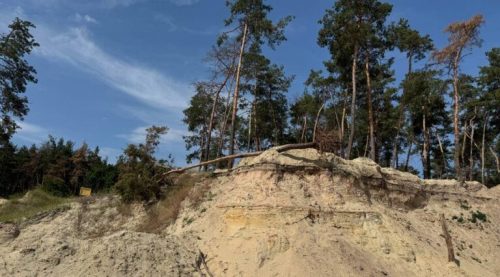
Three residents of Kirovohrad region organized the illegal felling of trees in shelterbelts in the territory of Ketrysanivska territorial community in Kropyvnytskyi district.
The organizer and two of his accomplices were notified of suspicion by prosecutors, the press service of the Kirovohrad Regional Prosecutor's Office reports.
It is noted that the loggers did not have any permits. They are suspected under Part 4 of Article 246 of the Criminal Code – illegal logging.
"The wood was later cut down and sold to local residents," the press service said.
The message added that black loggers face five to seven years in prison. The investigation is ongoing.
Earlier, EcoPolitic wrote, that in April eco-inspectors calculated more than 4.1 million UAH in damages for felling 586 trees along the highway near Veliko Andrusivska Territorial Community in Kirovohrad Oblast.
Previously, EcoPolitic analyzed what is destroying Ukrainian forests and what the Ministry of Environmental Protection and Natural Resources is doing to protect them. After all, in 2022, the amount of detected illegal logging amounted to 20.6 thousand m3, of which 76.6% was committed by undetected forest violators, and no one will be held responsible for this.