The content of oil and iron in drinking water exceeded 38 times near Kharkiv

The content of oil and iron in drinking water exceeded 38 times near Kharkiv
Katerina Belousova

Previously, the water quality was "good"

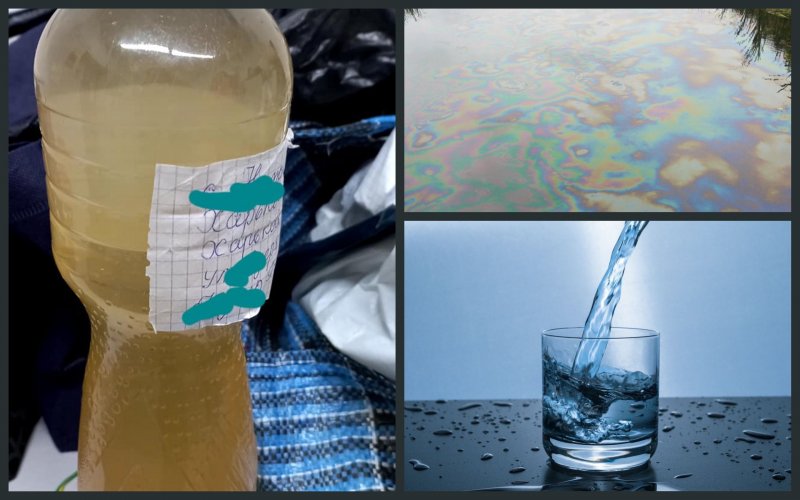
In the Kharkiv region, the water in households and the lake in the villages of Verkhnia and Nizhnya Ozeryana showed an excess of oil products by 11.8 times and iron by 37.7 times.

Specialists of the laboratory, which conducted a chemical analysis of the water, concluded that its quality does not meet drinking water standards, reports the Facebook community "News of Ozeryan".

The report emphasized that, according to local residents, the water quality was "good" before. Then it became brown, sticky, had an unpleasant smell, and an oily film began to form on its surface.

The authors said that the activists took water samples and sent them for analysis to an independent laboratory.

Exceeded maximum permissible concentrations were detected:

  • manganese – 0.084 mg/dm3 (norm – up to 0.05);
  • petroleum products – 0.118 mg/dm3 (norm – up to 0.01);
  • lead – 0.09 mg/dm3 (norm – up to 0.03);
  • cadmium – 0.01 mg/dm3 (norm – 0.0013);
  • total iron – 7.54 mg/dm3 (norm – up to 0.2).

As EcoPolitic reported before, in the Kharkiv region, in the villages of Verkhnya and Nizhnya Ozeryana, the water in households has become yellow and sticky, its surface is covered with an oily film, and the water has acquired an unpleasant smell. Local residents associate such changes with the activities of PrJSC "Ukrgazvydobutok".
Related
Communities in the Kharkiv region are refusing to allow environmentalists to establish protected areas

The Regional State Administration even went so far as to break the law by failing to provide either comments or approval of the applications

The Ukrainian government has approved 11 environmental documents: an overview of the key ones

This concerns the update of the National Pollutant Emission Control Plan (NPEC), the biodiversity conservation strategy, and European standards for monitoring new pollutants

Agenda for the meeting of the Verkhovna Rada’s Environmental Committee on 15 June

MPs will also discuss the conversion of "Forests of Ukraine" into a public limited company

Around a hundred organisations are calling for the Great Meadow to be recognised as a UNESCO World Heritage Site

In addition to gaining access to the historical site, the researchers also witnessed a remarkable restoration of a unique natural ecosystem