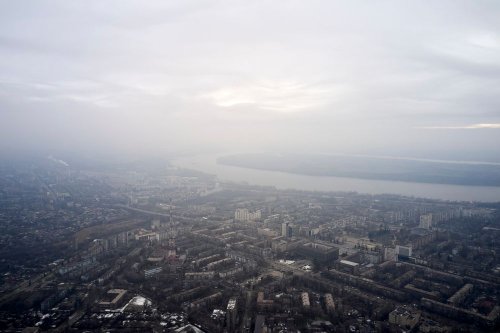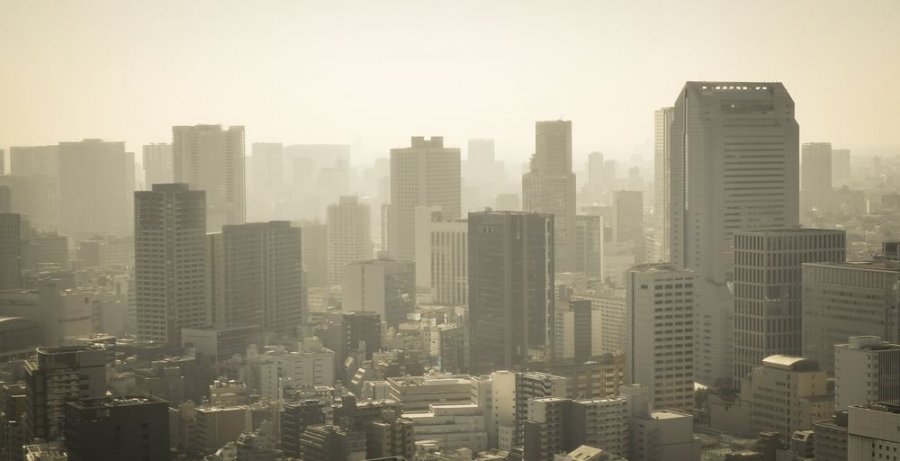
Generally speaking, on 8 September, no levels of pollution are recorded in Ukraine that could be harmful to vulnerable groups. However, in some places, the air is saturated with harmful substances due to fires and industrial emissions.
This is evidenced by data from the IQAir monitoring platform.
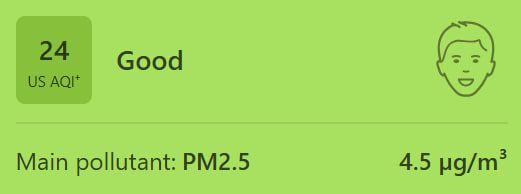
According to the average figures recorded by monitoring stations in various parts of the capital, air quality in Kyiv is good.
The concentration of the main pollutant — fine particulate matter of the PM2.5 fraction — is just 4.5 µg/m3. To put this into perspective, the upper limit of the standard, as estimated by the World Health Organisation, is 5.5 µg/m3.
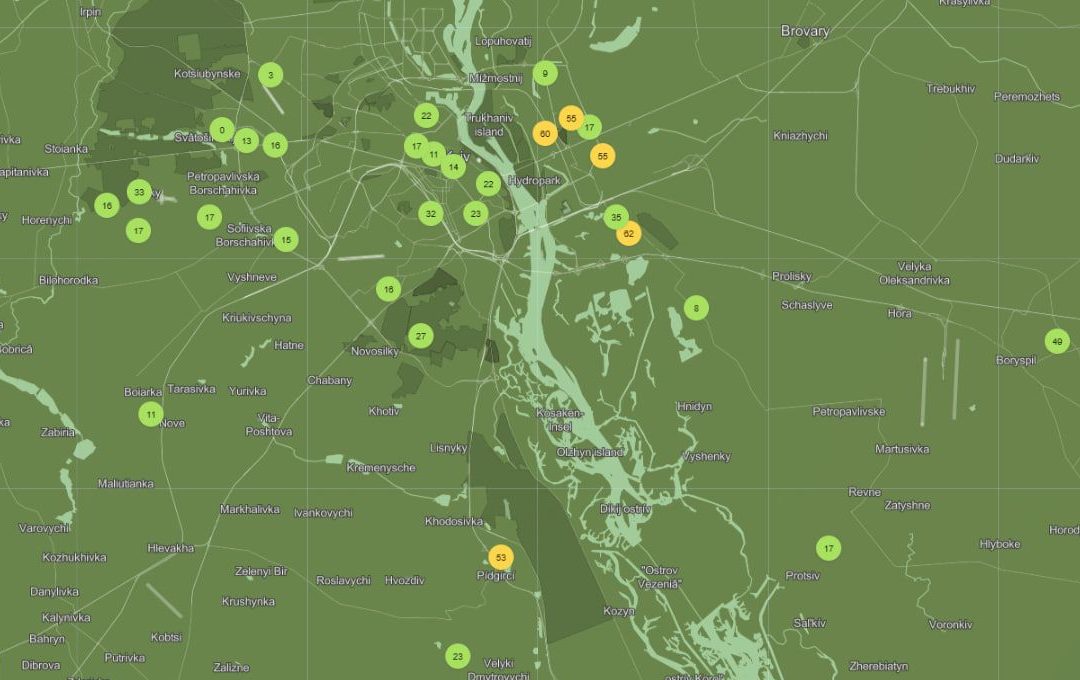
However, at several locations, air quality is in the ‘yellow’ zone, indicating moderate pollution. Specifically, the dust concentration on Hotkevych Street is 11 µg/m3, on Kakhovska Street — 14 µg/m3, and on Trostyanetska Street — 14.9 µg/m3.
As of 12:00, air quality is also good in all cities across Ukraine. These figures represent the average readings at designated monitoring stations.
The concentration of fine particulate matter in individual regional centres is as follows:
- Dnipro — 3 µg/m3;
- Odessa — 2.9 µg/m3;
- Lviv — 3.3 µg/m3;
- Kharkiv — 3 µg/m3;
- Zaporizhzhia — 3.8 µg/m3;
- Poltava — 2.7 µg/m3;
- Chernihiv — 4.1 µg/m3;
- Zhytomyr — 2.5 µg/m3;
- Vinnytsia — 2.9 µg/m3;
- Lutsk — 4.8 µg/m3;
- Rivne — 5.3 µg/m3;
- Ternopil — 4.7 µg/m3;
- Cherkasy — 3.1 µg/m3;
- Uzhhorod — 1.5 µg/m3.
Sources of emissions from fires have been recorded in the Kryvyi Rih and Zaporizhzhia regions, and a red alert regarding pollution from industrial emissions is currently in force for Kryvyi Rih.
EcoPolitic previously reported that Ukrainian scientists had investigated the impact of the war on air quality. You can find out more about this in this article.