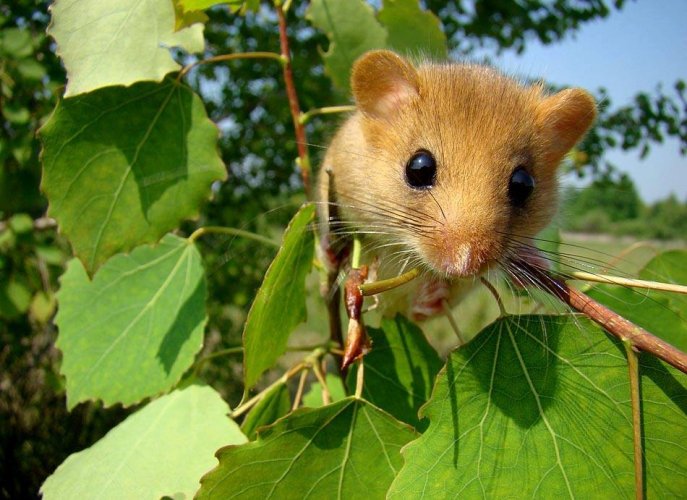
In the Rivne region, in the Nobel National Natural Park, scientists for the first time treated the woodpecker rodent, or hazel wolf, which is included in the European Red List.
This animal can protect its life by shedding its skin, reports District.Varash.
As you know, the woodpecker inhabits deciduous and mixed forests. She leads a nocturnal lifestyle: she sleeps during the day, and goes in search of food in the evening. The basis of the diet consists of fruits, berries and nuts.
"At the end of summer, the animal begins to look for a suitable place for the future wintering. Deep pits or large piles of fallen leaves are most often used. By autumn, the animal is covered with a relatively thick layer of fat, which will help it survive the cold winter," the article says.
When the woodpecker goes into hibernation, its breathing is reduced to 2-3 breaths per minute, and the body temperature drops from 34°-36°C to 0.25°-0.5°C. All metabolic processes in the body are reduced to a minimum.
The hazel wolf usually wakes up from hibernation in May, when the ambient temperature is higher than 20°C.
The woodpecker has few natural enemies and predators do not specifically hunt it. However, during winter hibernation, rodents are sometimes dug out of burrows or forest floor by wild pigs and red foxes.
"Nature provided an original method of protection for the woodpecker: if you sharply grab the animal by the tail, its thin skin will instantly fly off like a stocking, and the animal will be able to escape," the material said.
Earlier, EcoPolitic wrote, that in Transcarpathia in the Uzhan National Natural Park in the lens a red bison was caught in the camera trap, scientists also recorded a female with cubs in another area.
As EcoPolitic previously reported, in Kyiv, in Holosiivsky Park, utility workers installed 13 houses for bats (bat box) to preserve the population of these animals.