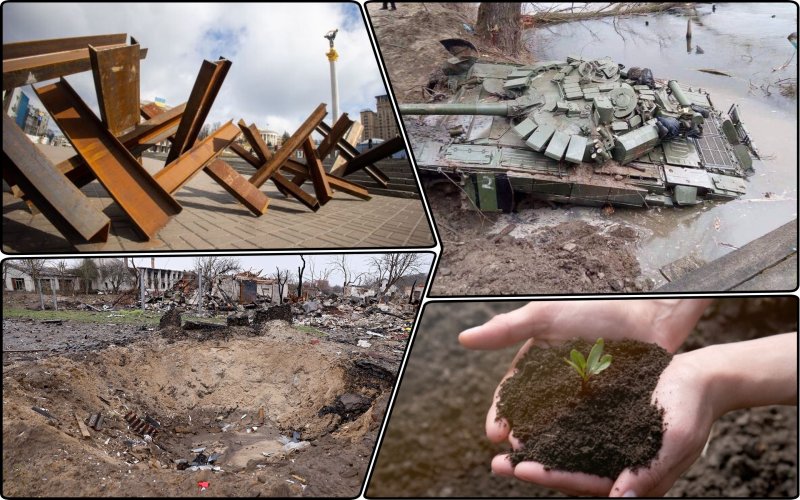
Research by scientists from the Kyiv Scientific Research Institute of Forensic Examinations (KSRIFE) showed that the water and soil of the Kyiv Region are contaminated with the remains of explosives, chemicals, and fuel and lubricants.
Experts use this data to develop recommendations to minimize the negative impact of war on the environment, HUBZ reports.
It is noted that the research was conducted after the de-occupation of the region and the detonation of the Kakhovskaya HPP. Among the potentially dangerous compounds, the following were found:
- remnants of explosives such as TNT and plastid;
- chemical residues, in particular nitrates and other poisonous substances;
- metal fragments of heavy equipment;
- fuel and lubricants.
KSRIFE emphasized that carbon dioxide and carbon dioxide, sulfur dioxide, soot, lead and its compounds, copper and nickel enter the air due to Russia's military aggression. This threatens people's health, because long-term exposure to such air pollution can lead to a general deterioration in the quality of life, a decrease in physical activity and an increase in the risk of mortality.
The scientists noted that the explosions also release toxic substances into the air, including nitrogen oxides and hydrochloric acid. Explosive residues also contain heavy metals such as lead, cadmium, mercury and the like.
They emphasized that in wartime, when safety and survival are the priority, taking care of ecology and preserving the environment is a challenge.
"Rational use of natural resources, conscious handling of waste, preservation of natural ecosystems, popularization of environmental education, positive behavioral changes in an ecological direction, use of the principles of a sustainable lifestyle – these are the small steps that every Ukrainian can take," the article says.
Earlier, EcoPolitic wrote, that eco-inspectors calculated about 2 trillion hryvnias in environmental damage, what the Russian army did to the environment of Ukraine during 11.5 months of full-scale war.
Earlier, EcoPolitic conducted a unique study of surface water quality in 8 reservoirs and 11 pumping stations in Kyiv and the region. Exceeding the pollution standards was detected in 5 rivers and lakes, as well as in 1 pumping station.