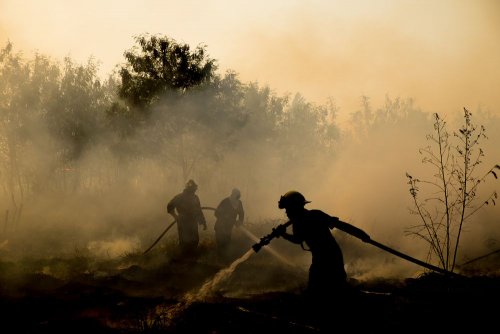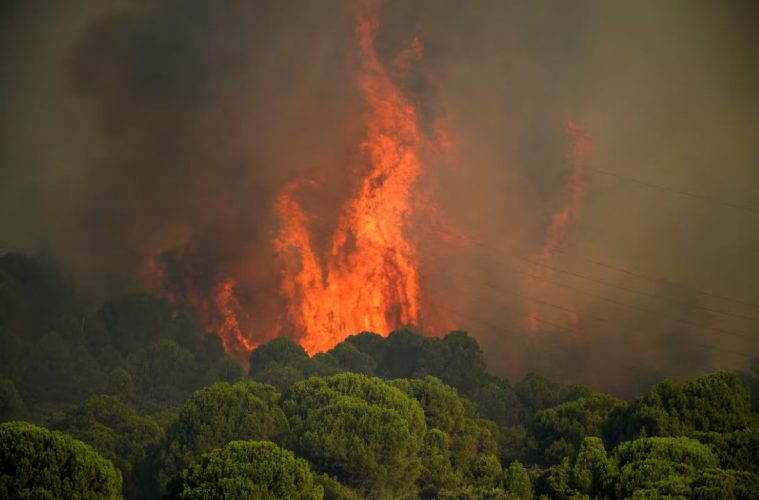
Wildfires continue to ravage Europe. The forest fires have reached such proportions that the authorities in Spain and France have been forced to evacuate over 300,000 residents from danger zones. Meanwhile, the WHO has reached a grim conclusion – wildfires in Europe are becoming more frequent and causing greater destruction every year.
According to Reuters, in France the fires have spread to the outskirts of Bordeaux, forcing the rescue of around 200,000 people from the natural disaster. A further 75,000 have been evacuated in Spain, whilst another 30,000 people have been ordered not to leave their homes.
The scale of the disaster
On France’s Atlantic coast, the fires have scorched vast areas of the Cap Ferret peninsula – a popular tourist destination. Firefighters have been trying to halt the blaze on the outskirts of the region’s capital, Bordeaux. However, the fires have still come too close – within 15 km of the city’s outskirts.
“We have a fire that is not under control and is moving towards the city. The overall situation is very unfavorable, we are in an unprecedented situation,” said Interior Minister Laurent Nuñez on Sunday evening.
Previously, there had been no evacuation plans for Bordeaux. Authorities intended to respond more calmly, but as the fire spread, police had to go door-to-door at night evacuating residents.
In Spain, people were evacuated away from the fires that engulfed the center of the country, near Toledo and Madrid. According to authorities, the fire devastated over 50,000 ha of rural land in Ávila, making it the largest fire in modern Spanish history.
In the east of the country, in Castellón province, more than 4,300 ha were burned.
“The fire is out of control; it is technically very difficult to extinguish, particularly due to unfavorable weather conditions, which will persist throughout the day,” regional leader of Valencia Juanfran Pérez told reporters.
Wildfires grow stronger every year
From the beginning of the year to July 22, there have already been 1,254 fires in Europe, which have also affected Greece, Italy, Portugal, and Germany. As a result, 8.31 million tonnes of carbon dioxide have been released into the environment.
On Friday, July 24, the World Health Organization released alarming data-wildfires in Europe are becoming increasingly frequent and intense. According to Euronews, in the European Union the number of fires has risen by 57% compared to 2022 data.
During the past year, fires in Europe destroyed about 2.2 million ha. As of July 22, more than 254,000 ha have already burned.
“As climate change causes the world to warm, we must prepare for more frequent and intense wildfires,” said WHO Europe head Hans Henri Kluge.

Impact on health
Wildfires are a major source of environmental pollution. The primary reason is the smoke, which can spread hundreds of kilometers. It contains a mixture of hazardous substances, including PM2.5, NO, and lead. Burning of houses and buildings can also release toxic chemicals from electronics, furniture, plastics, and paints.
"Smoke can spread over great distances, worsening cardiovascular and respiratory diseases, as well as affecting mental health, especially among the elderly, children, pregnant women, and people with chronic illnesses," Kluge said.
EcoPolitic previously reported that large-scale wildfires have engulfed Canada, and for the first time, Japan has recorded an extremely hot day.