

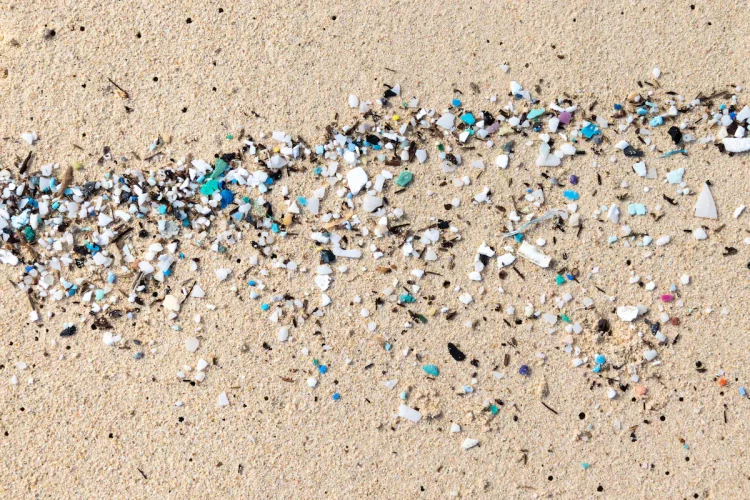
For decades, scientists have known that microscopic plastic particles are present in the world's oceans, rivers, and lakes. Only in recent years has it become clear that our food and bodies are also a habitat for these foreign objects.
New data on these particles, which became known in 2025, was reported in The Washington Post.
The brain accumulates microplastics
Microplastic particles have previously been found in the kidneys, testicles, and even in the placenta and first excrement of newborn babies. When researchers finally decided to turn their attention to the human brain, they found foreign elements there as well.
In 2025, a research team from the University of New Mexico discovered that microplastics can cross the blood-brain barrier in the human body. The particles not only break through into the brain, but also accumulate there.
The researchers analyzed the brain tissue of people who died in different years. The further back in time, the less microplastics were found in their heads. No connection was found between the age of death and the amount of plastic in the brain.
Another discovery by this research team is that microplastics account for approximately 0.5% of the brain's weight. For an average-sized brain, that's a whole plastic spoon. This conclusion has been questioned by other experts.
Links to disease risk
Last year, scientists added Alzheimer's disease and heart disease to the list of diseases that microplastics are believed to cause.
Researchers at the University of Rhode Island found that mice genetically predisposed to Alzheimer's disease show signs of the disease more quickly when exposed to polystyrene (a component of foam plastic).
Scientists from New Mexico also found that the amount of microplastics in the bodies of people with dementia is 3-5 times higher than in people without the disease. However, it is important to understand that dementia makes the brain more porous, which contributes to the accumulation of foreign particles in it.
Studying mice, a team from the University of California found a direct link between microplastic exposure and the development of atherosclerosis. Scientists from Italy found that people with particles in their arteries are more likely to have a stroke, heart attack, or death within the next three years.
Harm and the riskiest ways to get an increased dose
You are most likely to be exposed to higher doses of microplastics through the following factors:
- Heating. Plastic containers with hot contents release more particles than with cold ones. This also applies to reheating food in such containers, including in microwave ovens.
- Highly processed foods. Greater concentrations of microplastics in these foods are linked to their long journey through technological equipment on assembly lines. Such foods are also high in phthalates, bisphenols, and other plastic chemicals that are harmful to hormonal balance.
Scientists agree on one thing: more research is needed to thoroughly study the impact of microplastics on the body.
At the same time, the world is trying to determine their exact effects and ban “forever chemicals” – polyfluoroalkyl substances (PFAS). EcoPolitic reported that they have already been banned in France.