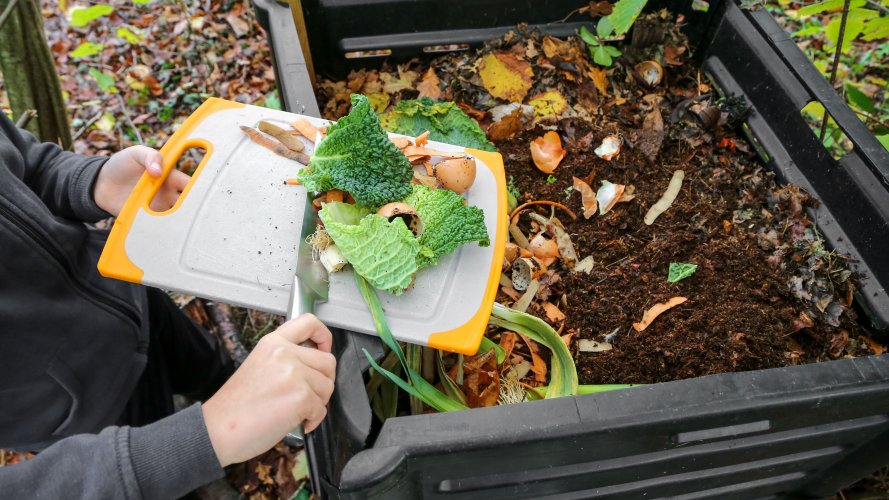
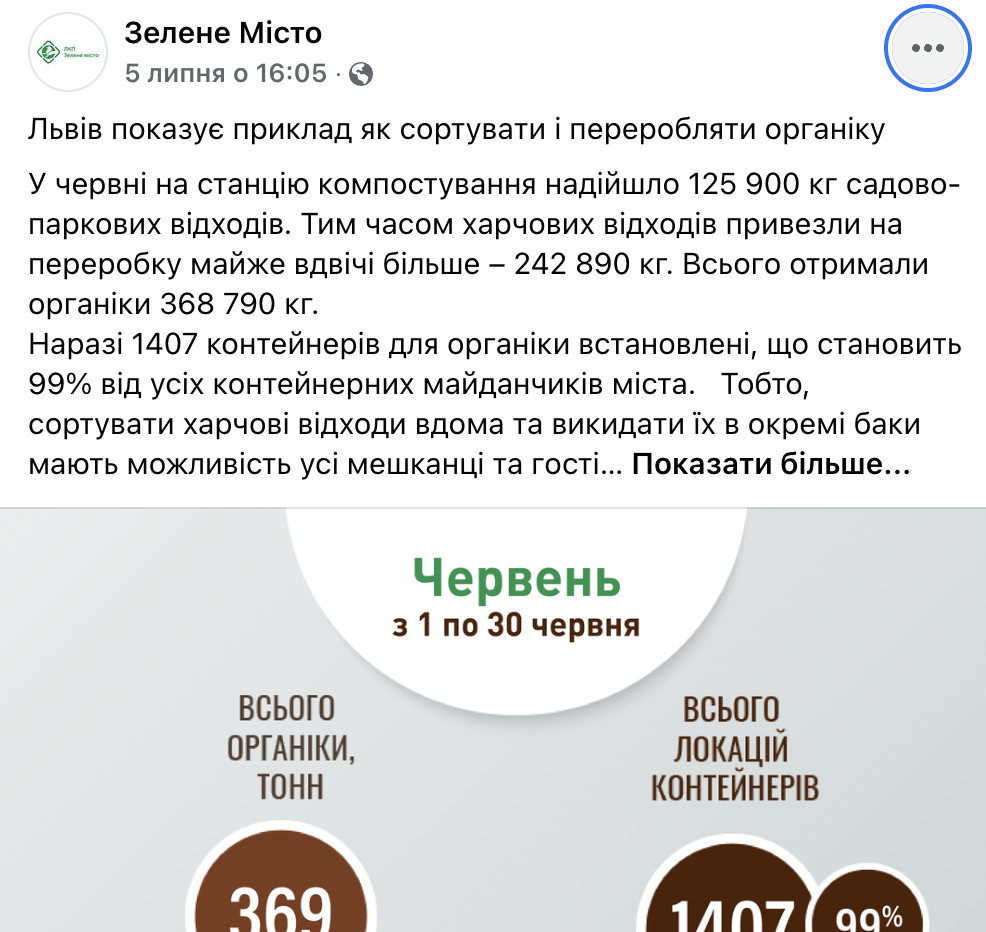
In Lviv, during June, city residents submitted 368,790 kg of organic matter for processing, namely food and garden waste.
Currently, containers for organics are installed in 99% of all Lviv container sites in the city, reports "Zelene Misto" on Facebook.
"Lviv shows an example of how to sort and process organic matter," writes "Zelene Misto".
The material noted that all residents and guests of the city have the opportunity to sort food waste at home and throw it into separate bins.
In June, the composting station received 125,900 kg of garden and park waste, and almost twice as much food waste (242,890 kg). There are currently 1,407 containers for organics in Lviv.
"Please sort organics responsibly and dispose of them in appropriate containers without plastic bags or other garbage. Sort organic matter responsibly - give it a second life!", the message urged.
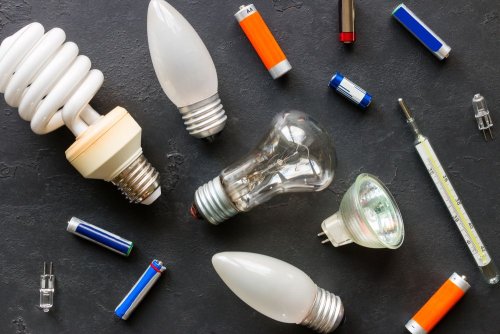
We will remind in July, citizens of Lviv will be able to hand in used ones for disposal free of charge mercury thermometers, lamps and batteries in the so-called ecobus.
As EcoPolitic previously reported, 40% heat of the city of Zhovkva in the Lviv region is produced from renewable energy sources: sawdust, chips, wood pellets, etc.