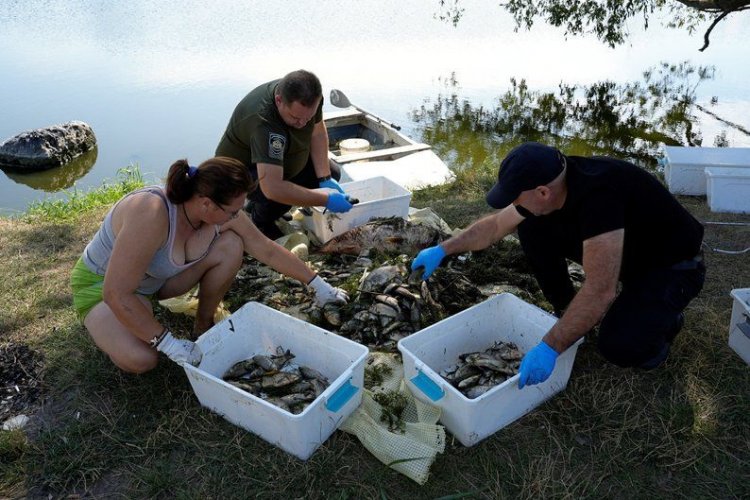
Local residents of the village Khroly, 3 km from Kharkiv, is eliminating the consequences of a mass fish kill that began on August 3.
This is reported by "Suspilne.Kharkiv".
According to Tetyana Zhukova, head of Khroliv, locals smelled the stench and noticed the mass death of fish as early as August 3.
"Fish continue to surface. We are cleaning the pond now. Unfortunately, we don't have chemicals yet. I hope someone will help. Maybe we will buy some on our own, and then fill in some. The water surface is almost two hectares. The scale is colossal," says the headman.
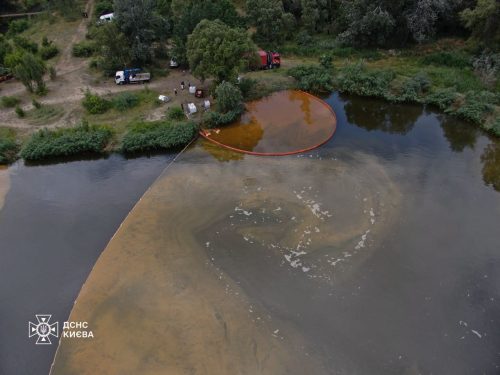
She claims that the death of the fish began after the sewage got into the pond due to the rupture of the city collector in Kharkiv. Khrol is located next to the Industrial district of the regional center.
"On Saturday , On August 3, the cold began. Yesterday there were already many fish on the surface. Instead of redirecting and repairing something, they distributed this collector to the storm drains – where the water should go. All the sewage went to our ponds," says the old man.
The villagers built a dam of sand and clay on their own to stop the flow of sewage. They appealed to the administration of the Kharkiv Industrial District and the Kharkiv City Council for help in eliminating the consequences of pollution, but they have not responded to this request at the moment. Correspondents of "Suspilno" also did not receive an answer to their request regarding the situation.
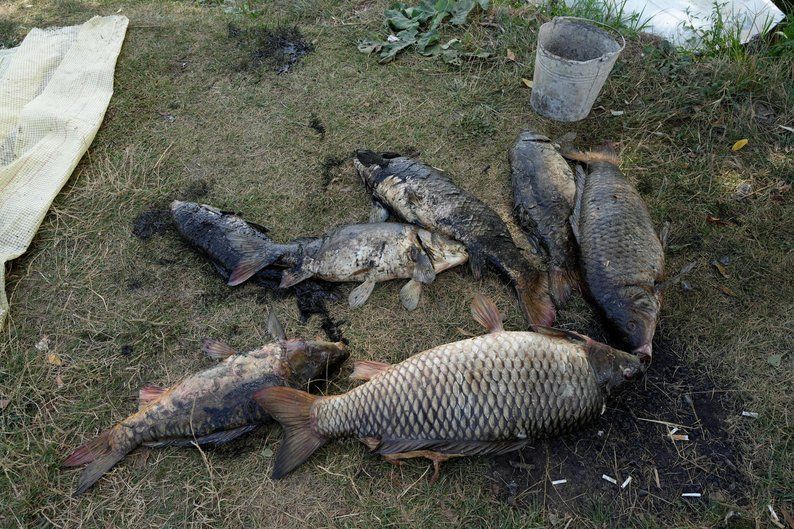
Photo: Suspilne Kharkiv/Yugen Gertner.
According to Oleksandr Kovalchuk, a representative of the Kharkiv Fish Protection Patrol, the estimated losses from the mass death of fish amount to more than UAH 3 million.
On August 5, the Kharkiv Regional Prosecutor's Office opened a criminal investigation into the fact of a mass fish kill in the Studenok River in the village of Khroly, Kharkiv District.
"There are currently two main working versions of this event: a discharge from some enterprise or networks that caused surface water pollution, or perhaps it was a natural process due to heat or other natural processes that caused the death of these fish. We do not currently have any of these versions we highlight separately", said Dmytro Chubenko, the spokesman of the regional prosecutor's office.
In July, EcoPolitic reported a massive fish kill in the Khadzhibey estuary and near Mykolaiv due to the excess content of ammonium nitrogen in the water and the decrease in the content of soluble oxygen due to hot weather.