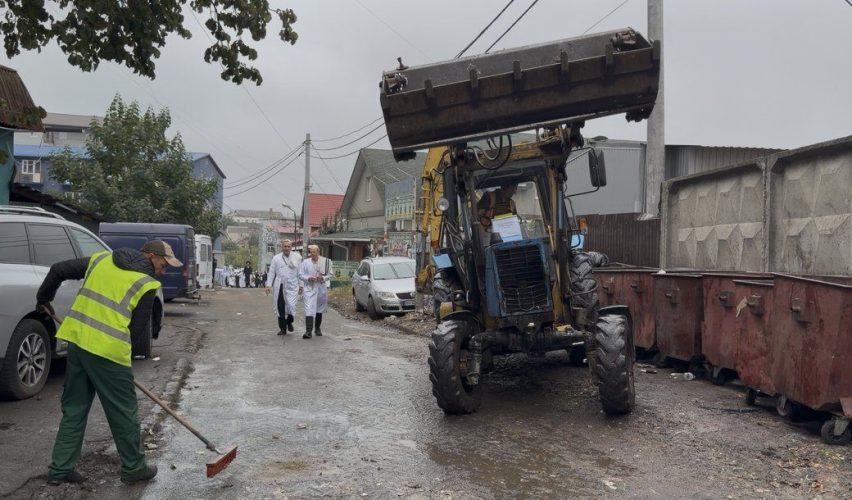
This year’s Rosh Hashanah celebrations in Uman attracted around 50,000 Hasidic worshippers. Traditionally, at this time of year, social media was flooded with complaints about the rubbish that had littered the streets during the festivities. However, to prevent a rubbish crisis, the city organised round-the-clock cleaning operations and removed over 200 tonnes of waste.
This was reported by the media outlet ‘Suspilne’.
Another town has arrived in the town
According to Oleg Ganich, the first deputy mayor, in the first few days after the Hasidim’s arrival — from 4 September — the council’s cleaning crews were working during the curfew. However, once the celebrations began, the cleaning efforts had to be stepped up.
The authorities realised that the night-time hours alone were not enough to clear up after the tens of thousands of people who had gathered in a confined area. Consequently, rubbish was being collected round the clock, and they expect the final clean-up to be completed in one and a half to two weeks.
"It’s not easy, because we realise that another town has arrived in our not-very-large town. It has arrived in a small, designated area where they are staying. We realise that even now, once the pilgrims have left the homes where they were staying, the people who hosted them will still be putting out their rubbish. And I reckon we’ll be collecting it constantly for at least one and a half to two weeks,” said Oleg Ganich.
The town loses nothing
It is true that round-the-clock cleaning has resulted in additional expenditure from the city budget. However, Uman more than makes up for this through the tourist levy.
According to the deputy mayor, preliminary estimates suggest that the city’s coffers will receive 25 million hryvnias from these payments. The city plans to allocate 15 per cent of this sum to cover excess expenditure in the housing and utilities sector, including waste collection.
The pilgrimage is expected to come to an end and the tourists to leave in the next few days.
EcoPolitic recently reported that people in the Poltava region are outraged by the implementation of an environmental project. Three years ago, they were due to start crushing plastic bottles there. However, the crusher has still not been installed, and the plastic is being stored in the open air.
If you’d like to start sorting your rubbish at home, here are a few tips on where to start.