The key challenge in decarbonizing Ukrainian industry is finding sources of funding.
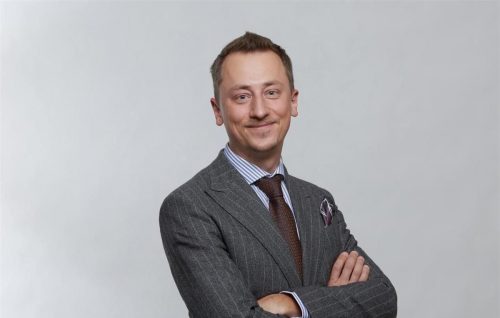
This was emphasized by Stanislav Zinchenko, Chairman of the Industrial Ecology and Sustainable Development Committee of the European Business Association (EBA) and Director of GMK Center.
The expert is convinced that if there is no answer to the question, "How should the green transition be financed and where can the funds be obtained?", any decarbonization strategy risks damaging Ukraine's economy. He stressed that climate goals cannot be achieved through economic contraction, deindustrialization, impoverishment of the population, and the collapse of infrastructure.
The price of the issue
Stanislav Zinchenko called for recognition that decarbonizing production requires very significant investments. According to the expert, for the metallurgical, cement, and chemical industries, the cost of transitioning to low-carbon technologies is estimated in the billions.
“According to preliminary estimates, the decarbonization projects of Ukrainian steel producers alone will require a total of around €12 billion,” says the director of GMK Center.
According to him, the investment needed to implement Ukraine’s Nationally Determined Contribution (NDC) plan for 2021-2030 is measured in tens of billions of euros.
He noted that even wealthy EU countries with developed financial markets and access to cheap loans for businesses have faced problems in decarbonizing their industries. Green projects are being postponed, revised, or halted, the expert said.
"This is an important signal for the whole world and Ukraine: if it is difficult for Europe, then for our country, which is at war, the challenges are 10 times greater," explained Stanislav Zinchenko.
Risk of deindustrialization
The EBA Committee Chair warned that decarbonization without a pragmatic approach would inevitably lead to the deindustrialization of the economy.
"When emission reduction requirements outpace the financial capabilities of businesses and technological development, companies are forced to cut production or close down altogether," he explained.
The expert recalled that Ukraine had already faced such a situation in the 1990s, and its repetition is unacceptable. He cited a shocking figure: from 1990 to 2023, industrial production in our country, including construction, fell by 80 (!!!)%.
Stanislav Zinchenko stressed that during the war and post-war reconstruction of Ukraine, it is critically important to preserve industry as the foundation of the economy. After all, it is industry that provides jobs, exports, tax revenues, and foreign exchange earnings.
The main issue
According to the expert, the primary issue for discussion in climate strategies should not be the level of carbon payments, the technical parameters of the emissions trading system, or even the formal targets for reducing CO₂ emissions, but rather the search for sources of financing for decarbonization, because without them, all other elements simply lose their meaning.
What support do industrialists need for decarbonization?
Stanislav Zinchenko highlighted the following financial instruments that will help domestic enterprises in the green transition process:
-
cheap long-term loans similar to those received by companies in the EU through the European Investment Bank and other institutions;
-
grants and direct subsidies from European funds;
-
tax incentives that reduce the investment burden when implementing green projects.
“Without this, large industrial companies will physically be unable to begin the green transformation,” the expert emphasized.
He explained that existing international support instruments, in particular the Ukraine Facility, are mainly focused on small and medium-sized businesses rather than large industry, where the cost of decarbonization projects exceeds €1 billion.
"Such a scale of investment requires a completely different financial architecture—special funds, guarantees, insurance mechanisms, and risk sharing between the state, donors, and business," the expert believes.
He recalled the leading role of large businesses, which:
-
are the largest employers;
-
pay the most taxes;
-
are exporters and buyers of goods and services from small and medium-sized businesses.
That is why, according to Stanislav Zinchenko, decarbonization should focus on key enterprises in the industrial and energy sectors.
"Any Ukrainian climate strategy must first and foremost be a strategy for financing green transformation, because without this, climate policy will turn into a risky economic experiment with negative social consequences," the expert warned.
He insists that the logic should be as follows: first, it is necessary to identify the funds, sources, and instruments available for accumulation, and only then set goals based on the available financing.
We would like to remind you that EcoPolitic recently published an interview with the president of the PAEW Association of Environmental Professionals, Lyudmila Tsyganok, CEO of the Office of Sustainable Solutions, in which we discussed the current state of affairs in Ukraine regarding the eco-modernization of industry and the challenges now facing businesses and the state for a successful transition to European environmental standards.