Developed countries are actively seeking ways to artificially control the planet's temperature. In parallel with or even instead of controlling emissions, governments are funding research into solar geoengineering. The technology involves spraying certain particles into the upper layers of the atmosphere. However, the countries that could be the best places for such experiments are strongly opposed.
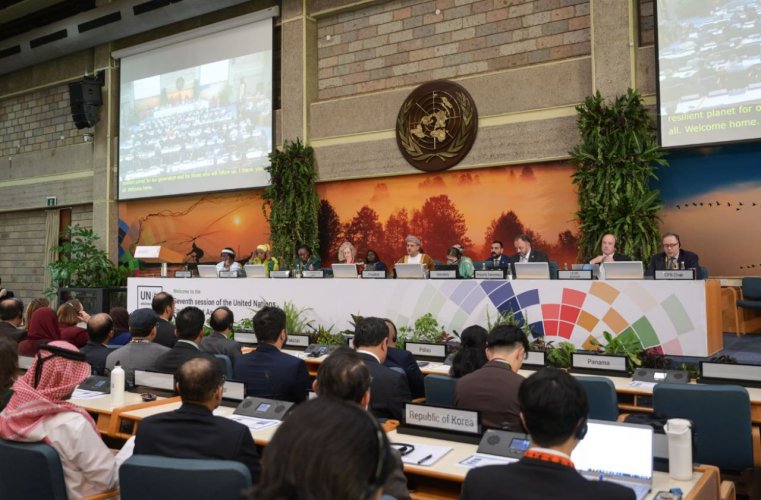
As The Guardian reports in its article, diplomats are talking about the need to stop promoting this technology on the sidelines of the UN environmental talks in Nairobi.
It will only get worse
African countries do not want to become a testing ground for questionable and extremely dangerous technology. It involves spraying certain chemical compounds into the atmosphere, which will supposedly cool the planet.
“They point to environmental, ethical, and geopolitical risks. That is why the continent insists on a global ‘non-use’ agreement that would prohibit government funding, outdoor experiments, patenting, and official promotion of these technologies,” writes The Guardian.
There are significantly more disadvantages. Solar geoengineering will not reduce greenhouse gas emissions in any way, but will only create additional risks for the planet. Among the possible side effects are changes in precipitation patterns with consequences for the global agricultural sector.
Who will take control of the global "thermostat"?
Developed countries have begun a race to be the first to develop effective technology and secure the right to determine the planet's temperature.
An American-Israeli company is already developing a spraying system that it wants to sell to governments. This has led to a moratorium by Mexico, which has already fallen victim to unauthorized American experiments on its territory.
The United Kingdom is not far behind. There, similar research is funded directly by the government. Through the Advanced Research and Innovation Agency, the country is looking for ways to modify solar radiation and is already conducting small-scale tests.
The community is also concerned that the US, which has already made "energy dominance" in the region its economic credo, will want to take the lead.
“Solar geoengineering offers a way to manage temperature risk without weakening the grip of the carbon economy. Control of both the world’s energy supply and the global thermostat clearly appeals to the White House and its billionaire supporters,” the media adds.
EcoPolitic previously reported that due to climate change, every minute, one person dies on the planet.
Warming will also affect the seasons. By the end of the century, summer in Europe is expected to last eight months.