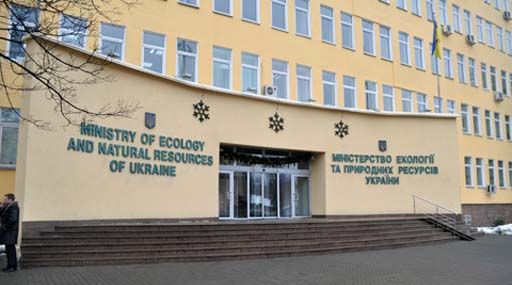
More than two dozen civil society organizations and activists have spoken out against the possible transfer of the former Ministry of Ecology building—which currently houses the environmental division of the merged Ministry of Economy, Environment, and Agriculture—to the High Anti-Corruption Court.
According to environmental activists, this move would preclude the possibility of reestablishing the Ministry of Ecology as a separate institution. We discuss all the risks of such a decision in more detail in this article.
What is known?
As reported in a post on the Facebook page of the legal organization "Ecology – Law – People" (EPL), the building in question is located at 35 Lipkovsky Street in Kyiv, which previously belonged to the Ministry of Ecology. It is currently on the balance sheet of the merged ministry, although environmental departments continue to operate in these very premises.
The High Council of Justice is claiming this building to house additional judges and support staff.
What is the risk?
Environmental activists are convinced that the transfer of the building poses a threat to the environmental management system. State eco-management, according to EPL, still lacks full agency after being integrated into the Ministry of Economy, Environment and Agriculture. Losing its own premises may intensify this effect and make it impossible to fully restore the Ministry of Ecology as a separate entity.
“This will provoke a wave of resignations among public servants, paralyze the processes of forming and implementing environmental policy, and also paralyze the system of state control,” the activists note.
In their joint statement, the environmental community calls for blocking the process of transferring the building to HACC. The activists’ categorical stance also extends to scenarios in which alternative premises are offered to environmental officials.
At the same time, EPL emphasizes that they currently see no progress in the work of the ministry’s environmental wing.
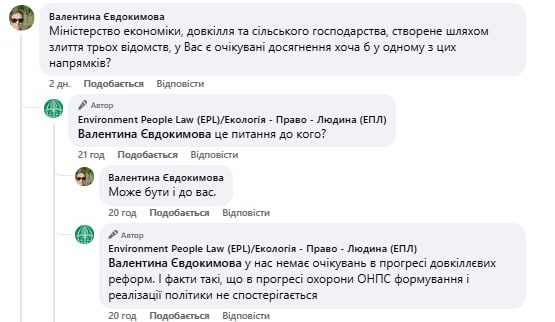
It is reported that the statement has already been signed by over 20 public organizations, scientists, and experts. In comments regarding the possible change of the building’s owner, some users speak of “arbitrariness” and “disgrace,” while others express confusion as to how the workplace of environmental officials impacts environmental policy at all.

Some commenters are more critical in their assessments of the effectiveness of officials and the former ministry in particular.

EcoPolitic previously reported that as of February 2026, the Ministry of Economy had 126 officials dealing with issues of environmental protection and use.