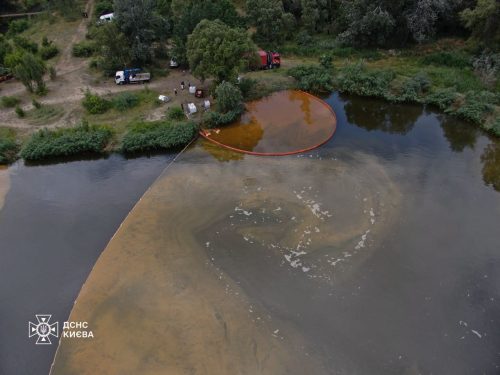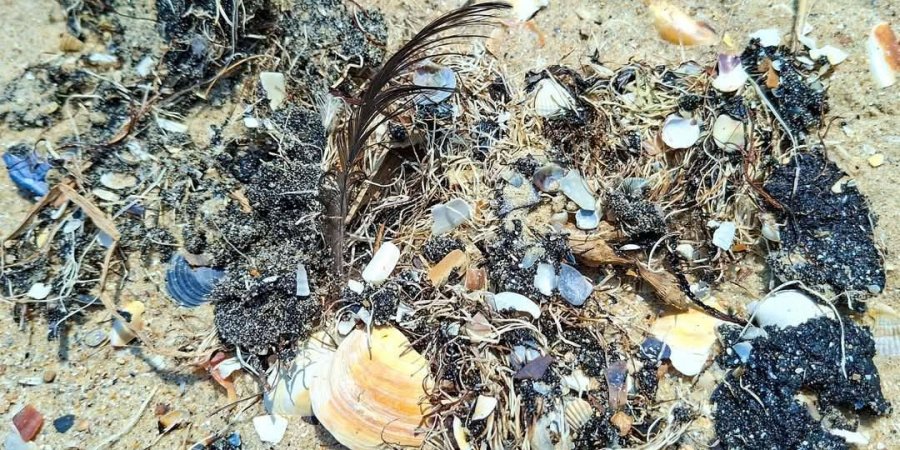
Employees of the Tuzly Estuaries National Nature Park have once again discovered a sandy spoil patch where the Black Sea has released fuel oil from sunken Russian tankers.
This was reported on his Facebook page by Ivan Rusev, an ecologist and head of the research department of this environmental institution.
According to him, the contaminated area of 2 km of sandy spoil was located near the strait that connects the Tuzly estuaries to the Black Sea.
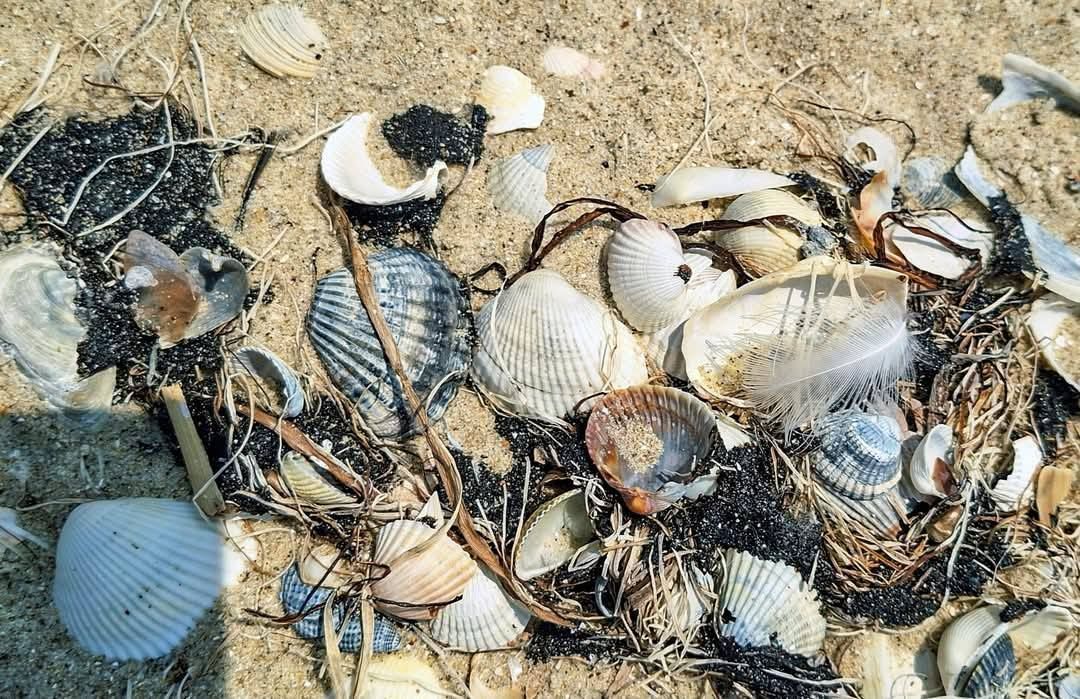
Photo: facebook.com/ivan.rusev.215723.
The fuel oil fractions were of different sizes, with a total weight of about 1 kg. The pollutant was promptly collected by the national park's employees.
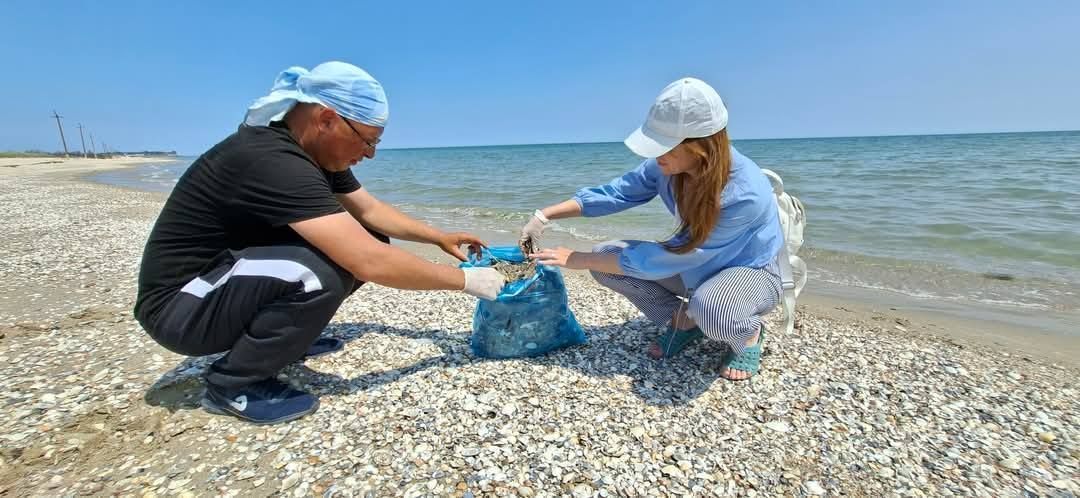
Photo: facebook.com/ivan.rusev.215723.
Ivan Rusev says that the fuel oil was very soft due to the temperature of +30°C on the sand. He also noted that the sea threw out the fuel oil mostly along with seagrass – zostera and shells of various kinds.
“Powerful winds and underwater currents have recently plucked seagrass from the seabed where the fuel oil was spread and washed ashore,” the expert explained.
He also suggested that this oil product is also present on other parts of the Odesa region's coastline, but they don't know about it because beaches are not inspected everywhere.
“In addition, powerful winds and sand transport over the shoreline in recent days are likely to partially cover it, and it dissolves in the sand, poisoning sandy biocenoses,” Rusev said.
The ecologist said that the bulk of the fuel oil that could have reached the Northwestern Black Sea coast from the accident site on December 15, 2024, is already dissolving with warming and is being “embedded” in the food chains of aquatic organisms in the marine ecosystem and the Tuzly estuaries. He suggests that fuel oil caused the death of the atherina fish, which the sea threw onto the coast of the Burnas estuary near the specified strait on 2 km of sandy embankment.
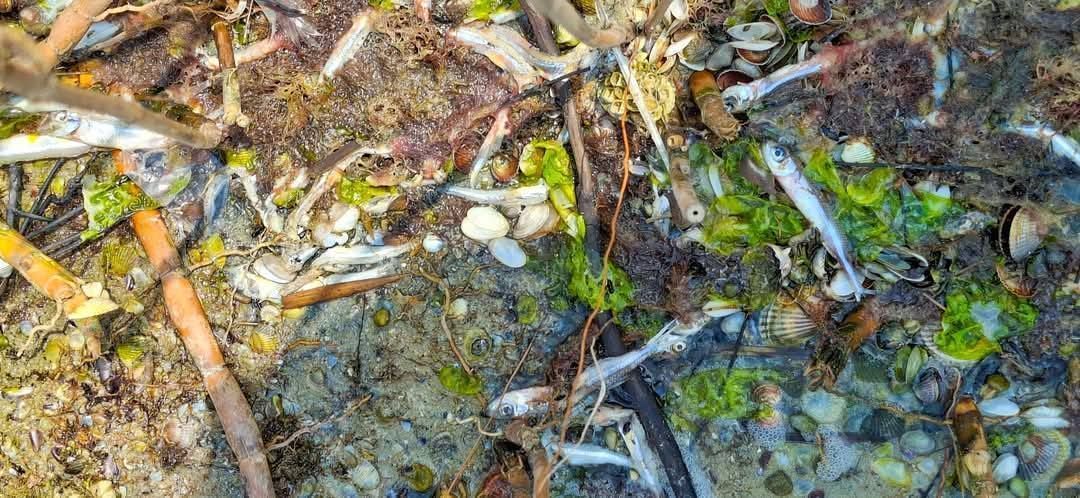
Photo: facebook.com/ivan.rusev.215723.
Employees of the Tuzly Estuaries informed the Department of Ecology of the Odesa Regional Military Administration about the discovery of fuel oil in the national park.
Earlier, EcoPolitics wrote that Ivan Rusev accused the State Ecological Inspectorate of inaction in eliminating large-scale fuel oil pollution of the sandy spill near the Danube Biosphere Reserve in Odesa region.