Environmentalists called not to bring artificial flowers to the cemetery: what threat do they hide

Environmentalists called not to bring artificial flowers to the cemetery: what threat do they hide shutterstock
Hanna Velyka

Plastic flowers are not recyclable and will pollute the environment for centuries

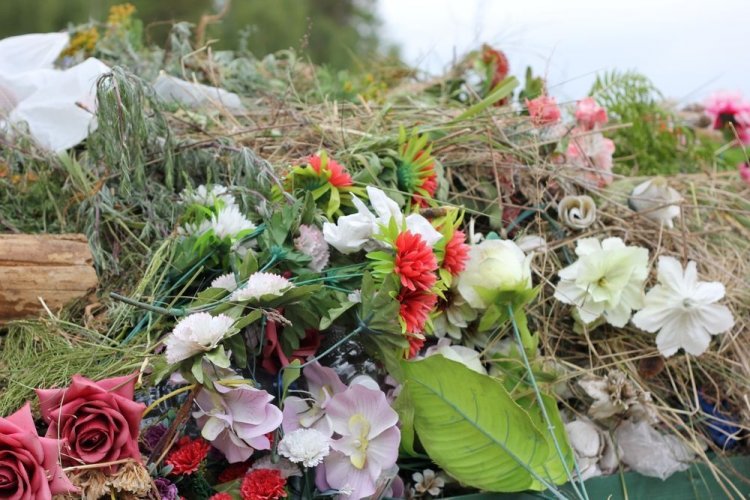
Artificial flowers and plastic decorations that people bring to cemeteries on memorial days pollute the environment and pose a danger to human health.

This was reminded by experts from the State Ecological Inspectorate of the Southwest District.

They once again called for the abandonment of this tradition. Environmental inspectors listed a number of reasons why this should not be done.

What is the danger

First, most artificial flowers are made of polymeric materials that will decompose in the soil for hundreds of years, polluting the ground, water, and even air. Moreover, such decorations are usually imported from China and their composition is not known for certain.

Secondly, toxic dyes poison the soil when they decompose and can enter underground springs.

Thirdly, many people burn artificial flowers with garbage. This way, toxic substances get into the air we breathe.

Fourthly, the wind often blows torn plastic petals, so they end up in forests, rivers and lakes.

What is the solution?

As an alternative, ecologists suggest choosing fresh flowers – they will naturally decompose and will not harm the environment. You can also plant perennial plants, such as periwinkle, lavender, or other flowers that can grow for a long time near graves. Or you can replace plastic flowers with eco-friendly alternatives, such as wooden, paper, or fabric arrangements.

Last December, countries failed to adopt a global treaty to limit plastic.
Related
Six EU countries have already met their 2030 targets for the collection of single-use plastics

Countries that have been successful in collecting single-use plastics use REW and a deposit-return system

A vast swamp in the Rivne region will not be made available for peat extraction

We are talking about more than 2,300 hectares of wetland ecosystem bordering the nature reserve

Officially, the foundations for the wind farm in Runa were built illegally. Government agencies are facing an investigation

Lawmakers are also calling for the lifting of the moratorium on environmental inspections

The government is turning a blind eye to the destruction of nature caused by dolomite mining in the Zhytomyr region

Experts are convinced that, in the absence of a response from the authorities, an approach like the one in Negrebivka is likely to spread across the entire country