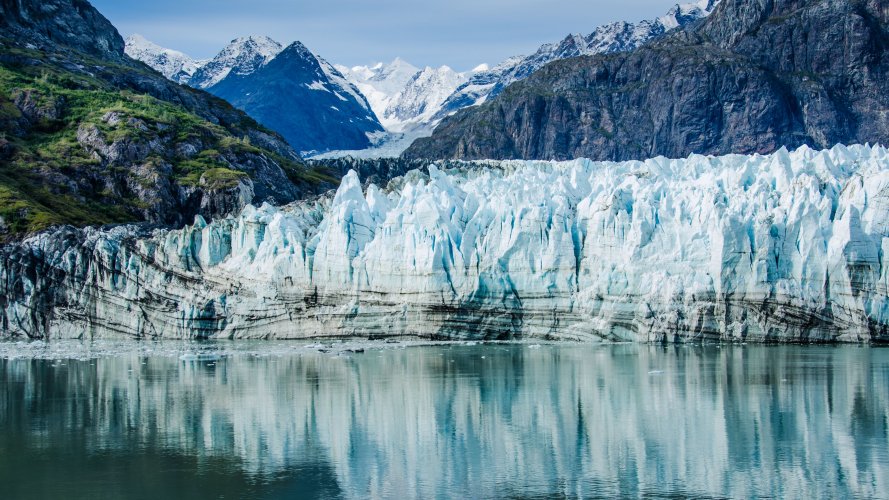
Global warming is gradually "thawing" the Arctic for shipping. Routes that were previously impassable are now being used by more and more ships. Their emissions further accelerate the melting of ice, but geopolitical games prevent change.
According to Euronews, several countries are calling on international shipping regulators to require ships to use cleaner fuel.
Loss of whiteness – loss of cold
Soot, or black carbon, produced by ships covers glaciers and snow. Then ordinary physics takes over – by losing its whiteness, the ice loses its ability to reflect rays. As a result, the sun's heat is absorbed by the surface and it melts faster.
“This leads to an endless cycle of accelerated warming. We need to regulate emissions, particularly black carbon. Both factors in the Arctic are absolutely unregulated,” emphasized Sian Prior, lead advisor of the Clean Arctic Alliance.
The need for regulation
France, Denmark, Germany, and the Solomon Islands have put forward a regulatory proposal. They are asking the International Maritime Organization to require shipping companies to use polar fuel. It produces less pollution than traditional marine fuel.
The proposal features geographic zoning – the fuel mandate would apply to all vessels operating above the 60th parallel.
Since 2024, a ban on the use of heavy fuel oil in the Arctic has come into force. However, its climate impact has been minimal, mainly due to legislative gaps.
The Arctic as a hostage of geopolitics
Black carbon has a warming effect in the Arctic 1,600 times greater than that of CO2. While the world seeks to reduce these emissions, a geopolitical battle is unfolding around the Arctic.
Donald Trump’s statements about possessing Greenland have renewed debate over sovereignty and NATO’s future. The Arctic’s ecology has taken a back seat. Trump, who has called climate change a hoax, opposes new environmental regulations for shipping.
Last year, the International Maritime Organization was meant to introduce carbon fees for the shipping fleet, to push companies toward cleaner fuel. However, after active lobbying from Trump, the decision was postponed for a year, and its prospects remain uncertain.
Under such circumstances, a rapid reduction of black carbon emissions in the Arctic seems unlikely. Even among Arctic states, which are the primary victims of this pollution, there is no consensus on new rules.
An example is Iceland. The country leads in “green” technologies, but its progress regulating marine pollution is limited. This is attributed to the importance of the fishing industry for its economy.
“The industry is satisfied with its profits, dissatisfied with taxes, and does not engage with issues such as climate or biodiversity,” explained Arni Finnsson, Chair of the Iceland Nature Conservation Association.
The impact is already noticeable
In 10 years, from 2013 to 2023, the number of ships in the Arctic has increased by 37%. The total number of routes they have traveled has increased by 111%.
While ships emitted 2,696 tons of black carbon in 2019, this figure rose to 3,310 tons in 2024. Fishing vessels were found to be the biggest polluters in the Arctic.
The environmental community is convinced that fuel regulation is the only realistic way to reduce black carbon emissions, as it is unlikely that states can be forced to restrict traffic on profitable routes.
Earlier, EcoPolitic reported that the tundra in the Arctic belt is rapidly melting. It has been storing carbon for a long time, but with warming, it is releasing it back into the atmosphere.